
Trail Map
Note: This is a good AllTrails route to navigate with, but this route stops at the start of the third lake. The trail continues past here to the other side of the lake, where the campsite is. The trail to the campsite is well-marked and pretty obvious. The best swim spots for the upper lake are near the campsite, so if you want to cool down, continue past where this map stops.
Where to Stay (Before It’s Fully Booked)
Key Tips For Hiking to Joffre Lakes

- Mosquitoes. They are not too bad on the trail or the first 2 lakes, but at Upper Lake, they can be aggressive when there is no wind. The viewpoint and the campsite are both hotspots. Bring lots of bug spray.
- Day Passes and Permits. From May to October, you'll need a day-use pass to hike the trail. They are $18 CAD per tent and are actually a bit easier to get than day passes, especially if you can swing it on a weekday. We will go over all the permit information in greater detail later in this guide.
- Iconic Floating Log. The Instagram shot everyone comes for is at Middle Lake. This is my personal favourite spot for swimming. The log looks awesome in pictures, but it's also a great diving platform. Middle Lake is still a bit icy, so it helps to jump right in from the log. You can lounge, swim, and snack at the rocky beach area near the log all day. If you're wondering how to find the log, it's just along the trail next to Middle Lake. It is obvious, and there is always a crowd, so you can't miss it.
| Distance | Elevation | Time | Type | Difficulty |
|---|---|---|---|---|
| 7 km | 478 m | 4 h | out and back | moderate |
Complete Camping Gear Guide: What You Actually Need & What You Can Skip
Click here for our comprehensive guide!Why Hike to Joffre Lakes (Or Why Not To)


Joffre Lakes is one of the most iconic hikes in British Columbia, and it lives up to the hype. Turquoise water, glacier views, and rugged peaks. With the sea of evergreen trees and blue lakes, it feels like someone turned the saturation slider way up. The hike leads you past three lakes: Lower, Middle, and Upper Joffre. It's an entry-level hike with hardcore backcountry payoff.
I find this hike funny to talk about when it comes up with locals. It's like asking someone in New York about the Empire State Building. They won't say it's lame, but they also can't remember the last time they've been there themselves. Indisputably, this hike delivers some of the most epic and quintessential BC alpine lake views, but it's missing some of the challenge that a lot of BC locals are looking for.
It's an easy drive from the city to a big parking lot, the hike itself is relatively easy, you won't ever be alone on this trail for long, and the campsite is full every night of the summer. It's missing the 20 km of forest road driving, the gruelling unmarked hike, and the solitude that comes with the challenge that some locals are looking for. But you're visiting from the U.K, this is the perfect accessible hike that takes you to some truly magical, untouched alpine terrain without throwing you into the real deep end of the BC back country.
What to Expect at Each Lake
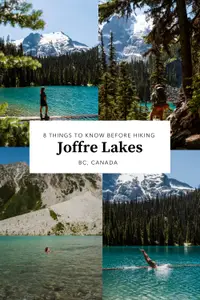
- Lower Joffre Lake: A quick 5-minute walk from the trailhead. Great teaser of that glacier blue and already epic mountain backdrops. Most people stop here for a quick photo, but don't linger. The lakes just keep getting better.
- Middle Joffre Lake: About 2.5 km in and arguably the showstopper. The water is insanely blue (I swear we are not editing these photos to be more blue). There's a famous log in the water where people line up for photos. It's the most touristy part of the trail, but you can make it fun.
- Upper Joffre Lake: Around 3.5 km in. The final lake and across it the glacier that fuels all 3. This is where most hikers stop and eat and then turn back, so it can get a bit crowded. At the far side of the lake, there is a campsite that requires a permit.


3. Do I Need A Permit to Hike Joffre Lakes

Yes. From May to October, you'll need a day-use pass. It's free but must be reserved online through BC Parks (here), and they often sell out. Check dates and book early. They open up at 7 am two days before your hike.
If you are camping at the top, you do NOT need a day pass, but you will need to buy a camping permit. They are $18 CAD per tent and are actually a bit easier to get than day passes, especially if you can swing it on a weekday. You can book yours here.
4. How to Get to the Joffre Lakes Trailhead
The hike is in Joffre Lake Park, which is an area between North Joffre Creek and Cayoosh Pass that's managed by BC Parks. The area is called Pipi7íyekw, meaning a camping place where storage houses were, in the St̓atímcets language.
Where is the Trailhead
The trailhead is next to a big parking lot off the Duffy Lake Road, 30 minutes north of Pemberton or 2.5 to 3 hours from Vancouver. It's an easy drive and paved until you reach the parking lot.
If you don't have your own car you can compare all the major rentals companies here.
Road Conditions
In the summer months, road conditions are great. It's a well-maintained and paved mountain highway. Some steep parts once you're on the duffy, but won't be a concern unless you are in something very old and very heavy. Big rigs and logging trucks make it up and down all the time, so it's nothing to be too concerned about.
Parking
Parking is free, and the lots are big. The main lot fills most days, but there is overflow parking across the highway. It adds maybe 5 minutes to your hike, so it's not a big deal. This is one of the most popular hikes in BC, but BC Parks limit the number of day passes they hand out each day. If you have a day pass, you're still not guaranteed parking at peak hours. If you're doing this as a day hike, arrive before 7:30 am if you want to park close and avoid the crowds.
5. Hiking to Joffre Lakes


We parked in the main lot and checked in with the friendly staff at the trailhead. We told them it was our first time camping here, and they explained the procedure.
- No setting up camp on the emergency Heli-Pads. Which, to be fair, do look exactly like camping lots aside from the signs.
- All food needs to be in the bear safe when not being used.
- All the sites are first-come, first-serve, and checkout is at noon. So no rushing someone out of their spot.
Then we did the hike. We stopped at the middle lake for a swim and some photos, and a snack and then again at the upper viewpoint and really made a day of it. We hit the trail around 9 and weren't up at camp until nearly 2. Most people will do this hike much faster (like less than 2 hours).
Time
If you're in a hurry and you're a strong hiker, you can be up and down and back in your car on your way to lunch within 4 hours. If you're like us and stop for a swim at each lake and take 100 photos at every viewpoint, it could take 4 hours just to get to the campsite.


Terrain
- To Lower Lake: You can walk over to the Lower Lake, grab your pic, and turn around. Lower Lake is one of the most incredible lake views I've seen (like globally), and it's only a few minutes from the parking lot. This option is perfect for anyone with limited mobility. It has that sense of a remote mountaintop lake without requiring the hike. It is still an uneven trail leading to the lake, but it is mostly flat and well-kept. I would advise anyone WITHOUT mobility restrictions NOT to do this option. The day passes for this hike sells out most days all summer, so we don't want to stop other people from enjoying the full experience.
- To Middle Lake: It will be about 2.5 km and a bit over 300 M of elevation gain to the middle lake. Then it's a few minutes along the lake, and you will see the beach. The terrain is pretty easy, but there are some rocks and roots (so no flip flops). It gets a bit steep as you approach the lake. If you hike at all, this will be a pretty easy hike for you. But if it's one of your first hikes, be careful because there are loose rocks, muddy bits, and lots to look out for.
- To Upper Lake: It's about 1 km and 100 m gain past the middle lake. This section is mostly a wide dirt path with easy terrain. Both times we passed the viewpoint, it was packed with people resting along the big boulders. It's a great place to chill out, and the views are incredible. But it's not a great swim spot. There's no great place to get in, and the upper lake is the coldest of the three.
- To Campsite: The campsite is just 1 km past the upper lake viewpoint. This part of the trail is mostly flat but goes up and down a bit, and the terrain is a lot harder than the rest of the hike. Most of the hike is a carefully manicured and maintained trail, but this stretch is overgrown and filled with roots and little rock scrambles. Pretty easy stuff if you hike a lot, but intimidating if you're not used to this kind of terrain. Because of the glacier, the landscape changes each year, so lots of rocks are loose, so make sure you stick to the trail and take it slow if you're not doing this kind of thing often.
Views
Each lake has its own main viewpoint, and they're worth stopping for.
- Lower Joffre Lake greets you right off the trail with calm, mirror-like water and Mount Matier reflected in the distance. Perfect for a warm-up photo before the climb.
- Middle Joffre Lake is the crowd favourite, with a deep turquoise colour and the famous wooden log that's perfectly placed for Instagram.
- Halloway Falls is the bonus stop between Middle and Upper Joffre Lakes. A series of powerful cascades rushes right beside the trail, close enough that you'll feel the mist on a warm day. It’s a natural break in the climb and a reminder of just how much glacial water is feeding these lakes. We took a long break here to get cooled down by the mist, and we definitely recommend it if you're visiting in the summer.
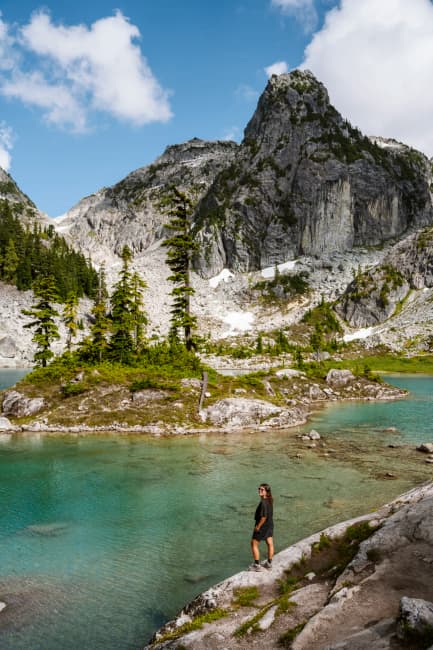
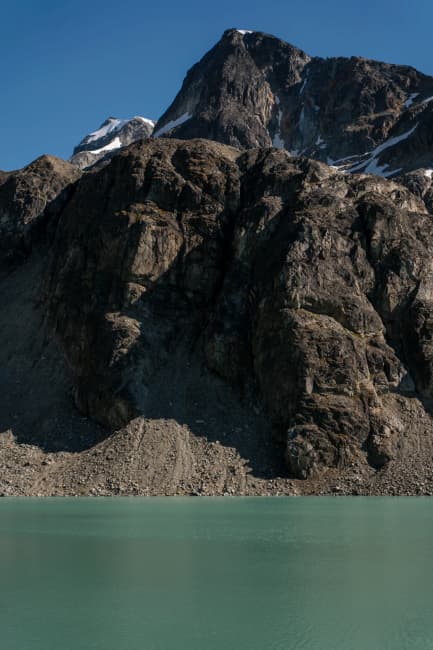
- Upper Joffre Lake sits right at the base of the glacier, surrounded by rocky outcrops and waterfalls. If you're not camping, the view from the campsite isn't different enough from the main viewpoint to be worth the extra hike.
6. Camping at Joffre Lakes


It's bare bones camping if you're used to the more front country road-trip style campsites, but it's one of the nicest back country sites I've seen.
- There is a fast-flowing stream near camp coming straight from the glacier. It's generally safe to use after boiling or treating, but make sure to check BC Parks up to date recommendations before you go.
- There is a decent outhouse. It uses a well-designed process that is kind of a no-flush septic tank. It's not luxury, but it's miles ahead of a standard outhouse. Make sure to pack your own TP, though!
- The sites themselves are nice and flat, but most are rocky, so make sure you bring a comfy sleeping pad.
Booking a Tent Pad
You will need to buy a camping permit to spend the night. They are $18 CAD per tent and are actually a bit easier to get than day passes, especially if you can swing it on a weekday. You can book yours here.
Tent pads are first-come, first serve to people with a camping permit. There are several spots along the water, then a few up higher on the rocky area, then a third row even higher up on wooden platforms. Generally, the lower ones have more bugs and less wind, and the higher ones have more wind and less bugs. So pick your poison. Or do what we did and just take a spot in the middle.
Camping Infrastructure
- Clearly defined and first come first serve tent pads plus a few gravel spots.
- Bear-proof storage lockers.
- Outhouse close to camp.
- No fires allowed.
What to Do At The Joffre Lakes Campsite
We took a dip in the lake. Ate some snacks. Did a little exploring around some of the trails that meander off into the rock slide. We made dinner at our campsite using the water from the stream and watched the alpenglow from our tent, hiding from the mosquitoes.
There is a longer trail from camp that goes up closer to the edge of the glacier. There is a cool waterfall there, but we just went high enough to see a cool aerial view of the lakes and then called it quits.

Campsite Vibes
There are 3 distinct camping areas, and all of the lots are pretty spread out and private. You will see lots of people out and about in camp, but you will have plenty of space to yourself.
During the week, it is usually perfectly quiet at night if the wind isn't too loud, but it's a popular spot for larger groups to come. So, depending on who else is camping, it can be one of the more raucous backcountry camping spots, especially on long weekends.
What to Pack
- Warm layers. The alpine nights get chilly even in July.
- Bug spray. Mosquitoes are around but not unbearable.
- Water filter or Tabs. There are two running streams near camp.
- Bear spray. The lake is in bear country and there is 1 local bear who frequents the campsite.
7. When to Visit Joffre Lakes

- Summer (June to Sept): Best weather and the lakes are at their bluest, but busiest. We went in mid-July, and I slept with no sleeping bag and was able to swim in the lakes. It can be much colder in early June or past August. It also can't get too busy because there are only so many day passes given out per day. It's a lot, but it's not overwhelming.
- Fall (Oct): Fewer crowds and gorgeous golden larches, but trails can be icy, and it is too cold to camp unless you have the proper gear.
- Winter: It turns into a snowshoe route. Beautiful, but advanced. No plowed parking, and the avalanche risk is real. This is only for people who know what they are doing (which isn't me)
- Spring: Impractical as the snow melts.
8. Where to Stay Near Joffre Lakes
Joffre Lakes is a doable day trip from Vancouver so you can head back down to Whistler, Squamish, or all the way back to the city after the hike.
Some budget-friendly options near Whistler:
- Whistler HI Hostel: This isn't in the village, but it is connected by bus. Or it's a quick drive if you have your own car.
- Pangea Pod Hotel: Pod-style rooms right on the village stroll.
The Pan Pacific is our favourite hotel if you want to up the budget a bit from the hostel. It has great suites and amenities like the sauna, pool, and hot tubs. But there are tons of hotels in Whistler, ranging from basic budget rooms to luxury stays. You can compare all the major hotels in the area here.
If you're looking to front country camp a bit more locally, check out Lillooet Lake. On the drive back down the Duffy towards Pemberton, you will pass the forest road to access all the lakefront camping. There are 4 paid sites on the lake:
Final Thoughts
- Leave no trace: Like every hike, make sure you leave everything just as it was and pack out what you pack in.
- Drones are banned. The signage is clear, the fines are real, and the local sentiment towards drones is negative. You could get some sick shots for sure, but you will piss everyone off and get slapped with a massive fine.
- Don't swim in the lakes unless you're okay with being extremely cold. We swam in July because the water was around 10 degrees. It is glacier-fed water, so it was in recent history actual ice. The water is colder other times of year, and if you don't have the sun or you get a cold wind, you could be putting yourself in danger. If you don't normally like cold dips, this is not the spot to try it out.
FAQ
What is Joffre Lakes?
Do I need a permit to hike or camp?
What should I expect at each lake?
How do I get to the trailhead?
What is the hike like?
What about camping?
What are key tips for visiting?
When is the best time to visit?
Where to stay nearby?
Why hike Joffre Lakes?
Our Trusted Travel Partners
We only recommend products and services we personally use and trust.

SafetyWing
Travel medical insurance for nomads and remote workers
Booking.com
Find the best deals on hotels, apartments, and vacation rentals
AllTrails
Discover hiking trails with detailed maps and reviews
Surfshark
Secure VPN for safe browsing and accessing content worldwide
Get Your Guide
Find the best deals on tours and experiences
Airalo
Prepaid SIM cards for travelers
Trusted Housesitters
Find free accommodation by house and pet sitting worldwide
Wise
Send and receive money internationally with low fees* We may earn a commission when you make a purchase through our affiliate links, at no extra cost to you. We appreciate this support, which helps sustain our blog and allows us to create more content and help more great trips get planned!