
Key Tips For Visiting Cusco

- Carry Small Change. Many taxis, small shops, and markets won’t break large bills. Keep coins and small notes handy.
- Book in Advance During Festivals. Cusco’s festivals (like Inti Raymi in June) draw big crowds, and hotels sell out fast.
- Take it Slow on Stairs. Even a short uphill climb feels intense at altitude. Pace yourself and enjoy the views as an excuse to stop.
- Layer Up. Mornings and evenings can be cold, but midday sun is strong.
- Drink Bottled or Filtered Water. Tap water isn’t safe to drink; refill from your hotel or carry a filter bottle.
- Be Street-Smart. Cusco is safe overall, but pickpocketing can happen in busy markets and plazas, especially at night.
Top 9 Best Things To Do in Cusco
1. Day Trip To Rainbow Mountain (Vinicunca): This has become one of Cusco’s most famous day trips, and for good reason. The striped mineral layers look literally unreal, as if a giant were doing some finger painting on the mountains. The colours shift constantly in the light as you climb. Getting there isn’t easy. It’s a high-altitude hike (over 5,000m at the top), so expect thin air and take it slow.
Most tours include an early morning pickup, a bumpy drive through the Andes, and a few hours of hiking before the daytime crowds arrive. Dress warm, bring layers, and consider chewing coca leaves or tea to help with the altitude. Also, don't forget to drink way more water than normal; you dehydrate fast at high altitudes. It’s a long day, but standing at the summit with the rainbow-colored ridge in front of you feels unforgettable (and is one of the iconic Peru IG pics that you need).
2. Day Trip to Lake Humantay:This is another classic day trip from Cusco and is a great way to get out and see the natural side of the Andes. The lake sits beneath a snow-capped peak, and the water is an unreal shade of turquoise that looks Photoshopped until you see it in person. The hike isn’t long, but it’s steep and at altitude.
It’s a great hike and a fun day trip, but I would say it wasn’t quite as cool as the hikes we did in Huraz. So if you’re really into hiking, I would suggest making some time to visit Huraz instead of spending a full day on this. But if you’re not going to Huraz, it's the best way to get a quick taste of hiking in the Andes.
Most tours leave Cusco early, drive a few hours into the mountains, and drop you at the trailhead for about a 2.5 to 3-hour round-trip climb and descent. Along the way, you’ll pass grazing alpacas and wide valley views before reaching the lake itself. Pack layers; mornings are cold, but the hike will warm you up fast. And bring snacks or coca tea for the climb. The payoff is sitting by the shoreline with glaciers towering above. It's much nicer on a clear day because the iconic turquoise of the lake comes out best in the direct sun.

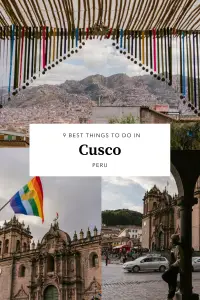
3. Visit Cusco's Main Plaza (Plaza De Armas). It’s the city’s central square, framed by colonial churches, buzzing cafes, and streets that branch off into cobblestone alleys. By day, it’s the perfect place to sit on a bench, sip coca tea, and watch life in the city go by. By night, the whole plaza lights up, with street performers, locals meeting up, and travellers soaking in the atmosphere.
It’s also the best spot to get your bearings. If you’ve just arrived in Cusco, spend some time here adjusting to the altitude and people-watching before diving into the rest of the city.


4. Wander San Blas. Every city has that neighbourhood, and in Cusco, it’s San Blas. Cobblestone streets, tucked-away courtyards, and staircases that lead to the prettiest views. Grab a seat on the little balcony at L’atelier Café (coffee was meh, views are 10/10), or head to the main San Blas square, especially when the pop-up market is on.


5. Eat at Green Point (aka the 12th Best Vegan Restaurant in the World) Green Point is the kind of restaurant you plan your day around. We went there constantly. It’s open all day, has its own brewery/distillery, and offers one of the best menu del día lunches you’ll find anywhere. The food is creative and cozy, and their little bakery window is dangerously good. Even if you’re not vegan, it’s a must.


6. Visit the Markets - San Pedro & San Blas If you want a real taste of local life (and a crash course in the 300+ kinds of potatoes Peru has), check out San Pedro Market for its chaotic beauty and variety, and San Blas Market for a smaller, neighbourhood feel. Bonus: Govinda Lila, Cusco’s first vegan spot, is inside San Blas Market. Their menu del día is cheap, delicious, and filling.

7. Explore the Inca Ruins Around Cusco. The City is surrounded by incredible Inca ruins. Just above town, you’ll find Sacsayhuamán, a massive fortress with giant stone walls that fit together so precisely that it’s still a mystery how they were built. Nearby are Q’enqo, Puka Pukara, and Tambomachay. They are smaller sites, but each with its own story, from ceremonial caves to water temples.
You can reach them by taxi, a short hike from the city, or even on horseback tours if you want a bit more adventure. Tickets are usually included in the Boleto Turístico (Tourist Ticket), which covers multiple archaeological sites around Cusco. If you’ve got a day to spare, this is one of the best ways to understand why Cusco was once the capital of the Inca Empire.
8. Chill at Cabin & Garden. One afternoon while wandering San Blas, we stumbled on Cabin & Garden, a peaceful little outdoor food court with a view. There are mini food stalls, sunny garden seating, and even a resident llama. We ended up returning multiple times. It was a great spot to journal, grab a smoothie, or hang out with a book.

9. Take a Day Trip To Palccoyo Mountain: If Rainbow Mountain sounds a bit too intense, Palccoyo Mountain is its easier (but still stunning) sibling. Instead of one colourful ridge, Palccoyo has a whole range of rainbow-striped peaks, and the best part is the hike is much shorter and less steep, making it way more manageable if you’re worried about altitude.
Most tours leave Cusco early in the morning and include a scenic drive through Andean villages before a short walk (about an hour or less) to the viewpoint. You’ll still be at high altitude, so pace yourself, but it’s far less demanding than Vinicunca. Crowds are usually lighter too, which makes the whole experience feel more relaxed. If you want those iconic rainbow mountain photos without the gruelling climb, Palccoyo is a fantastic alternative.


How Long to Stay in Cusco

You’ll probably want at least 2 weeks total if you’re combining Cusco with the Sacred Valley and Machu Picchu. That could mean a few days before and after a tour or staying for a full month if you fall for the place like we did. It’s one of those cities where you blink and a week’s gone by.
Basic Spanish Phrases for Cusco
Knowing a handful of Spanish phrases will go a long way here. Locals appreciate when you try, even if your accent is rough. Here are some essentials:
| English | Translation | Phonetic |
|---|---|---|
| Hello | Hola | OH-lah |
| Please | Por favor | por fah-VOR |
| Thank you | Gracias | GRAH-see-as |
| Excuse me / Sorry | Perdón | pehr-DOHN |
| Where is...? | ¿Dónde está...? | DOHN-deh es-TAH |
Starting with these will help with ordering food, asking directions, or just making friendly small talk.
A Brief History of Cusco

Cusco was once at the centre of the Inca Empire, the largest empire in pre-Columbian America. Known as the “navel of the world” in Quechua, it was the political, cultural, and spiritual center of Inca civilization. The city’s layout was designed in the shape of a puma, with important temples, plazas, and roads radiating outward.
When the Spanish arrived in the 16th century, they demolished much of the Inca architecture, but instead of clearing the foundations, they built their colonial structures right on top of them. That’s why you’ll still see the famous Inca stonework at the base of many buildings in the historic center.
Cusco has survived earthquakes, invasions, and centuries of change, but it remains one of South America’s most atmospheric cities.
A few fun facts about Cusco
- It’s the oldest continuously inhabited city in South America.
- The walls of the famous 12-Angled Stone are so precisely cut that they don’t need mortar.
- Cusco was once considered the center of the known world by the Incas.
- The city’s name in Quechua, Qosqo, means “navel” or “center.”
Getting Around Cusco
Cusco is compact enough that most of your exploring can be done on foot, but you’ll be walking at altitude, so take it slow, especially uphill.
- Walking. Most of the main attractions and neighbourhoods (like San Blas and the Plaza de Armas) are within a 10 to 20 minute walk of each other. Just be ready for lots of stairs.
- Taxis. Affordable and everywhere, but agree on a price before you get in (most rides within the center cost 5 to 10 soles).
- Collectivos. Shared minivans that locals use to get to nearby towns or markets. Super cheap, but not much English is usually spoken.
- Public Buses. Not always the easiest for tourists, but if you’re adventurous, they connect many parts of the city for a nominal fee.
- Uber. It exists here, but regular taxis tend to be faster to hail in the city center. Uber is easier, though, if you don’t feel like negotiating a price in person.
Dealing with Altitude in Cusco
At 3,400 meters (11,150 feet), Cusco is one of the highest cities most travellers will ever visit. Even if you’re fit, altitude sickness can sneak up on you.
To help ease into the altitude:
- Take it slow the first day. Avoid strenuous activity while your body adjusts.
- Drink plenty of water. Hydration is key. Your body is going to burn through water way quicker than you’re used to when you're up this high.
- Avoid alcohol and heavy meals early on. Drinks will hit quicker, and a feast might leave you nauseous. Ease into both as your body adjusts.
- Consider chewing coca leaves or drinking coca tea, a traditional natural remedy locals swear by to combat altitude effects. You can find both easily in Arequipa’s markets and cafes. Most hostels will also have a steady supply of coca tea available.
- If you’re feeling rough, over-the-counter acetaminophen can help with headaches, but don’t ignore persistent or severe symptoms. Seek medical help if needed.
- Remember, most people acclimate within a day or two and then get to enjoy all the city and nearby landscapes without trouble.
Best Time to Visit Cusco, Peru
- Dry Season (May to September) Best weather for trekking and sightseeing, but also the busiest and priciest.
- Wet Season (November to March) Fewer crowds, greener landscapes, but heavy afternoon rains.
- Shoulder Months (April & October): Sweet spot for decent weather, thinner crowds, and lower prices. The weather can be a bit less predictable in these months, though.
FAQ
What should I know before visiting Cusco, Peru?
What are the top things to do in Cusco?
How long should I stay in Cusco?
What basic Spanish phrases are useful in Cusco?
What’s the history of Cusco?
How do I get around Cusco?
How can I handle altitude in Cusco?
When is the best time to visit Cusco?
Our Trusted Travel Partners
We only recommend products and services we personally use and trust.

SafetyWing
Travel medical insurance for nomads and remote workers
Booking.com
Find the best deals on hotels, apartments, and vacation rentals
AllTrails
Discover hiking trails with detailed maps and reviews
Surfshark
Secure VPN for safe browsing and accessing content worldwide
Get Your Guide
Find the best deals on tours and experiences
Airalo
Prepaid SIM cards for travelers
Trusted Housesitters
Find free accommodation by house and pet sitting worldwide
Wise
Send and receive money internationally with low fees* We may earn a commission when you make a purchase through our affiliate links, at no extra cost to you. We appreciate this support, which helps sustain our blog and allows us to create more content and help more great trips get planned!