
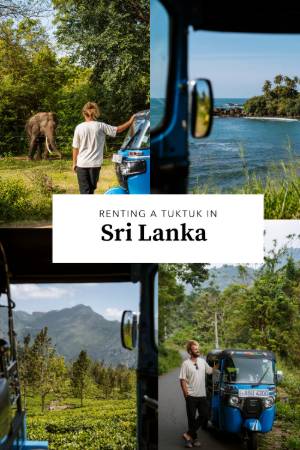
Key Tips

- Risks: Sri Lankan roads are organized chaos. Buses and trucks dominate the traffic flow, tuktuks tip easily, and there’s an unspoken rhythm to the traffic that feels insane until you get used to it. It’s not perfectly safe, but it’s manageable if you drive defensively, take corners slowly, and avoid nighttime driving.
- Costs: Expect to pay $14-22 USD per day for the rental, plus a $150 refundable deposit. Fuel is cheap, roughly $5 USD per 100 km, and insurance is usually included in the rental price. Compared to hiring a driver or relying on private transfers, it’s a bargain.
- Driving Range: Tuktuks don't hold much fuel, but don't use much either. You'll comfortably cover 100 to 120 km per tank, but plan shorter drives; the average speed is 30-50 km/h, and the journey is half the fun.
- Benefits: Freedom and a story to tell back home. You can stop anywhere for photos, explore hidden roads, and move at your own pace. It’s one of the most authentic ways to see Sri Lanka. You’re not just watching the country go by; you’re in it.
- Stay Connected. Pick up an e-SIM before you go to stay online. Google Maps will be vital for you.
- Local Reactions: Locals love it (mostly). You'll get waves, smiles, and curious questions at every stop. Most people appreciate tourists taking the time to explore their country independently. Some local Tuktuk drivers don't love seeing inexperienced foreigners ripping around on the Tuktuks that they've spent years mastering. I understand their point of view, but I don't think it should stop you from taking on this experience. Police checkpoints are also common; just keep your documents handy and be polite. We only met friendly and curious police who want to know where we're from and how we're enjoying Sri Lanka. Our rental company gave us a number to call if a police officer is trying to ask for money (not common, but it does happen).
- Refuelling: Gas stations are easy to find in towns but scarce in remote areas. Always top up when you can. A full tank costs around $5 to 6 USD and gets you 100 to 120 km of range, depending on terrain
- Nighttime Driving: Avoid it. Roads are dark, unmarked, and full of animals, pedestrians, and unlit vehicles. Drunk driving is illegal in Sri Lanka, but is quite common, especially in remote areas. If you must drive at night, go slow and stick to main highways, but ideally, be parked and making dinner plans by sunset.
)
Common Questions About Renting a Tuktuk

- How Much is Fuel? Super cheap. About 5 USD per 100 kilometres. Fuel costs are one of the best parts about driving a tuktuk. You can cover a lot of ground without spending much.
- How Fast Are They? Not very. On the right road, you could probably get up to 70 km/h, but the speed limit countrywide is 40 km/h. Most of the time, you'll be cruising at 30-50 km/h, which is fine because the roads are winding and you'll want to take your time anyway.
- What About the Kandy to Ella Train? This is one of the most scenic train rides in the world, and you don't have to miss it just because you're driving a tuktuk.The company we rented from (Tuktuk Rentals) offers a service where they send you a driver who will take your tuktuk from Kandy to Ella while you ride the train. You meet them in the morning, hand over your tuktuk, hop on the train, and when you get off in Ella, your tuktuk is waiting for you at your hostel. It's a brilliant solution, and it means you get both the freedom of the tuktuk and the experience of the train.
What It's Like Driving a Tuktuk in Sri Lanka


Driving a tuktuk is a mix of scooter mechanics and car control, but it feels like neither. Your right hand handles the throttle, your left manages the clutch and gears. You pull a lever for the clutch, twist to shift, and use a foot pedal for the brake. It's awkward at first, especially if you've never driven a manual transmission. But give it an hour or two, and it clicks. You sit in the center, open to the air, surrounded by the sound of engines, horns, and jungle. It is raw and immersive, nothing between you and the road. It is chaotic, but doable.
Don't let all this scare you. We drove nearly 1,000 kilometres without a scratch (and I wouldn't even call myself a good driver). Everyone we met who rented one had the same experience. A few small breakdowns that are quick and cheap fixes at local mechanic shops, but major accidents are rare.
Here is how to make it safer and smoother: Start slow. Practice in quiet areas before hitting city traffic. Avoid driving at night. Roads are dark, drunk driving is common, and visibility is terrible. Watch for buses and trucks. Give them space because they won't give you any. Take corners carefully. Slow down more than you think you need to. Stay defensive, assume no one sees you, and always expect the unexpected. Also, don't try to match the locals' speed; they've been driving like this for decades.
If you're used to riding scooters or driving manual cars, you'll adapt fast. If not, it's a big learning curve but a manageable one. The payoff is worth it: open roads, endless viewpoints, and the kind of freedom you can't buy with a driver or a tour.

How to Rent a Tuktuk in Sri Lanka

Renting a tuktuk in Sri Lanka is surprisingly easy. There are a handful of local companies that specialize in renting to foreigners, and most handle everything from paperwork to licensing to insurance. The process feels intimidating at first, but it's actually smooth, organized, and tailored for travellers.
Where to Rent a Tuktuk


The most popular and reputable option is Tuktuk Rental.com (tuktukrental.com). This is not a sponsored post, but they are the company we went with, and we have nothing but great things to say. They're well-known among travellers and have hundreds of solid reviews. The booking process is simple: you fill out a form online, upload your license documents, pay the deposit, and they'll either deliver the tuktuk to your hotel or have it ready for pickup at one of their locations.
Other local companies exist, but few match their reliability or quality of service. If you go with a smaller company, double-check the reviews and confirm they help with the proper driving permit (some don't).
With Tuktuk Rental.com, you can pick up or drop off in multiple cities, usually Colombo, Negombo, Kandy, or Ella, and they allow flexible routes, meaning you don't have to return the tuktuk to where you started. Although we ran into a lot of fellow renters on our trip, and nearly all of us were starting and ending in Colombo, so we could fly in, pick up the tuktuk, drop it off, the fly off again.
The Rental Process


Here's what the process typically looks like: Book online at least a week or two in advance, especially during high season (December, April and July September). Submit your driver's license and passport so they can process your Sri Lankan recognition permit (more on that below). Pay the deposit of $150 USD, refundable when you return the tuktuk in good condition.
If you're like me, you might tense up when hearing 'good condition', 'book online', or 'deposit'. Does that mean they are going to look at every little scuff or try to charge me for existing issues? No. At least not with tuktukrental.com. They are only going to charge you for major damages (and only a fair price).
We had some delays with our license (we weren't sure we'd been issued one yet, as we boarded our flight), and we had some trouble getting in touch with the company. They weren't answering our emails right away, and we couldn't get through on the phone. Once we saw their operation in person, we understood why. They have a massive fleet and are so busy.
It's stressful planning to fly into a country and not really knowing for sure that your tuktuk and your license will be ready. But the staff (and Sri Lankans in general) have a 'we will make it work' attitude, and they've got you covered. Even if they don't get back to you right away, they will make sure you get your tuktuk and have a great time. It's their confidence that they will make it work (and they always do) that might lead to them not responding to everything urgently or seeming nonchalant in what you think is an emergency.
We were lucky on our trip and didn't have so much as a flat tire. But we talked with lots of other renters on the road and quite a few people who had complex breakdowns or other trip interruptions all said they had great support from tuktuk rental.com. They will always talk you through it or call someone more local to come and support. In Sri Lanka, you're never alone, and someone or their cousin will come out of nowhere to lend a hand.
Once everything is processed and you've made it to Sri Lanka, there is one more step before hitting the road: driving lessons. These are informal lessons but crucial. One of their local experts will take you out on a Tuktuk and demonstrate how it works as they rip around the busy city streets. After, they will take you to a quiet area, and then it's your turn. Expect to stall a few times and to get some feedback from the instructor.
Once you have the basics down, they will take you to a training course area where you will practise reversing and starting/stopping the Tuktuk properly, as well as what to do when you accidentally stop in gear. If you pick it up quickly, the lesson is only about 30 minutes. But if you need a bit more help, they can drag on longer.
It's important to come out of the lesson with some confidence because the first part of your journey will be getting out of the city, which is some of the most challenging driving of the whole trip.
After you ace your lesson, they will take you back to pick up your tuktuk. Make sure to inspect everything before signing off. Take photos of any scratches or dents. Check your documents, registration, insurance, and permit and keep them easily accessible for police checks.
It is busy every day in peak season, but the staff are awesome and there is organization in the chaos, just like the traffic you're about to battle.
Extra Tip: Pay the extra for a speaker. It's not much, but blasting your playlist while weaving through the jungle roads is well worth it.
License Requirements


To legally drive a tuktuk in Sri Lanka, you need:
- Your home country driver's license
- An International Driving Permit (IDP)
- A Sri Lankan recognition permit (issued by the Department of Motor Traffic)
If you rent through Tuktuk Rental, they'll handle this last step for you as part of what you're paying for. They'll submit your documents and have the permit ready when you arrive. This is really useful because it can take a while for those documents to be processed, and doing it through the company ensures everything is ready before you even get to the country. For most travellers, letting the company handle it is worth the small service fee.
Insurance and Coverage

Most rental companies include basic third-party insurance, which covers damage to other vehicles or property, not your tuktuk. For full peace of mind, pay extra for comprehensive coverage, which usually costs around $5 to 7 USD per day. Ask specifically what's included.
Common exclusions are:
- Flat tires (you'll change these yourself)
- Lost keys
- Damage caused by reckless driving
- Water damage from flooding (yes, it happens)
- Always double-check that your personal travel insurance allows self-driven vehicle rentals. Not all policies do.
Deposits and Payment

Most companies accept credit card or cash deposits, refunded when you return the tuktuk in the same condition. Inspections are usually quick and fair. A few small scratches or scuffs aren't an issue, but broken mirrors or deep dents might cost extra. Always take photos or videos during pickup. It protects you from disputes later. Most disputes are not the company trying to take advantage of you. They have a massive fleet of tuktuks, so the person doing the inspection is not able to just take your word on existing damages. Having photo evidence makes it easier for everyone.
Where to Stay (Before It’s Fully Booked)
Pickup and Drop-Off Options

If you're flying into Colombo or Negombo, pickup is easy. Many travellers start there and drive their way around the island. If you're finishing your route in another city (like Ella or Galle), most companies offer one-way drop-offs for a small fee. You can even use their driver transfer service for the Kandy Ella route: they'll send someone to drive your tuktuk while you take the scenic train ride, then meet you on the other side. It's a perfect way to experience both.
What to Check Before You Drive Off

Before you hit the road, double-check:
- Brakes, clutch, and horn (you'll use the horn a lot).
- Headlights and indicators
- Fuel gauge accuracy
- Tire pressure and spare tire
- That all documents are inside the glovebox
Take 15 minutes to get familiar with the gear system and steering. Don't rush this; slowing down those first few minutes behind the wheel will make your whole trip smoother.

How Much Does It Cost to Rent a Tuktuk in Sri Lanka?

Renting a tuktuk in Sri Lanka is surprisingly affordable (for how cool it is), especially compared to car rentals or hiring a private driver. You're basically paying for freedom and the ability to stop anywhere, explore backroads, and travel at your own pace.
Average Daily Rates


Expect to pay between $14 to 22 USD per day, depending on the company, the length of your rental, and the season. It's a big range because longer rentals generally get better rates, and prices drop a lot in shoulder season. For a short (1 week rental) in peak season, expect to pay closer to the $22 USD per day cap.
These rates usually include:
- Basic third-party insurance
- Unlimited kilometres
- A spare tire, tools, and emergency roadside support
- Help with your Sri Lankan driving permit
- You'll pay more if you add comprehensive insurance or optional extras (like a roof rack, phone holder, or surfboard mount).
- A bluetooth speaker is about $1 a day extra and worth its weight in gold on a long drive.
Fuel Costs

Fuel in Sri Lanka is relatively cheap. As of late 2025, petrol costs around 420 to 460 LKR per litre (~$1.25 to 1.40 USD). A tuktuk gets roughly 25 to 30 km per litre, meaning you'll spend $8 to 10 USD per 200 km, pretty great for a full day of exploring. You'll fill up at standard petrol stations (there are plenty, even in rural areas). Always ask for Petrol 92, that's the grade used for tuktuks (but everyone in Sri Lanka knows that).
Other Potential Costs

- Tuktuk license $30 to $40 USD. You need this to legally drive a tuktuk in Sri Lanka. The rental company will charge for this, but handle it all for you. This is not a scam. This is a helpful service that is a pain in the butt to handle on your own.
- Comprehensive Insurance $5 to 7 USD/day. Not required, but optional for peace of mind. We didn't get this, and we were fine, but it's up to you. Keep in mind that a common cause of damage is monkeys and elephants, so make sure you know what is included in the comprehensive package.
- Delivery or Drop-Off Fee $20 to 50 USD. Only applies to one-way rentals. There is a similar fee if you have someone take your tuktuk for you while you ride the Kandy to Ella train.
- SIM Card / Navigation Data $5 to 10 USD. Optional but helpful for Google Maps.
- Parking $0.50 1/day. Rarely charged outside big cities. We never paid any parking fees during our trip.
- There are no highway tolls for tuktuks
Total Trip Estimate


For a two-week tuktuk trip, here's what most travellers spend:
- Rental: $250 to 300
- Fuel: $60 to 80
- Insurance & fees: $50 to 70
- Drop-Off or Transfer Fees $20 to 70
It will be around $400 to 500 USD for two weeks. Without a tuktuk you will still spend a bit on buses, taxis, and hiring local tuktuks to get you around. We also found that having the tuktuk let us save quite a bit on food as we were able to find more local restaurants and avoid some of the tourist-priced food in the busy areas. You could ride the buses and budget backpack your way cheaper than this for sure, but the freedom to experience everything that exists between the major tourist destinations, and the unique experience this provides, is well worth the slight hit to the budget.
Fuel, Range, and Refueling Tips

Here's the basics:
- Roughly 100 km between fueling stops.
- $5 to 7 USD to fill up the tank.
- Some stations are cash only.
- Some stretches of highway have huge distances between stations (within your range, but you will need to plan carefully)
- Most tuktuks have a backup tank that gives you around an extra 20 km range for emergencies.
Tuktuks are small and efficient, but they don't hold much fuel. They are mostly used to take passengers small distances inside cities, but you will probably be going between cities and spending some time on the highway, so it's important to plan fuel stops carefully when doing big drives through rural areas.
You will need to fill up with Petrol 92. This is usually clearly labelled, but you won't need that anyway. All the stations we visited had attendants who would handle it all for you and would know what fuel to use.
You don't need to tip every time you fill up, but if you have some small bills, the attendants appreciate it. Most stops, we were only getting the equivalent of $5 USD of fuel and tipping 50 cents to a dollar if we had change. Most stations can accept card payments, but the systems can be down, and some stations are strictly cash only.
If you don't plan carefully and you get stuck with an empty tank between stations, most tutuks have a backup reserve of fuel. It's not much, but it will give you an extra 20 to 25 km in a pinch. The rental company will explain how it works during your lesson.
Final Thoughts

Renting a tuktuk in Sri Lanka isn't the safest option, and it's not the easiest. But it's one of the most rewarding ways to see the country. The freedom, the spontaneity, and the sense of adventure made our trip unforgettable. If you're up for it, do it. Just watch out for the buses.
FAQ
Is it safe to rent a tuktuk in Sri Lanka?
Do I need special licenses or permits?
How much does it cost to rent a tuktuk?
How far can I drive on one tank?
How fast do tuktuks go?
Can I still do the Kandy to Ella train ride if I rent a tuktuk?
Is driving a tuktuk difficult?
Should I avoid driving at night?
What's included in the rental price?
Where can I pick up and drop off the tuktuk?
What should I check before driving off?
Will locals be friendly about tourists driving tuktuks?
What if my tuktuk breaks down?
Can I use my regular travel insurance?
Is it worth it?
Our Trusted Travel Partners
We only recommend products and services we personally use and trust.

SafetyWing
Travel medical insurance for nomads and remote workers
Booking.com
Find the best deals on hotels, apartments, and vacation rentals
AllTrails
Discover hiking trails with detailed maps and reviews
Surfshark
Secure VPN for safe browsing and accessing content worldwide
Get Your Guide
Find the best deals on tours and experiences
Airalo
Prepaid SIM cards for travelers
Trusted Housesitters
Find free accommodation by house and pet sitting worldwide
Wise
Send and receive money internationally with low fees* We may earn a commission when you make a purchase through our affiliate links, at no extra cost to you. We appreciate this support, which helps sustain our blog and allows us to create more content and help more great trips get planned!