
Key Tips

- Zodiac boat tours to Princess Louisa Inlet are a highlight. On clear days, you will see more peaks, and on foggy or rainy days, you might see hundreds of narrow waterfalls form over the granite cliffs.
- Make sure to check out the Skookumchuck Narrows Rapids. They are one of the fastest tidal changes on the planet, and during a big flow, it creates massive standing waves that expert kayakers come to ride. Tide flows are not always noticeable and don't have a full peak every day.
- Bring everything you need. The general store is small and carries basics only. Pack food, water, and any gear for hikes or paddling.
- Check the tides. Tides don't matter so much for the Princess Louisa Inlet tour, but are important to keep in mind for the rapids. These tide tables are your best bet for planning. They show you the peak times each day, if the tide is ebbing or flowing, and the expected magnitude (small, medium, large, extra large). Try to time it with at least a large.
- Respect local privacy. Many of the waterfront homes are private, and the trails pass close to them, so stick to the trails and public beaches.
- Prepare for hills. Egmont is tucked into the forested coast backed by mountains, so walking and cycling involve some uphill.
- A day trip is possible, but you might want to stay a night to better align with the rapid tide times. The West Coast Wilderness Lodge's suites or camping just outside of town is your best bet.
Where to Stay (Before It’s Fully Booked)
)
Top Things to Do in Egmont
1. Visit Princess Louisa Inlet


Princess Louisa Inlet is one of the most spectacular fjords in BC and an easy day trip away from Egmont. The inlet is only accessible by boat, so plan ahead:
- Guided Tour: You can book a tour with the Egmont Adventure Centre and rip over to the inlet on a zodiac boat (about 4 hours round-trip). We went with about 8 other people; it was a beautiful and comfortable ride. Our captain was awesome and made lots of stops to show us some of the hidden pictographs. They were amazing and are minuscule compared to the scale of the cliffs, so they would be nearly impossible to spot on your own.
- By Private Boat: If you have a boat, the trip through the Sechelt Inlet and Jervis Inlet is breathtaking. Watch for seals, eagles, and the waterfalls cascading down the cliffs. Also, keep an eye out for red markings on the cliff sides; there is a collection of First Nations pictographs all along the waterway.
- Kayak or Paddleboard: For the adventurous and experienced only. There is generally calm-ish water in the inlets, so you can paddle all the way to the mouth of the inlet, but it's a multi-day journey. It's best done with prior experience or as part of a guided tour.

The trip to and from the inlet showcased some of the most pristine, classic BC wilderness we've encountered, and the inlet itself was truly awe-inspiring.
We visited at the end of summer, enjoying a bright, sunny day. Having the sun on our faces while speeding across the water was incredible, and the clear views of the surrounding peaks were breathtaking. However, all that sunshine meant the iconic waterfalls were dried up.
Chatterbox Falls, the main waterfall at the end of the inlet (pictured above), flows steadily year-round, but during dry months, the hundreds of small waterfalls that form along the granite cliffs are nowhere to be seen. We're already planning to return in spring to see it in a completely different light.

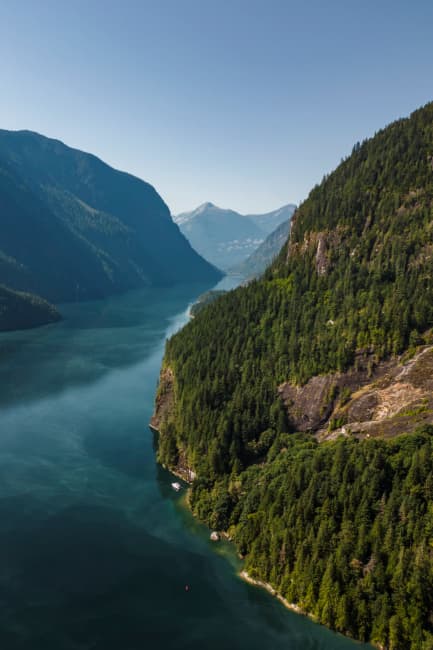
You enter the inlet surrounded on all sides by sheer towering granite cliffs. The cliffs look smooth and bare, stretching up to the sky. Defiant tufts of green dot the dark surface where some small groups of trees have managed to strike out, growing from even the smallest outcroppings. On a calm day, you can see the cliffs extend down into the water, and from the boat, it's easy to realize that these are just the tips of much larger mountains that were submerged millions of years ago.
It's often compared to Norway's Fjords or Milford Sounds (especially when wetter weather awakens the hundreds of miniature waterfalls). The tour will stop off at a dock near the provincial park. There are washrooms and a short trail to a waterfall. There are a lot more intense trails here, too, but that is a whole other type 2 kind of fun day. You can actually hike from this provincial park to Whistler. It will take you a few days and cut straight through grizzly country, but there are technically trails that will connect you.
Once inside the inlet, you'll see towering cliffs, waterfalls, and the famous Chatterbox Falls. There are mooring buoys for day stops and a few designated camping spots for overnight visitors. Always check tide and weather conditions before heading out.
Fun fact: while on the Jervis Inlet, you will pass over some of the deepest water in North America, where the Canadian military tests new submarine technology. (According to our captain).
2. Check Out The Skookumchuck Rapids


This is some of the fastest-flowing tidal water on the planet. To get here, it's a short to medium-length flat hike through a stunning forest area with peekaboo views of a few different lakes and the large inlet. The trailhead is near the town, and camping at Strongwater the night before is convenient if you want an early start. The trail will take about an hour each way, and there is a lot of free parking right next to the trailhead.
The inlet is lined by trees on all sides, and in the morning, a golden mist hangs in the middle of the water. There are 2 viewpoints where the trees give way to a clear view of the rapids.
- North Point: This is a higher-up and fenced-off viewpoint that is safer in bad weather.
- Roland Point: This point is just a bit further down the trail than North Point and goes right down to the water. Don't forget to look in the calmer eddies for starfish.
Make sure to check the tide times before you go. This schedule is your best bet for planning.
It shows the peak times as well as the flow direction and the expected magnitude (small, medium, large, extra large). Try and go for at least a large one if you can. There is a 20 to 40-minute build-up and cool-down period on either side of the peak times
On a large or extra large in the summer, you will probably see some expert kayakers and/or white water surfers. But even if you're not into extreme water sports, the rapids are worth a visit.
We hiked in for a 'large' at around 9 AM. We started the hike early, around 7:30, and the timing worked out great. The hike is a really chill and mostly flat walk through the woods. The path is wide most of the way, so we could walk side by side and chat, and we arrived around 8:30.
The timing was perfect. We had a few minutes to scout out both viewpoints, and by 8:40, we had picked out our preferred spot, and the rapids started to get more intense. From 8:40 to 9, the rapids built steadily and then the peak intensity lasted around 10 minutes, then it slowly calmed down. It was still going strong until almost 9:30.
Getting there ahead of the peak time was great. It gave us time to take the trail at a leisurely pace, check out both viewpoints and decide where we wanted to be for the show, and then we got to see the rapids grow to their full intensity. The rapid times change with the tides, so make sure to check the times before you go. It's not always 9 AM. But it has a similar build-up and cool-down period, so plan for around 20-30 minutes on either end of the listed peak time.
3. Rent a Paddle or Kayak


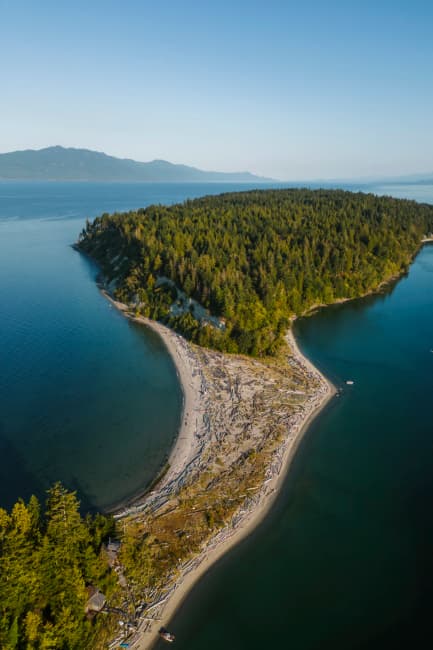
The waters around Egmont are calm and dotted with small islands. Paddle along the shore, explore hidden coves, or take a quick trip out to nearby Snake Island. Rentals are available from the Egmont Adventure Centre if you don't bring your own.
You could paddle for days around here if you wanted to, but even just a few hours is a great way to get out on the water. You can circle the little islands dotted along the inlet or just cruise out to get a better view of the mountains that line the waterfront. Wildlife spotting is also almost guaranteed. You will see lots of seals and maybe even orcas or dolphins if you're lucky.
If you feel like something a bit more fast-paced, the adventure centre rents out jet-skis too. We've only gotten out on the water here as a part of the inlet tour, and it was beautiful, but that zodiac flies over the water so fast that on our next trip, were hopping to also get out on a kayak and take it all in at a bit of a slower pace.
4. Explore Egmont Harbour

Start at the harbour where a small collection of fishing boats and kayaks bob gently in the inlet. You can take in the views of the Sunshine Coast, the nearby islands, and the occasional seal or heron.
Next, you can check out the local thrift store if it's open or head over to the pub. The pub is actually a bit further away from the main harbour, but if you're driving, it's worth a stop for a pint or a burger at their waterfront picnic tables.
There are a lot of small towns along the Sunshine Coast, but this one is especially small, so this won't take you long to explore. We had our cup filled with a 20-minute wander while digesting our visit to the pub.
5. Swim or Canoe on Waugh Lake


Waugh Lake is a classic Canadian lake landscape: calm water, thick forested shoreline, and mountains peeking up in the background. The lake has a couple of old floating docks where you can lounge, sunbathe, or jump into the refreshing water. There are a few famous logs that are sticking out of the water, tempting kids and adults alike to climb up on them. They've actually been floating in this lake since before Egmont was a town.
There are also 2 canoes tied up here. They belong to the nearby campsite. If you're a guest, you're welcome to take them. And if you're not, you can just ask nicely, and they will probably say yes. Paddling across the glassy surface of the lake at golden hour is about as peaceful as it gets.
We spent our afternoon here on our last day in Egmont, and it was an amazing end to a great visit. We actually hit the road a bit later than we wanted to because we couldn't resist one last dip. We were visiting at the end of the summer, so the lake had the whole season to warm up, and it was pool temperatures, so you could actually stick around in the water for a while and get a bit of a swim in.
6. Grab a Coffee or Baked Good From Skookumchuck Bakery & Cafe

We didn't get the chance to stop in. Sadly, it was closed when we passed through, but locals rave about this place. The Skookumchuck Bakery & Café is tucked just off the main road near the trailhead to the rapids, and it smells amazing when it's open. Fresh sourdough, gooey cinnamon buns, and strong coffee are the big draws, especially before or after hiking to the rapids. If you're planning a visit, double-check the hours. They are open 9 to 4 Thursday through Sunday. Timing the bakery and the rapids feels like solving a riddle, but it's well worth it if you can get the timing right.
7. Visit the Backeddy Pub


The Backeddy Pub is Egmont's go-to spot for a pint with a view. It sits right on the water overlooking Jervis Inlet, where boats drift past, and curious seals peek at the patrons. The menu is casual: burgers, seafood, and local beer on tap. It's classic pub food done right, and they also offer multiple vegan options. The vibe is great with hikers, sailors, and locals all sharing the space. They have a big wrap-around patio as well as some picnic tables set up on the grass.
We stopped by after our zodiac tour, and we were basically guerilla marketing the patio to take the tour because we spent the whole time reminiscing about how epic it was.
8. Peruse the Thrift Store
We didn't make it there ourselves, but the woman who ran our campsite couldn't stop talking about it. Apparently, the Egmont thrift store is a point of local pride, packed with quirky finds, old books, and properly unique vintage clothes. It's run by friendly volunteers and doubles as a bit of a community hub. If you've got time before heading to the rapids or ferry, pop in for a quick browse.
Where to Stay
- The West Coast Wilderness Lodge: This is the accommodation connected to the Adventure Centre. It has an iconic waterfront lodge and has also recently finished construction of a collection of self-contained suites that look out to the inlet. Great pick if you will be here for a few nights and would rather be able to cook for yourself.
- Camping: The most convenient place for viewing the rapids is Strongwater Campground. A cheaper option would be the Klein Lake Rec Site, but those spots fill up early in the day.
- Sechelt or Halfmoon Bay: If you want more options or amenities, these towns are a short drive away. You can browse all of the main hotels here.
How to Get to Egmont

Egmont is just off Highway 101 near where it ends at Earls Cove. Turn toward Egmont via regional roads; the final stretch winds through forested hills and small communities.
If you need to rent a car, it's best to pick one up in the city and take it over on the ferry. You can compare all the major brands in Vancouver and their rates here.
When to Visit

Summer is ideal for calm waters, paddling, and trail hiking. Spring and fall are quieter, with fewer visitors and stunning forest colours. The waterfalls in Princess Louisa are strongest in wet spring weather. Winter brings storms and rough seas. Beautiful, but not ideal for casual trips.
Where to Go After Egmont

In a way, Egmont is the end of the road, and it's a great way to end your Sunshine Coast road trip on a high. But if you're curious to follow the 101 to its true ending point, you can continue via ferry from Earls Cove to Saltery Bay. From there, you will pass Powell River on your way to Lund, where the road actually ends (although there is a ferry from Lund to Savary Island….)
Final Thoughts

Egmont is BC epitomized. Nice, comfortable, but the real selling point is the surrounding wilderness. The waterways, the forests, the trails, and the peaks are all iconic BC landscapes and easily the most untouched places you can get to within 6 hours of the city. No cottages dotting the coast, no big wooden docks, just trees and cliffs and more trees. It's an amazing grand finale to this little and often forgotten stretch of Canadian coastline.
FAQ
What is Egmont?
What are the top things to do in Egmont?
How do I visit Princess Louisa Inlet?
What should I know about the Skookumchuck Rapids?
Are there places to rent kayaks or paddleboards?
Where can I swim or canoe near Egmont?
Where can I eat or get supplies in Egmont?
Where should I stay in Egmont?
When is the best time to visit Egmont?
How do I get to Egmont?
Where to go after Egmont?
Our Trusted Travel Partners
We only recommend products and services we personally use and trust.

SafetyWing
Travel medical insurance for nomads and remote workers
Booking.com
Find the best deals on hotels, apartments, and vacation rentals
AllTrails
Discover hiking trails with detailed maps and reviews
Surfshark
Secure VPN for safe browsing and accessing content worldwide
Get Your Guide
Find the best deals on tours and experiences
Airalo
Prepaid SIM cards for travelers
Trusted Housesitters
Find free accommodation by house and pet sitting worldwide
Wise
Send and receive money internationally with low fees* We may earn a commission when you make a purchase through our affiliate links, at no extra cost to you. We appreciate this support, which helps sustain our blog and allows us to create more content and help more great trips get planned!