
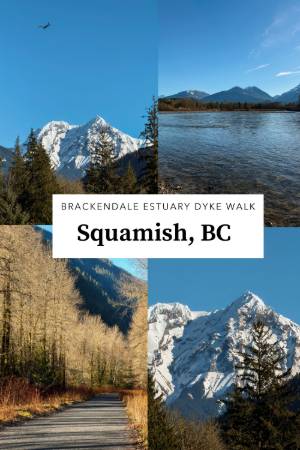
The Brackendale section of the estuary is quieter and more remote than the Downtown Loop. You'll walk along dykes with views across the marshes and river channels. This is prime eagle territory in winter, and the beaches at Fisherman's Park are a nice bonus stop along the way.
Key Tips for Brackendale Estuary Dyke Walk


- Longer and quieter: This is a more extended walk than the Downtown Estuary Loop, taking 1.5 to 2 hours depending on your route.
- Connects to Eagle Run Path: You can walk from Brackendale south to Eagle Run Path, making this a point-to-point or out-and-back route.
- Fisherman's Park: The trail passes sandy beaches at Fisherman's Park, a great spot for a break or picnic.
- Prime eagle territory: Winter is peak season for Bald eagles in Brackendale. Thousands gather here annually during the salmon run.
- Muddy sections: The trail can be muddy after rain or during winter. Wear waterproof boots.
- Dogs allowed on leash: Dogs are permitted on the trail but must be leashed to protect wildlife.
- Remote feel: This section of the estuary feels more isolated than the Downtown Loop, even though you're still close to town.
- Transit access: Take the #1 bus north to Brackendale (end of Depot Street) to start the walk.
- Combine with other trails: You can start in Brackendale, walk to Eagle Run Path, then continue to the Downtown Estuary Loop for a full-day estuary adventure.
- Bring binoculars: The estuary is one of the best birdwatching spots in BC, with over 200 species passing through.
Trail Map
Where to Stay (Before It’s Fully Booked)
Walking the Brackendale Estuary Dyke
| Distance | Elevation | Time | Type | Difficulty |
|---|---|---|---|---|
| 4.3 km | 12 m | 1 h | out and back | easy |
Getting to the Trailhead

By Transit: Take the #1 bus further north to Brackendale (to the end of Depot Street) and start heading down the Estuary trail from there.
By Car: Drive to Brackendale and park near the end of Depot Street. There's limited street parking, so arrive early on weekends.
Trail Overview


This is basically just a more complicated way to get to Eagle Run Path. You can start in Brackendale and walk south through the estuary, passing the sandy beaches at Fisherman's Park, through sandy woods, and eventually spitting you out right onto Eagle Run Path. This is perfect if you're keen for a longer walk or really want to earn your pint and truffle fries.
The trail follows dykes along the estuary with views across the marshes and river channels. The path is flat and easy, but the distance and remoteness make it more of a commitment than the shorter estuary walks.
Fisherman's Park is a highlight along the way. The sandy beaches here are a great spot to stop, relax, and watch the river. In summer, it's a popular swimming and picnic area. In winter, it's quieter but still beautiful.
The Brackendale section of the estuary is quieter and more remote than the Downtown Loop. You'll walk along dykes with views across the marshes and river channels. This is prime eagle territory in winter, and the beaches at Fisherman's Park are a nice bonus stop along the way.
Bald eagles are common year-round, but winter is when this area truly shines. Thousands of eagles gather in Brackendale for the annual salmon run, making it one of the best eagle-watching destinations in the world. The Brackendale Eagle Festival in January celebrates this migration with guided walks and community events.
Why Walk the Brackendale Estuary Dyke

The Squamish Estuary isn't a hike in the traditional sense. There's no summit, no alpine lakes, and no gruelling elevation gain. These are easy, accessible walks that let you experience Squamish's natural beauty without committing to a full-day adventure.
The estuary is one of the best birdwatching spots in BC. Over 200 species pass through here, including thousands of Bald eagles during winter. The views of the Chief and the Tantalus Range are stunning, and the proximity to downtown makes it easy to combine a walk with coffee or a meal afterward.
If you're visiting Squamish without a car, these trails are perfect. If you're a local looking for a quick after-work walk, they're equally great. And if you're travelling with kids, older family members, or anyone who isn't up for a steep hike, the estuary walks are some of the best flat trails in the Sea-to-Sky corridor.
The Brackendale Dyke Walk is perfect for anyone who wants a longer, quieter estuary experience. It feels more remote and wild than the Downtown Loop, even though you're still within minutes of town. The connection to Eagle Run Path and The Watershed Pub at the end makes it a full afternoon outing.
What to Do at the Squamish Estuary

Bring binoculars and spend time birdwatching. The estuary is a migration hub, so you'll see different species depending on the season. Winter is peak eagle season, while spring and fall bring migratory waterfowl.
Stop at Fisherman's Park. The sandy beaches here are a great spot to rest, have a picnic, or swim in summer.
If you're walking to Eagle Run Path, stop at The Watershed Pub at the end for food and drinks. It's a local favourite with a laid-back vibe and solid pub fare.
Pack a camera. The views of the Chief and Shannon Falls from the estuary are some of the best in Squamish, especially in afternoon light.
Combine multiple trails for a longer walk. You can start in Brackendale, walk to Eagle Run Path, then continue to the Downtown Estuary Loop for a full afternoon outing.
When to Visit the Squamish Estuary
- Spring (April to June): Migratory birds return, and wildflowers bloom in the wetlands. Trails can be muddy from rain.
- Summer (July to September): Best weather and longest days. Trails are dry and easy to walk. Sunset walks are incredible. Fisherman's Park is great for swimming.
- Fall (October to November): Cooler temperatures and fall colours. Migratory birds pass through again. Less crowded than in the summer.
- Winter (December to March): Peak eagle season, especially in Brackendale. The Brackendale Eagle Festival in January is a highlight. Trails can be muddy or icy. Dress warmly and wear waterproof boots.
FAQ
How long is the Brackendale Estuary Dyke Walk?
Is the Brackendale Estuary Dyke Walk suitable for beginners?
Are dogs allowed on the Brackendale Estuary Dyke Walk?
How do I get to the Brackendale Estuary Dyke Walk?
When is the best time to walk the Brackendale Estuary Dyke?
Can I see eagles on the Brackendale Estuary Dyke Walk?
What is Fisherman's Park?
Does the Brackendale Dyke Walk connect to other trails?
Is the trail muddy?
What should I bring for the Brackendale Estuary Dyke Walk?
Can I swim at Fisherman's Park?
Is the Brackendale Estuary Dyke Walk good for birdwatching?
Our Trusted Travel Partners
We only recommend products and services we personally use and trust.

SafetyWing
Travel medical insurance for nomads and remote workers
Booking.com
Find the best deals on hotels, apartments, and vacation rentals
AllTrails
Discover hiking trails with detailed maps and reviews
Surfshark
Secure VPN for safe browsing and accessing content worldwide
Get Your Guide
Find the best deals on tours and experiences
Airalo
Prepaid SIM cards for travelers
Trusted Housesitters
Find free accommodation by house and pet sitting worldwide
Wise
Send and receive money internationally with low fees* We may earn a commission when you make a purchase through our affiliate links, at no extra cost to you. We appreciate this support, which helps sustain our blog and allows us to create more content and help more great trips get planned!