
The Campgrounds: Where to Actually Stay

There are a few options on the island. Here is a brief summary before we get into the details.
My top pick is Ruckle Provincial Park. This is one of my favourite campsites in the province. It's epic.
A solid option that is closer to town and has a few more comfortable amenities is Mowhinna Creek campground. It wins big points for being walking distance to Ganges and for coin-operated showers, but it doesn't have the same wow factor as Ruckle.
A third option you can consider is Garden Faire. It's also near the main town, but I haven't been here myself and the reviews online are hit and miss. Some people had negative interactions with the owner, some were disappointed by the level of upkeep, but some also seemed to have had a great time. For me, this one looks too risky for a camping trip that could turn into a nightmare quickly, but it could be worth further research.
Complete Camping Gear Guide: What You Actually Need & What You Can Skip
Click here for our comprehensive guide!Ruckle Provincial Park
This is my favourite spot and the one I highly recommend. The provincial park itself has over 240 hectares of parkland on the southeast corner of the island with walk-in campsites right on the water. Ruckle is what most people picture when they think of "Gulf Islands camping."
The Setup: 78 sites scattered through coastal forest and oceanfront meadows. You park in a central lot and walk anywhere from 50 meters to 500 meters to your site with your gear. Some sites are tucked in the trees, others are literally on the rocky shoreline.
Note: There are massive wheelbarrows by the parking lot that you can load your gear into to wheel down to the campsite. This makes it way easier, especially for the sites that are quite far down the coast. Just remember to bring back the wheelbarrow because there are only 5 or 6 of them and they are shared between 78 sites.
Why It's Great: This is peak BC parks camping. The facilities are basic but well-maintained. You have fresh drinking water and drop toilets throughout the camp. The sites themselves are scattered across a stunning stretch of coastline on the south of the island. Every site has a picnic table, and they all have their unique advantages. There really are no bad spots, but they all are a little different.

There are some tucked into the trees that have wooden platforms. These are ideal if you need to be totally flat to get a good sleep.
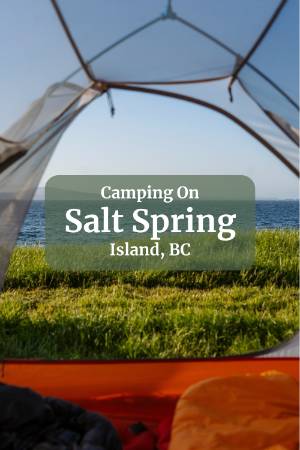
There are others closer to the water. These are my personal favourites, because I can sleep standing on my head, and one of my favourite feelings in the world is opening up my tent in the morning and taking in the views before I even climb out of my sleeping bag. The downside for these spots are there are no wooden platforms, so you will need to find the flattest possible spot for your tent (and sometimes that's not so flat). Also, the waves crashing all night can be relaxing for some or can be disruptive for light sleepers.
There are more spots further down the coast as well, both along the water and tucked into the treeline. If you want to hang around camp a lot and value privacy, the longer walk from the car will buy you a less crowded experience.
There are also 8 RV/car access spots (these are spots where you can park right at the site). But they are just along the dirt road that leads to the main campsite parking. They are quite a bit less epic, but they are practical if you have a campervan.
The Reality Check: No showers, no hookups, and no flushing toilets. This is classic BC camping without any of the frills. If you want to try out camping but this sounds too rough, you might consider one of the privately operated campsites on the island (more about those later).
Reservations: The campsite operates from March 13 to October 31, and the reservation system is only in effect from May 8 to Sept 6. Outside of those dates, everything is operated on a first-come, first-served basis. All 8 RV sites are reservable, but only 4 of the tent camping sites can be reserved. This means 74 of the walk-in sites are first-come, first-served all year. The way the system works is you just head in and set up your tent next to one of the picnic tables (they all have numbers on them). Once you're set up, you've laid your claim, and that spot is yours for up to 2 weeks. The park rangers will come by at some point and register you and collect the camping fee ($20 per party per night).
Private Options
If you love the idea of camping on Salt Spring but want a few more comforts than a provincial park can offer, there are a few privately operated campgrounds on the island you could consider. They are generally more centrally located and come with a few more comforts like flushing toilets and coin-operated showers.
Mowhinna Creek campground is a solid option if you want to be more centrally located. Located just 1km south of Ganges, it gives you easy access to grocery stores, restaurants, galleries, breweries, and basically everything else you might want over a weekend without sacrificing that classic forested camping feel.
The Setup: The campground is tucked into the woods with a mix of RV sites, tent sites, and a couple of small (unfurnished) sleeping cabins. The RV spots are easy to access, even for larger rigs and include full hook-ups (power, water, and septic).
Tent sites range from sunny clearings to shaded forest spots, with options for walk-in, drive-in, and back-in camping depending on how much gear you have and what kind of experience you're after.
There are also two simple, unfurnished cabins that comfortably sleep two adults. They're a good middle ground if you want the camping atmosphere without bringing a full tent setup.
Why It's Great: This place strikes a nice balance between convenience and nature. You're still surrounded by trees and away from the crowds, but you also get amenities that make longer stays way easier: flush toilets, hot showers, WiFi, playgrounds, power hookups, and friendly campground hosts. It's especially ideal for families, RV travellers, or anyone easing into camping for the first time.
The campground is also on the local bus route, which makes exploring Salt Spring surprisingly easy if you don't want to drive everywhere all weekend. Although, just to be clear, the bus route is not really the most convenient or comprehensive.
The Reality Check: This is definitely more of a serviced campground experience than rugged backcountry-style camping. If your ideal trip is total wilderness and oceanfront isolation, Ruckle will still be the more memorable experience. But if you want comfort, convenience, and an easier basecamp for exploring the island, Mowhinna Creek makes a strong case.
Garden Faire is another private option close to Ganges. The location is great, but I haven't stayed here myself and the reviews online are mixed. Some reviews mention rats and that the area isn't kept up as well as the other sites mentioned in this guide. There are also some glowing reviews from campers who had a great time. This one will require some more research before you commit.
Getting There: The Ferry Situation


Salt Spring has three ferry terminals, which is convenient and also slightly confusing.
From Vancouver:
- Tsawwassen to Long Harbour (Salt Spring): Direct ferry, roughly 90 minutes, less frequent sailings
- Tsawwassen to Swartz Bay (Victoria), then Swartz Bay to Fulford Harbour (Salt Spring): More frequent but requires two ferries
From Vancouver Island:
- Swartz Bay to Fulford Harbour: 35 minutes, frequent sailings, this is the easiest route if you're coming from Victoria
- Crofton to Vesuvius Bay: 20 minutes, super frequent, good if you're coming from up-island
My Recommendation: If you're coming from Vancouver and you can time it right, take the direct Tsawwassen to Long Harbour ferry. One ferry is always better than two. But if the timing doesn't work, the Swartz Bay connection is fine, just budget an extra hour.
Ferry Reality Check: Summer weekends require reservations unless you want to wait for multiple sailings. Book your ferry as soon as you book your campsite. The Long Harbour route especially fills up fast.
Vehicle or Not: You'll want a vehicle on Salt Spring. The island is too spread out to walk or bike everywhere, and there's no real public transit. If you're foot passengers, you'll be limited to what's near Ganges.
There is a slight exception to what I just said. The island takes about 45 minutes by car to go tip to tip and would take you all day on foot, BUT it is actually an immensely popular place for bike packers to visit. The last time we camped at Ruckle, nearly every second group had come by bike. But the island is big and hilly, so these are all cycling enthusiasts with nice bikes and strong legs. So it is technically accessible by bike if you're up for the challenge, but it's not like Savary Island, where anyone can just hop on an old bike and rip around.
Wildlife

Wildlife is usually a major issue for BC camping, but Salt Spring is a nice exception to that. There are tons of deer on the island, and you will see them around the camp a lot, especially at night. Because of the deer and the birds, you can't leave food or garbage out and about because they will come and scavenge for it, but the main difference about camping on Salt Spring vs the rest of BC is no bear protection. There are no bear hangs or bear caches, because there are no bears!
It has happened in the past where a bear has managed to swim over to Salt Spring from Vancouver Island, but it's not common, and there are no local bear populations on the island.
That said, “no bears” doesn’t mean “ignore wildlife rules.” A lot of the deer on Salt Spring are very comfortable around humans and may approach campsites looking for food. It can feel harmless to feed them or let them get close for photos, but it’s better for both you and the animals to keep your distance. Human food is unhealthy for wildlife, and animals that become dependent on campers often lose their natural caution around roads, campsites, and people.
A few simple rules go a long way:
- Never feed wildlife, even if they approach you
- Keep food, coolers, and garbage secured when unattended
- Give animals space and don’t try to pet or approach them
- Use a zoom lens instead of walking closer for photos
- Keep campsites clean, so the next campers don’t inherit scavengers
One of the best parts of camping at Ruckle is how natural and quiet it still feels. Respecting the wildlife helps keep it that way.
Food and Supplies


Before You Arrive: Stock up on the mainland or in Victoria. Salt Spring has grocery stores, but they're more expensive and have limited selection. If you're camping at Ruckle without a vehicle, you'll be stuck with whatever you brought.
On-Island Options:
- Country Grocer (Ganges): Full grocery store, well-stocked
- Thrifty Foods (Ganges): Another good option
- Salt Spring Mercantile (Fulford): Smaller general store, but closer to Ruckle.
Eating Out:
- Tree House Cafe: Breakfast institution, expect a wait
- Salt Spring Inn: Solid pub food
- Rock Salt: Upscale dining if you want one nice meal
Our Strategy: We usually bring most of our food, but plan one breakfast or lunch out. The market is great for supplementing your camp cooking with fresh bread, vegetables, and pastries.
What to Do At Camp

The private campsites give you easy access to town, but Ruckle gives you a front row seat to the entire provincial park. From the Ruckle campsite, you can access some amazing coastal trails, get out on the water, or just absolutely chill.
If you want to get a hike in, I would recommend the Ruckle Park Shoreline trail. It starts from the campsite and follows the coast all the way up to King's Cove before looping back through the Ruckle farm. The whole way along the coast, you will be passing by amazing viewpoints and a dozen or so small beaches. Unfortunately, we did this hike on our last morning on the island, so we didn't have time to stop at any of the beaches, but next time, I think we will dedicate a full day to just beach hoping along this trail.
Trail Map
If you want to extend this hike, instead of following the AllTrails, where it loops back into the farm, you can continue on up all the way to Yeo Point. This is another great viewpoint next to one of the nicest pebble beaches on this part of the coast.
If you're more interested in chilling than getting a full hike in, I would suggest following the trail only up to Ruckle Park Beach. It's the beach right before you reach Bear Point and should only take 10 to 15 minutes to get to from the campsite. This is a great spot to bring a camp chair and a few cold drinks of your choosing.
And if you're using Ruckle as a base for a more in-depth exploration of the island, check out our comprehensive guide that goes over everything Salt Spring has to offer.
FAQ
What is the best campground on Salt Spring Island?
Do you need to make a reservation to camp at Ruckle Provincial Park?
How do you get to Salt Spring Island?
Are there bears on Salt Spring Island?
What is there to do at Ruckle Provincial Park beyond camping?
Our Trusted Travel Partners
We only recommend products and services we personally use and trust.

SafetyWing
Travel medical insurance for nomads and remote workers
Booking.com
Find the best deals on hotels, apartments, and vacation rentals
AllTrails
Discover hiking trails with detailed maps and reviews
Surfshark
Secure VPN for safe browsing and accessing content worldwide
Get Your Guide
Find the best deals on tours and experiences
Airalo
Prepaid SIM cards for travelers
Trusted Housesitters
Find free accommodation by house and pet sitting worldwide
Wise
Send and receive money internationally with low fees* We may earn a commission when you make a purchase through our affiliate links, at no extra cost to you. We appreciate this support, which helps sustain our blog and allows us to create more content and help more great trips get planned!