
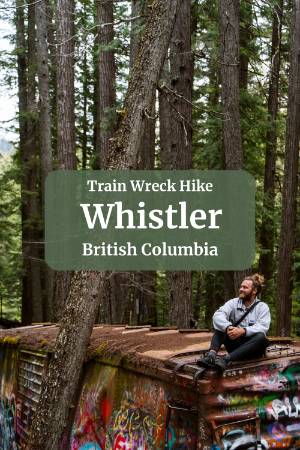
How to Get to the Whistler Train Wreck Trail


The trailhead starts near Cheakamus Crossing, just south of Whistler Village in the Function Junction area.
Driving from Whistler Village: Head south on Highway 99 (the Sea-to-Sky Highway), turn left at the first traffic light (the Cheakamus Lake Road / Function Junction intersection), cross the small bridge, and immediately turn right onto Jane Lakes Road. Drive about 500 metres, and you'll see a small gravel lot on your left with a "Train Wreck Parking" sign. Park there; the trailhead is directly across the road.
Parking The main lot on Jane Lakes Road is a small gravel lot with space for maybe 15-20 cars, and it's free. If that's full, there's an overflow lot a little further down the same road on the left. You can also park along Jane Lakes Road itself wherever there aren't "No Parking" signs, also free, but it fills up fast on summer weekends. If you're coming on a summer weekend afternoon, especially, get there early, before 10 am if you want a guaranteed spot. Weekdays and rainy days are noticeably quieter.
Public Transit: From the village, hop on BC Transit bus #10 or #20 heading south to the Cheakamus Crossing stop (Legacy Way at HI Whistler Hostel), then walk downhill through Bayly Park to the trailhead, which adds about 5 minutes.
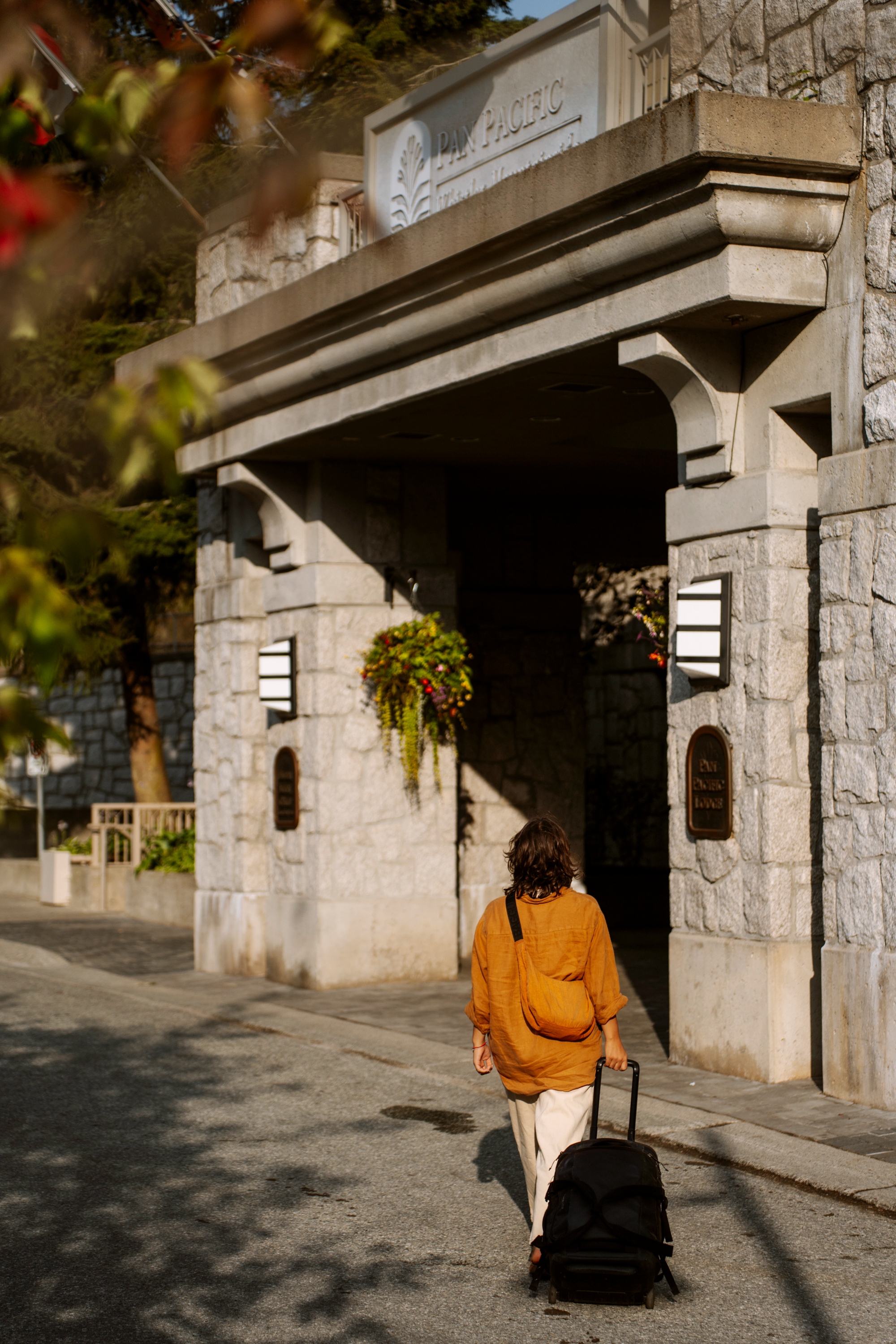
Whistler Accommodation Guide: Where to Stay in Whistler For Each Type Of Traveller (2026)
Click here for discounts and booking tips!The Trail to the Train Wreck


The trail itself is short and easy, a 2.6km round trip that takes most people 20-30 minutes each way, through the forest, across a great suspension bridge over the turquoise Cheakamus River, and out to the wreckage where you can wander around, climb on the cars, and take in whatever the graffiti looks like that week (it changes constantly, so no two visits ever look quite the same).
| Distance | Elevation | Time | Type | Difficulty |
|---|---|---|---|---|
| 2.6 km | 30 m | 1 h | out and back | easy |
What to Expect Along the Way
From the parking lot, cross Jane Lakes Road and look for the trailhead sign marking the Sea-to-Sky Trail; that's your starting point. The trail is wide, packed gravel, and winds through lush coastal rainforest, towering cedar and fir, moss-covered rocks, and the occasional mountain biker passing through. Since the trail is multi-use, stay alert and don't be surprised if you hear one coming up behind you.
About two-thirds of the way in, roughly 10 minutes, you'll hit a junction with the Sea-to-Sky Trail. The sign here is usually buried under its own layer of graffiti, but you want to turn right.
A few minutes past that junction, the trail dips slightly and brings you to the suspension bridge over the Cheakamus River, and this is one of my favourite parts of the whole hike. It sways and bounces a bit as you cross, which is honestly part of the fun, and the view of the glacial turquoise river rushing underneath is gorgeous.
From there, it's another 5 minutes through the forest before you start spotting graffiti-covered metal, and then, all at once, you're surrounded by train cars. There are seven total, spread out over about 400 metres, some upright, some tilted or half-crushed into the trees, all of them covered in constantly evolving art. You can climb on them, walk through them, and just wander the whole site at your own pace.
What You'll See at the Train Wreck

The Train Cars: Seven boxcars from a 1956 freight derailment, sitting in the same patch of forest for nearly 70 years, slowly being reclaimed by nature while also being transformed, layer by layer, by graffiti artists.
The Graffiti: This is an authorized graffiti zone, so the art is always changing. One visit you'll see intricate murals, the next it might be quick tags or something more political or abstract. It really does function like a living gallery, and that's a big part of why I keep coming back.
The Forest: The contrast between rusted metal and lush green forest is striking; trees grown up around the cars, moss coating the roofs, ferns sprouting out of the undercarriages. It's eerie and beautiful in a way that's hard to describe until you're standing in it.
The Cheakamus River: If you wander a bit further through the site, you'll find trails leading down to the riverbank. The glacial melt gives the water that same striking turquoise colour you saw from the bridge, and the sound of it rushing by adds a lot to the whole atmosphere.
The History: What Happened Here?


In 1956, a freight train hauling logs from Lillooet to Vancouver was moving through a section of track under repair. Despite a posted speed limit of 24 km/h, the train was running well over that, trying to make up time after falling behind schedule.
The fourth engine derailed, and three boxcars came off the tracks and crashed into the narrow rock-cut forest alongside it. No one was hurt; it was a freight train, not a passenger one, but the cars were too damaged and too wedged into the trees to be pulled back onto the tracks.
A local logging company was eventually brought in to deal with the wreckage. They hauled the cars up the embankment and rolled them off into the forest, where they've sat ever since. The tracks were repaired, trains kept running through, and the cars were more or less forgotten until hikers, bikers, and graffiti artists rediscovered them decades later and turned them into what they are today: one of Whistler's most popular free attractions.
Best Times to Visit the Train Wreck
The trail is open year-round, but it feels like a different hike depending on the season.
Summer (June-September): Warm, lush, dry trail, and the easiest season for families or first-timers. The tradeoff is crowds; the parking lot can be full by late morning on weekends.
Spring (April-May) The river and any nearby waterfalls are running hard with snowmelt, crowds are thinner, and you might catch some wildflowers. Just expect a muddier trail and more unpredictable weather.
Fall (October-November): Fall colours, fewer tourists, and cooler hiking temperatures. It is rainy season though, so bring waterproof gear and keep an eye on how much daylight you've got left.
Winter (December-March): The snow-covered forest turns the whole site into something magical, and it's quiet and peaceful in a way summer never is. You'll want snowshoes or microspikes, though; the trail gets icy, and the suspension bridge can get slippery.
If I had to pick, I'd say late spring (May-June) or early fall (September) hits the best balance of good weather and thinner crowds.
Key Tips For Visiting the Train Wreck

Arrive early if you're going in summer; before 10 am is your best shot at guaranteed parking and a quieter trail.
Wear proper shoes. The trail is mostly flat, but there are tree roots and uneven patches; hiking shoes or trail runners over sandals or flip-flops.
Bring a camera; the graffiti, the suspension bridge, and the forest setting are all super photogenic, and the art you catch on one visit might not be there the next.
Watch for mountain bikers. This is a multi-use trail, and bikers get the right of way on downhill sections, so stay alert and step aside when you hear one coming.
Stay on the established trail. Don't cut switchbacks or start carving new paths; it just accelerates erosion.
Pack out your own trash. There are no garbage cans anywhere along the trail or at the wreck site.
Be bear aware. This is bear country, so make some noise as you go, talk, clap, whatever works, travel in a group if you can, and carry bear spray if you have it.
Keep dogs leashed. It's a shared trail with bikers, and a loose dog is a hazard for everyone.
Download offline maps beforehand. Cell service out here is spotty at best.
Facilities at the Trailhead
The closest bathrooms are at Bayly Park, about a 3-minute walk uphill from the trailhead, a public park with outhouses. There's no drinking water at the trailhead itself, so bring your own, and cell service is spotty to non-existent once you're out there. Parking is free, both in the lot and along the street; dogs are allowed on leash, and camping isn't permitted.
Is the Whistler Train Wreck Worth It?
Yes, absolutely.
It's one of Whistler's most unique and accessible hikes. It's short enough that basically anyone can do it: families with young kids, seniors, people who don't consider themselves hikers at all, but interesting enough that it never feels like a throwaway stop just to say you did something outdoorsy.
The graffiti keeps changing, the suspension bridge is genuinely lovely to cross, and the forest setting pulls the whole thing together into something that doesn't feel like anything else you'll find in these mountains. It's free, it's dog-friendly, and it's less than 30 minutes from the village.
If you're in Whistler for a weekend and want an easy hike that gives you something completely different from the usual alpine trails, this is the one I'd point you to. Just get there early, bring a camera, and don't forget to actually look up, some of the best pieces are hiding on the roofs of the cars where most people never think to check.
Final Thoughts
The Train Wreck is proof that not every good Whistler hike needs to end above the treeline. It's short, it's free, and it gives you something you won't find anywhere else in the area: rusted train cars, ever-changing graffiti, and a suspension bridge crossing. Whether you've got a couple hours to kill, kids in tow, or you just want a break from alpine views for a day, this one earns its spot on the list.
If you're looking to round out the rest of your trip, check out our full guide with 27 Things To Do In Whistler In The Summer for everything else worth doing while you're in town. And if you haven't decided whether the sightseeing pass makes sense for your visit, our Is The Whistler Gondola Worth It guide breaks down exactly what you get for the price.
FAQ
How long is the Whistler Train Wreck hike?
Where do you park for the Train Wreck trail?
What are the train cars at the Whistler Train Wreck from?
Is the Whistler Train Wreck trail dog-friendly?
What's the best time of year to hike the Train Wreck?
Our Trusted Travel Partners
We only recommend products and services we personally use and trust.

SafetyWing
Travel medical insurance for nomads and remote workers
Booking.com
Find the best deals on hotels, apartments, and vacation rentals
AllTrails
Discover hiking trails with detailed maps and reviews
Surfshark
Secure VPN for safe browsing and accessing content worldwide
Get Your Guide
Find the best deals on tours and experiences
Airalo
Prepaid SIM cards for travelers
Trusted Housesitters
Find free accommodation by house and pet sitting worldwide
Wise
Send and receive money internationally with low fees* We may earn a commission when you make a purchase through our affiliate links, at no extra cost to you. We appreciate this support, which helps sustain our blog and allows us to create more content and help more great trips get planned!