
Key Tips Planning a Quito Itinerary

- Acclimate to the Altitude: Quito sits at 2,850 meters (9,350 feet), and day trips like Cotopaxi or even a long city walk can hit you hard if you’re not prepared. Take it slow the first day, drink lots of water, and avoid heavy meals right after arriving. A bit of cocoa leaf tea can help, but hydration is key.
- Start Days Early: Many highlights get crowded later in the morning. Arriving early means quieter streets, better photos, and less waiting.
- Dress in Layers: The weather can change quickly. Even on sunny days, mornings and evenings can be cool, and the higher-altitude trips like Cotopaxi or TelefériQo require warm, windproof clothing.
- Comfortable Footwear: Cobblestone streets in Old Town, uneven trails at Cotopaxi, and walking around Otavalo all require sturdy shoes. Bring sneakers or hiking shoes for day trips.
- Plan for Snacks and Water: Whether exploring the city or heading to the volcano, pack small snacks and water. Local cafés are great, and they are everywhere the tourists are, but having a backup keeps you energized on long treks.
- Learn a Few Spanish Phrases: Simple greetings and polite questions go a long way. “Hola,” “por favour,” and “gracias” are appreciated, especially in markets and smaller eateries.
- Cash and Cards: Many small vendors, taxis, and market stalls prefer cash (USD is the currency). ATMs are plentiful in the city, but having smaller bills for bartering and street food is smart. We had a lot of issues breaking larger bills, so try and get small denominations from the ATM if possible.
- Combine Attractions Thoughtfully: Quito has a lot packed into a small area. Group sites by neighbourhood (Old Town, La Floresta, north of Otavalo) to minimize travel time.
- Respect Local Customs: Indigenous culture is prominent in Otavalo and the surrounding areas. Ask before taking photos of people, be mindful of local practices, and if a local is telling you that you’re being inappropriate: listen!
- Stay Hydrated and Snack Smart at High Altitude: For Cotopaxi and other high-elevation hikes, carry water and light snacks. Even short treks can be draining, and you need to be constantly hydrating.
Where to Stay (Before It’s Fully Booked)
Day 1 - Exploring Quito’s Historic Old Town and City Views


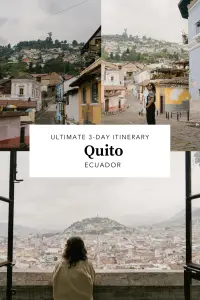
Start in the Old Town, which is actually one of South America’s best-preserved colonial centers. Here you can wander the cobbled streets, check out the shops, and make sure you go into at least one of the many ornate churches. La Compañía is the most famous church and is basically gold-plated. And don't forget to climb the spires of Basílica del Voto Nacional if you’re feeling brave. It is pretty high, so if you don't like heights, maybe stick to the ground.
After lunch, head to La Floresta, Quito’s artsy café neighbourhood, for street murals, small galleries, and a break from the tourist zones.
In the evening, ride the TelefériQo up the side of Volcán Pichincha for one of the highest city views in the world. You will be at 4,000m, so it gets chilly fast. So bring a jacket and some layers so you can stay and watch the sunset over the mountains.
Tomorrow we leave the city and get up close with one of Earth’s highest active volcanoes.
Day 2 - Cotopaxi National Park Day Trip from Quito


Today’s all about Cotopaxi. It’s 1.5 to 2 hours from Quito and worth the early start. Most tours handle the drive and entrance. The trail itself starts at around 4,000m and climbs to the glacier line at 5,100m. It’s short but steep, and the altitude hits hard. Even if you've been in Quito for a few days, pace yourself and drink loads of water. We had some Coco tea at the lodge, and it seemed to help, but slamming water is really the most important thing.
After the hike, head back to Quito for a slow, cozy evening. We refuelled at Tandana. It was healthy, vegan-friendly, and the right post-hike atmosphere.
Tomorrow, we journey to the middle of our planet and South America’s largest Indigenous market.
Day 3 - Otavalo Market, the Equator & Quito’s Nightlife


Start early for a day trip to Otavalo, about 2 hours north. This is South America’s largest Indigenous market and a textile wonderland. There are hundreds of stalls selling hand-woven rugs, alpaca everything, and every kind of jewellery you can imagine. Bartering is normal and all part of the experience. Keep it fun and light, though. Nothing in the market is that expensive, and all the sellers are just trying to make a living.
On the way back, skip the touristy Mitad del Mundo and stop at the Cayambe Equator line. This is the quiet, GPS-accurate spot where you can straddle both hemispheres. Local guides share how ancient cultures found the equator without modern tools, and fascinating and honestly pretty humbling.

End the night in La Ronda: a cobbled lane in the Old Town that comes alive with music, canelazo, and people spilling out of cozy bars. It’s the perfect way to wrap up your time in Quito.
Where to Stay In Quito
We suggest the old town for walkability, history, and cool colonial vibes or La Floresta for coffee shops, art, and slower mornings. We stayed in both and loved the contrast.
When to Visit Quito

Quito’s weather is mild year-round thanks to its equatorial location, but the dry season (June to September) is best for blue skies and hiking. The shoulder months (May & October) are warm with fewer tourists. The rainy season (November to April) has more afternoon showers, but it is still manageable.
Basic Spanish Phrases for Quito
Knowing a handful of Spanish phrases will go a long way here. Locals appreciate when you try, even if your accent is rough. Here are some essentials:
| English | Translation | Phonetic |
|---|---|---|
| Hello | Hola | OH-lah |
| Please | Por favor | por fah-VOR |
| Thank you | Gracias | GRAH-see-as |
| Excuse me / Sorry | Perdón | pehr-DOHN |
| Where is...? | ¿Dónde está...? | DOHN-deh es-TAH |
Starting with these will help with ordering food, asking directions, or just making friendly small talk.
A Brief History of Quito

Quito’s history stretches back thousands of years, long before the Spanish arrived. The area was originally inhabited by the Quitu people, who were later absorbed into the Inca Empire in the late 15th century. In 1534, Spanish conquistadors founded the colonial city we see today, building ornate churches and plazas over Indigenous settlements.
Most of Quito’s colonial core has been beautifully preserved. This preservation resulted in UNESCO naming the first World Cultural Heritage Site in 1978. Walking through Old Town feels like stepping back in time, with baroque churches, narrow streets, and colourful balconies.
Fun fact: Quito sits at an altitude of 2,850 meters (9,350 feet), making it one of the highest capital cities in the world. This high elevation gives the city its cool, spring-like climate year-round.
Another interesting tidbit. The Basilica del Voto Nacional is said to be the largest neo-Gothic basilica in the Americas, and locals jokingly call it the “largest unfinished cathedral” because parts of it are still incomplete.
Final Thoughts
Quito surprised us in the best way. It’s creative, clean, and full of character without the chaos of most capital cities. It is worth it to add a few days onto your trip so you can explore Quito in depth.
FAQ
What should I know before visiting Quito, Ecuador?
Day 1 itinerary in Quito?
Day 2 itinerary in Quito?
Day 3 itinerary in Quito?
Best time to visit Quito?
Basic Spanish phrases for Quito?
Final thoughts for visiting Quito?
Our Trusted Travel Partners
We only recommend products and services we personally use and trust.

SafetyWing
Travel medical insurance for nomads and remote workers
Booking.com
Find the best deals on hotels, apartments, and vacation rentals
AllTrails
Discover hiking trails with detailed maps and reviews
Surfshark
Secure VPN for safe browsing and accessing content worldwide
Get Your Guide
Find the best deals on tours and experiences
Airalo
Prepaid SIM cards for travelers
Trusted Housesitters
Find free accommodation by house and pet sitting worldwide
Wise
Send and receive money internationally with low fees* We may earn a commission when you make a purchase through our affiliate links, at no extra cost to you. We appreciate this support, which helps sustain our blog and allows us to create more content and help more great trips get planned!