
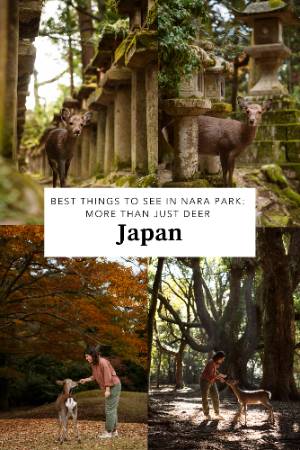
Did you know there's a city in Japan that's home to over 1,200 free-roaming deer? Welcome to Nara, Japan's first capital and a destination that has become famous worldwide for its sacred deer population. These animals have been protected for over a thousand years and are considered a national monument, freely wandering through Nara Park and the surrounding areas. As animal lovers ourselves, visiting Nara was high on our bucket list, and can happily say it exceeded every expectation.
While the deer are undoubtedly Nara's main attraction, this historic city offers so much more than adorable wildlife encounters. In this comprehensive guide, we'll share everything you need to know before visiting, including our top tips for interacting with the deer, where to purchase the famous deer crackers (senbei), and the best time to visit. We'll also cover the cultural experiences of Nara aside from the deer: from witnessing the iconic mochi pounding demonstrations and sampling freshly made mochi, to exploring vibrant local markets and visiting stunning temples and shrines.
Whether you're planning a day trip from Kyoto or Osaka or dedicating more time to explore this enchanting destination, our guide will help you make the most of your Nara adventure.
)
Key Tips for Visiting Nara

- Go Early: For fewer crowds before the day-trippers arrive. In the morning, the deer are calmer. They get more aggressive when they're hungry and surrounded by tourists.
- Don't Pack Snacks (Or Hide Them Well): The deer will find them. And you. Keep food in your bag zipped up tight, or better yet, don't bring any until after you've left the deer zones.
- Be Careful: Some deer are sweet, some are cheeky. Bow, smile, but keep your wits about you. They're still wild animals.
- Don't Touch the Fawns: If you touch the babies, there's a chance their mother will abandon them. Just admire from a distance.
- Stay Connected - Google Maps and Google Translate come in very handy. Make sure to download what you need ahead of time, or grab an e-SIM to make your life easier.
- Wear Comfortable Shoes: You'll be walking a lot, often on gravel paths or uneven terrain. Skip the sandals.
- Bring a Camera: The deer, the temples, and the scenery are all incredibly photogenic. Don't rely solely on your phone if you're into photography.
- Alternatives: We recommend staying overnight if you can, but if you're on a time crunch, you can also book onto a tour from Kyoto, or do a guided tour on arrival to speed things along.
Location Map
All locations mentioned in this blog are pinned here so you can visualize your trip!Getting to Nara
Nara is easy to reach from Kyoto or Osaka by train.
From Kyoto
Take the Kintetsu Line (fastest, about 35-45 minutes) or the JR Nara Line (slightly slower, about 45-50 minutes). Both drop you a short walk from Nara Park. If you have a JR Pass, take the JR line because it's covered. Otherwise, the Kintetsu Line is faster and drops you closer to the action.
From Osaka
About 40-50 minutes via the Kintetsu Line from Namba Station or JR Line from Osaka Station.
Cost
Around ¥700-1,000 ($4.5 - $6.5 USD) one way, depending on which line you take.
Both stations are walkable to the park, but Kintetsu-Nara Station is slightly closer (about 5-10 minutes on foot).
Where to Stay (Before It’s Fully Booked)
Best Things to Do in Nara
1. Feed the Deer


This is the main event. Nara Park is home to over 1,000 free-roaming deer, and they're not shy. Buy the official senbei (deer crackers) from one of the vendors in the park (¥200 for a stack), and the deer will approach you. Some even bow to ask for crackers, which is adorable.
The Reality: The deer are used to humans and know exactly what those crackers look like. As soon as you buy a stack, you might get mobbed. They'll nudge you, follow you, and occasionally nip at your clothes or bag. It's not aggressive in a dangerous way, but it can be overwhelming if you're not expecting it.
Tips for Feeding the Deer:
- Break the crackers into smaller pieces so you can feed more deer without getting swarmed.
- Once you're out of crackers, show your empty hands and they'll usually leave you alone.
- Don't tease them by holding crackers out of reach, because they will actually get annoyed.
- During mating season (fall), the bucks can be more aggressive. Be cautious around the bigger males.
Safety Note: The deer are wild animals, even if they're accustomed to tourists. Don't touch the fawns (their mothers might abandon them), and be gentle with all of them. Some adults will let you pet them, but it's hard to know which ones are into it, so it's best to just feed them and move on.
2. Visit Todai-ji


Inside the park, Todai-ji is a massive wooden temple housing an even more massive Buddha. The Great Buddha Hall is one of the largest wooden buildings in the world, and the bronze Buddha inside is over 15 meters tall. It's awe-inspiring in both detail and scale.
What to Expect: You'll walk through the temple grounds, passing through the Nandaimon Gate (guarded by two fierce-looking statues), and then enter the hall to see the Buddha. The deer loiter around the temple grounds, so it's easy to combine this with your cracker-giving mission.
Entry Fee: Around ¥1,200 ($8 USD) per person (children 12 and under pay half price).
Pro Tip: There's a pillar in the hall with a hole at the base. Legend says if you can squeeze through it, you'll achieve enlightenment. It's small, just about the size of the Buddha's nostril, and mostly only kids attempt it. But it's fun to watch.
Vibe: Grand, historic, touristy, but impressive. One of the must-sees in Nara.
3. Stroll Isuien Garden
Isuien Garden is a calm, traditional Japanese garden with ponds, stone bridges, and a tea house. It's a great contrast to the chaos the deer create in the main park areas.
The garden is beautifully maintained, and there are views of Mount Wakakusa and Todai-ji from within the grounds. It's a peaceful spot to slow down and appreciate the quieter side of Nara.
Entry Fee: ¥1,200 ($8USD) per person
Best Time to Visit: Mid-morning or late afternoon when the light is soft.
Vibe: Serene, elegant, a nice break from the crowds and deer.
3. Walk Through Meoto Daikokusha & Kasuga Taisha


At the far end of the park, the forest opens up to reveal something special: hundreds of weathered stone monuments scattered between ancient trees, with deer casually weaving through moss-covered lanterns and aged stone pillars. This area is noticeably quieter than the main park, and there's an almost mystical quality to it, so if you have the time, don't skip this section.
Kasuga Taisha is the main attraction here. It's a stunning Shinto shrine surrounded by thousands of stone and bronze lanterns. The approach alone is worth the walk: a tree-lined path flanked by moss-covered lanterns that have been standing for centuries.
Inside the shrine, hundreds of bronze lanterns hang from the ceiling, creating an almost hypnotic display. If you can time your visit with the Lantern Festivals in February or August, you'll see all of them lit at once.
Meoto Daikokusha is a small sub-shrine dedicated to the deity couple Daikokuten and Benzaiten, making it a popular spot for couples seeking blessings for their relationships, marriage, and harmony. The shrine's name literally translates to "married couple shrine," and you'll often see couples visiting together to pray for a strong partnership.
Even if you're not here for the romantic significance, the walk from the main shrine to Meoto Daikokusha is absolutely worth it. Search for the specific Google Maps pin because the path between the two shrines is stunning, with more lantern-lined trails and peaceful forest scenery that feels straight from a film.
- Entry Fee: Free to explore the grounds; around ¥700 ($4.50 USD) to enter the inner shrine
- Best Time to Visit: Early morning or near dusk when golden light filters through the trees and crowds thin out
- Vibe: Atmospheric, spiritual, and easily one of the highlights of Nara.
4. Watch the Mochi Pounding at Nakatanidou


Not far from Nara Station, this famous mochi shop puts on a show. The mochi masters pound and flip the mochi at lightning speed. It's mesmerizing to watch and makes you appreciate the skill and precision involved.
When It Happens: They pound mochi several times a day, but times vary. Check their schedule or just show up and ask. There's usually a crowd gathered when they're about to start, and a sign outside their shop where they write the time of the next pounding. (Note they do sometimes start early, so best to arrive early and find a spot to stand near the window)
What to Do After: Buy some freshly made mochi. It's affordable, delicious, and still warm. We grabbed a few to eat while walking through the park.
Vibe: Fun, energetic, surprisingly captivating. Don't skip this.
5. Hike to Mount Wakakusa
Mount Wakakusa is a short uphill walk from the back of Nara Park. It's not a challenging hike, more of a steady climb, and the views from the top are stunning, especially at sunset.
The mountain is covered in grass, and the deer often graze up here, so you'll have company on the way up. The views stretch over Nara city, the temples, and the surrounding mountains.
- Entry Fee: Around ¥150 ($1 USD) (only charged during certain seasons)
- Best Time to Go: Sunset. The light is incredible, and the city looks beautiful from up here.
- Tips: Bring water and snacks. There's nothing at the top.
- Vibe: Peaceful, scenic, rewarding. At sunset, the day trippers have left, and you can see the city in more of a natural state.
6. Walk Through Yoshikien Garden
Yoshikien Garden is a traditional Japanese garden located near Nara Park's main attractions. It's often overlooked by tourists, which means you'll likely have a quieter experience here compared to the crowded deer areas.
The garden features three distinct styles in one space: a pond garden with koi fish, a moss garden, and a tea ceremony garden with a traditional tea house. If you're visiting in autumn, the maple trees create an impressive colour display that reflects in the pond. It's great for photos, and the compact layout means you can see everything in 30 to 45 minutes.
Entry is free for international visitors. Just show your passport at the entrance. The garden is right next to Isuien Garden, so you can easily hit both if you want more garden time.


7. Visit Some Of Nara's Cafes
Like most places in Japan, Nara has a great cafe scene. Amazing matcha (you're just a short train ride away from where it is grown), top-notch coffee, and cute spaces for a date with your partner or your laptop.
Best Matcha - Matcha Lab Nara
Best Coffee - The Hood Coffee
Best Work Space - Chami Specialty Coffee Roaster
8. Wander Naramachi
Naramachi is a preserved merchant district with narrow lanes, old wooden townhouses, and small artisan shops. It's quiet, local, and often overlooked by tourists who spend all their time in the park.
If you want to see a more lived-in side of Nara, take an hour to wander through Naramachi. There are small cafes, craft shops, and traditional buildings that give you a sense of what old Nara looked like.
Best For: People who like exploring old neighbourhoods and want a break from the tourist crowds.
Vibe: Quiet, charming, underrated.
Where to Stay in Nara


Nara’s small, walkable, and easy to navigate, so you’ve got lots of options between hotels, guesthouses, hostels, and a few Airbnbs sprinkled around town. The key is staying within walking distance of Nara Park. You don’t need to be right on top of it, but being close cuts out a ton of backtracking and keeps the temples, deer, and food streets all within a few minutes’ stroll.
- Here are some of your best options:

Nara Visitor Centre and Inn
NARA Visitor Center and Inn offers authentic Japanese accommodations with exceptional 9.8 location rating in central Nara. Features traditional tatami rooms with futon bedding, public bath, and samue nightwear. Just 3 minutes to Kofuku-ji Temple, 10 minutes to Todai-ji and Deer Park. Tourist desk provides multilingual support, bike rental, and tour arrangements. Free WiFi, shared kitchen, coin laundry. Outstanding value and staff rated 9.8.Check Availability
Iroha Gran Hotel
Iroha Grand Hotel Kintetsu Nara Ekimae is a modern hotel with 9.2 location rating, just 2 minutes from Kintetsu Nara Station in a vibrant shopping district. Spacious rooms feature air-conditioning, comfortable beds, pillow choices, streaming services, and free WiFi. Excellent breakfast buffet with Japanese and European cuisine. On-site restaurants serve lunch and dinner. Complimentary bath bombs and face masks at reception. Five-minute walk to Nara Park. Check Availability
Daiwa Roynet Hotel
Daiwa Roynet Hotel Nara Natural Hot Spring offers comfortable modern accommodations with natural onsen facilities, rated 8.7. Located 6 minutes from JR Nara Station with excellent transport access. Rooms feature air-conditioning, bidets, bathrobes, electric kettles, and work desks. Relaxing hot spring baths on-site. Japanese restaurants serve breakfast, lunch, and dinner. Coin laundry facilities, private parking, free WiFi. Friendly, helpful staff.Check AvailabilityHow to Get Around Nara
Nara's main sights are all walkable from Kintetsu-Nara Station. The park, temples, and gardens are stitched together by scenic footpaths (with deer traffic, of course). If you're coming from JR Nara Station, it's about a 15 to 20-minute walk or a short local bus ride. Buses run often and cost around ¥220 ($1.5 USD).
Renting a Bike is another solid option, especially if you want to explore beyond the park to places like Heijo Palace or the outer shrines. Bike rentals are affordable (around ¥500-1,000 per day) and available near both stations.
Renting a Car is not common and honestly a bit overkill. Nara is small, walkable, and parking can be a hassle near the main sights.
Best Time to Visit Nara


Spring (March to May)
Cherry blossoms bloom across the park, especially around the temples. It's photogenic, breezy, and the deer are extra active. One of the most popular times to visit, though, so expect crowds.
Pros: Cherry blossoms, great weather, active deer
Cons: Crowded, higher accommodation prices
Autumn (October to November)
Fall foliage makes the temples and gardens even dreamier. The cooler air is ideal for walking, and the colours are stunning. October also features the Deer Antler Cutting Ceremony at Kasuga Taisha (a 300-year-old tradition), where trained handlers safely trim the antlers of the bucks.
Pros: Beautiful fall colours, comfortable weather, cultural events.
Cons: Still crowded, especially on weekends.
Summer (June to August)
Hot and humid. If you go, hit the park early in the morning or late in the evening. The deer tend to chill in the shade and siesta through the worst heat, so they're less active during midday.
Pros: Fewer tourists, lush greenery.
Cons: Oppressively hot and humid.
Winter (December to February)
Quieter, crisp, and peaceful. Fewer tourists mean you can enjoy the park and temples without the crowds. Some days feel magical if there's a dusting of snow and low mist around the shrines. Just pack warm clothes, because it gets quite cold.
Pros: Fewer crowds, peaceful, beautiful if it snows.
Cons: Cold, some deer are less active.
Where to Eat in Nara

Nara is a big tourist town, so there's no shortage of food options. Here are some solid picks:
Picnic in the Park
Grab snacks from a convenience store or bakery and eat in the park at a safe distance from the deer. Just keep your food secure and away from the deer. These guys know how to unzip bags and are cheeky enough to do it.
Best For: Budget meals, spontaneous snacks
Kamaiki
A cozy little udon shop with great lunch sets. Quick, affordable, and right near Kintetsu-Nara Station. Perfect for a warm bowl of noodles after walking around the park.
Best For: Quick, affordable meals, udon lovers.
Mellow Café
A trendy spot near the park with good pastas, coffee, and views. There are a few vegetarian-friendly options, which is nice if you're craving something different from traditional Japanese food.
Best For: Vegetarians, coffee lovers, casual lunch
Edogawa Naramachi
For a more traditional experience, this restaurant sits along a canal in the preserved Naramachi district. Try their seasonal set meals. They're a bit pricier, but worth it for the atmosphere and quality.
Best For: Traditional dining, special occasions
Nakatanidou
The mochi shop that puts on the mochi pounding show. After watching how it's made, pick up a few mochi to go. They're cheap, delicious, and still warm.
Best For: Snacks, experiencing local culture, mochi lovers
Final Thoughts


Nara is both exactly what you expect and full of surprises. Yes, the deer are adorable and chaotic. Yes, the Buddha at Todai-ji is massive and impressive. But there's also a less obvious beauty of Kasuga Taisha at dawn, the view from Mount Wakakusa at sunset, and the charm of wandering through Naramachi without a plan.
It's touristy, but it's also genuinely special. The deer add a playful energy that you don't find at most historic sites, and the combination of nature, history, and wildlife makes Nara feel different from anywhere else in Japan.
Whether you're doing it as a quick day trip or staying overnight to explore at a slower pace, Nara delivers. Just watch your bags, bring plenty of deer crackers, and don't be surprised if you leave with a few bite marks on your jacket.
FAQ
How do I get to Nara from Kyoto or Osaka?
Do I need to stay overnight in Nara?
Can I feed the deer in Nara Park?
What are the must-see attractions in Nara Park?
When is the best time to visit Nara?
How do I get around Nara?
Where should I eat in Nara?
Are there any safety tips for interacting with the deer?
Our Trusted Travel Partners
We only recommend products and services we personally use and trust.

SafetyWing
Travel medical insurance for nomads and remote workers
Booking.com
Find the best deals on hotels, apartments, and vacation rentals
AllTrails
Discover hiking trails with detailed maps and reviews
Surfshark
Secure VPN for safe browsing and accessing content worldwide
Get Your Guide
Find the best deals on tours and experiences
Airalo
Prepaid SIM cards for travelers
Trusted Housesitters
Find free accommodation by house and pet sitting worldwide
Wise
Send and receive money internationally with low fees* We may earn a commission when you make a purchase through our affiliate links, at no extra cost to you. We appreciate this support, which helps sustain our blog and allows us to create more content and help more great trips get planned!