
Key Tips for Planning a Japan Trip
- Maybe get a JR Pass: Check if it makes sense for your route (calculate costs beforehand, because it's not always worth it). This is a great tool for pricing out your JR transit costs. If you follow our itinerary exactly, you're better off NOT getting a pass.
- Book trains early: Popular routes like Aoniyoshi, Nohi buses (Kanazawa → Shirakawa-go → Takayama), and seasonal express trains sell out fast, especially in spring and autumn.
- Don’t overpack: Japan’s stations involve stairs, tight transfers, and crowds. It will be a real nightmare getting between stations and hotels if you have multiple or oversized bags.
- Stay flexible with the weather: Mount Fuji is shy. Build buffer days, especially in the Fuji Five Lakes area, to increase your chances of clear skies.
- Cash still matters: You can use cards in most cities, but smaller towns, markets, and older restaurants often prefer cash. Hit ATMs at 7-Eleven or Lawson.
- Convenience stores in Japan are elite: Konbini food is legitimately good. It's fast, cheap, and perfect for early train days.
- Book everything early in peak season: Spring (late March to early April) and autumn (late Oct to early Nov) require early booking for hotels and transport, especially in Kyoto. Booking.com is our favourite platform for booking hotels, and we always check Get Your Guide first for tours and activities.
- Google Maps works great in Japan: It works flawlessly for trains, buses, walking routes, and even platform numbers. Make sure to download maps offline or grab an e-SIM to stay connected.
- Start in Osaka, end in Tokyo: This route is intentionally designed to avoid backtracking and ease you into Japan’s pace before hitting Tokyo’s full intensity.
- Don’t try to see everything: There is so much to see across the country and within each destination that you could spend years trying to see it all. It's easy to overwhelm yourself and pack too much into a few weeks. Japan rewards slow mornings, aimless walks, unexpected cafes, and random shrines as much as its big attractions.
- When to Visit: This itinerary works year-round but is especially beautiful in spring (cherry blossoms) and autumn (fall foliage)
- For your Budget: Expect to spend more in Tokyo and Kyoto, less in smaller cities like Takayama and Nara
Location Map
All locations mentioned in this blog are pinned here so you can visualize your trip!Before You Go
Don't Leave Home Without Travel Insurance
We never leave the country without our safety wing coverage activated. Whether it's a missed flight, a lost bag, or a serious medical evacuation Safety Wing offers an irreplaceable peace of mind. Our favourite part is we can pause it with the click of a button when we're back in Canada and turn it back on just as easily when we're back on the move.
Week 1: Kansai Region (Osaka, Nara, Kyoto)
Osaka (2 Nights)


Osaka is the perfect starting point for your Japan adventure. It's energetic, food-focused, and gives you an immediate taste of Japanese city life without the overwhelming scale of Tokyo.
Top Spots to Visit:
- Osaka Castle: The city's most iconic landmark with impressive architecture and surrounding park grounds.
- Dotonbori: The neon-lit heart of Osaka, where you'll find incredible street food and the famous Glico Running Man sign.
- Shinsekai & Tsutenkaku Tower: A retro neighbourhood that feels frozen in time, perfect for experiencing old-school Osaka vibes.
- Namba Yasaka Shrine: Home to the giant lion head stage, which is one of Osaka's most unusual photo spots.
- Shitenno-ji: One of Japan's oldest Buddhist temples, offering a peaceful contrast to the city's energy.
How to Get To Osaka
Osaka is one of the easiest entry points into Japan. Most international travellers fly into Kansai International Airport (KIX), which handles long-haul routes from North America, Europe, and across Asia. From the airport, it’s a smooth 45 to 60 minutes into the city using either the JR Haruka Express (fastest into Tennoji/Kyoto) or the Nankai Airport Express (best for Namba and the southern side of the city).
If flights into KIX are looking expensive, try flying into Tokyo (HND/NRT) and catching a quick domestic hop or a Shinkansen down to Osaka. Japan’s rail system makes it painless either way, so getting to Osaka is straightforward, and it sets you up perfectly to start this three-week route without backtracking.
Where to Stay in Osaka


Here are some of the best options centrally located right near all the tourist areas:

Hotel K6
Hotel K6 Osaka Namba Dotonbori is a family-friendly hotel just 3 minutes from Namba Station with an excellent 9.6 location rating. Features include spacious rooms with jetted tubs, free breakfast and ramen, complimentary alcohol and soft drink bar, karaoke room, and kids amenities. Rooms have microwaves, fridges, flat-screen TVs. Perfect for families with bed guards available. Near Glico Sign and Dotonbori. Free WiFi, 24-hour desk, luggage storage included.Check Availability
Hotel Bali An
Hotel Bali An Resort Shinsaibashi is a boutique hotel with a 9.5 location rating, just 3 minutes from Glico Man Sign and Namba Station. Rooms feature air-conditioning, hot tubs, spa baths, and bathrobes. Outstanding amenities include unlimited free curry, ice cream, coffee, soft drinks, alcohol, and snacks all day. Rooftop coffee bar, karaoke room, 24-hour front desk, and room service. Walking distance to Shinsaibashi Shopping Arcade and Dotonbori nightlife.Check Availability
Karaksa Hotel
Karaksa Hotel Osaka Namba offers modern accommodations with a 9.4 location rating, just 5 minutes from Dotonbori and Shinsaibashi shopping. Rooms feature air-conditioning, flat-screen TVs, desks, and complimentary toiletries. Buffet breakfast available daily. Free WiFi, 24-hour front desk, luggage storage, and connecting rooms for families. Free coffee, tea, water, and snacks in the lobby. Near Glico Man Sign, train stations, and convenient stores.Check AvailabilityMore budget-friendly (a little less central but still solid):

Hotel MYSTAYS
Hotel MyStays Shinsaibashi is located in Namba, just 1 minute from Shinsaibashi Subway Station and next to America Mura. Air-conditioned rooms feature satellite TV, fridge, microwave, electric kettle, air purifier, and memory foam pillows. Free WiFi throughout. Twenty minutes by train to Universal Studios Japan, 25 minutes to Osaka Castle. Excellent 9.4 location rating for couples. Nearby public parking is available for an additional fee.Check Availability
Smile Hotel
Smile Hotel Osaka Yotsubashi offers comfortable air-conditioned rooms in Osaka's city center with private bathrooms, baths, hairdryers, refrigerators, work desks, and electric kettles. Excellent 9.3 location rating for couples. Just 5 minutes to Kokoni Sunaba Ariki Monument and under 0.6 miles to Shinsaibashi Shopping Arcade. Features 24-hour front desk, daily housekeeping, and luggage storage. Highly rated for convenient public transport access. Check AvailabilityNara Park (1 Night)


Most people day-trip to Nara from Osaka or Kyoto, but we strongly recommend spending the night. The park transforms in the early morning and evening hours when the crowds disappear. The light is incredible, and you'll have a much more peaceful experience with the deer. There is also a lot more to see in Nara than just the deer. Day trippers miss out on most of the experiences.
Top Spots to Visit:
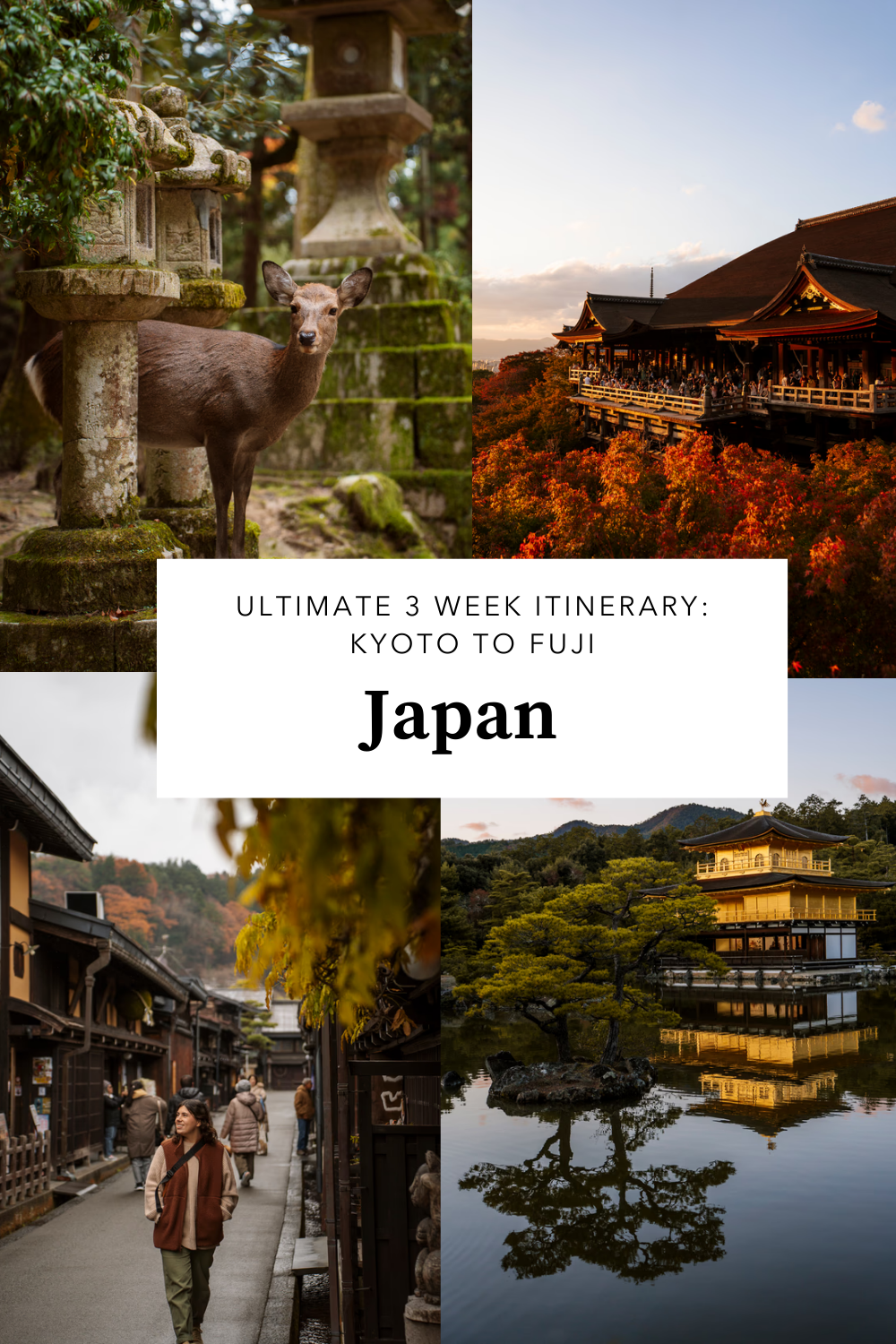
- Nara Park: Home to 1,400+ sacred deer that bow for crackers
- Todai-ji Temple: Houses the massive bronze Buddha statue.
- Kasuga Taisha Shrine: Thousands of lanterns line the forest paths leading to this atmospheric shrine
- Wakakusayama Hill: Climb for sunset views over Nara and the surrounding landscape.
- Nakatanidou: Famous for their dramatic mochi-pounding demonstrations, and don't forget to try the mochi; it's incredibly fresh.
- Isuien & Yoshikien Gardens: Two peaceful Japanese gardens that give a nice respite from the crowds and chaos in the main park. Yoshikien is free to enter, and Isuien has an entry fee of ¥1,200 ($8USD) per person.
The Naramachi neighbourhood: a preserved merchant district with narrow lanes, old wooden townhouses, and small artisan shops. It's quiet, local, and often overlooked by tourists who spend all their time in the park.
Where to Stay in Nara


Nara’s small, walkable, and easy to navigate, so you’ve got lots of options between hotels, guesthouses, hostels, and a few Airbnbs sprinkled around town. The key is staying within walking distance of Nara Park. You don’t need to be right on top of it, but being close cuts out a ton of backtracking and keeps the temples, deer, and food streets all within a few minutes’ stroll.
Here are some of your best options:

Nara Visitor Centre and Inn
NARA Visitor Center and Inn offers authentic Japanese accommodations with exceptional 9.8 location rating in central Nara. Features traditional tatami rooms with futon bedding, public bath, and samue nightwear. Just 3 minutes to Kofuku-ji Temple, 10 minutes to Todai-ji and Deer Park. Tourist desk provides multilingual support, bike rental, and tour arrangements. Free WiFi, shared kitchen, coin laundry. Outstanding value and staff rated 9.8.Check Availability
Iroha Gran Hotel
Iroha Grand Hotel Kintetsu Nara Ekimae is a modern hotel with 9.2 location rating, just 2 minutes from Kintetsu Nara Station in a vibrant shopping district. Spacious rooms feature air-conditioning, comfortable beds, pillow choices, streaming services, and free WiFi. Excellent breakfast buffet with Japanese and European cuisine. On-site restaurants serve lunch and dinner. Complimentary bath bombs and face masks at reception. Five-minute walk to Nara Park. Check Availability
Daiwa Roynet Hotel
Daiwa Roynet Hotel Nara Natural Hot Spring offers comfortable modern accommodations with natural onsen facilities, rated 8.7. Located 6 minutes from JR Nara Station with excellent transport access. Rooms feature air-conditioning, bidets, bathrobes, electric kettles, and work desks. Relaxing hot spring baths on-site. Japanese restaurants serve breakfast, lunch, and dinner. Coin laundry facilities, private parking, free WiFi. Friendly, helpful staff.Check Availability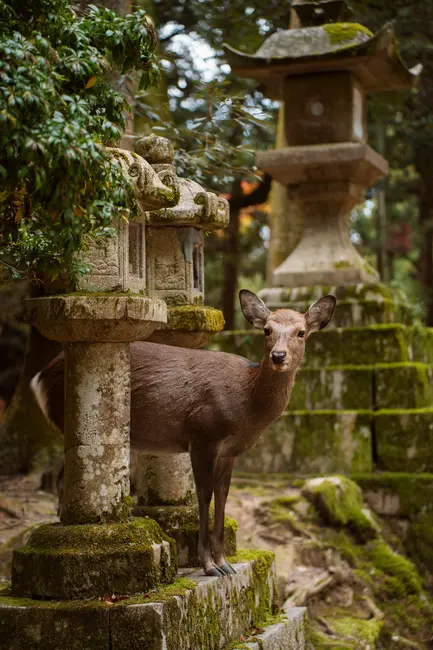
How to Get to Nara Park
From Osaka, Nara is about 40-50 minutes via the Kintetsu Line from Namba Station or JR Line from Osaka Station. Tickets will cost around ¥700-1,000 ($4.5 - $6.5 USD) one way, depending on which line you take. Both stations are walkable to the park, but Kintetsu-Nara Station is slightly closer (about 5-10 minutes on foot).
Buying tickets is easy: just grab them from the machines at the station (English available), or tap in with ICOCA/Suica/PASMO if you already have a transit card. No need to reserve anything in advance. The trains run constantly.
Kyoto (5 Nights)


Five nights in Kyoto gives you enough time to explore the city's temples, wander through traditional neighbourhoods, and take day trips without feeling rushed. This is where you'll fall in love with Japan's history and traditions. If you're short on time, you can cut a few nights from here, but you will miss out on some of the day trips and won't get to fully soak up all the culture Kyoto has to offer.
Top Spots in Kyoto:
- Fushimi Inari Taisha: The famous thousands of red torii gates winding up the mountain. Go early morning or late afternoon to avoid crowds. Try to time this on a weekday.
- Kinkaku-ji (Golden Pavilion): The gold-leaf-covered temple is stunning, especially on clear days when it reflects in the pond.
- Gion District: Kyoto's geisha district with traditional wooden machiya houses. Walk quietly and respectfully.
- Pontochō Alley (Pontocho District) This is a narrow lantern-lit alley running along the Kamogawa River. It’s one of Kyoto’s most atmospheric food streets, with tiny bars, hidden izakayas, teahouses, and riverfront dining decks in summer.
- Kiyomizu-dera Temple: Spectacular hilltop temple with views over Kyoto (note: it can get very crowded at sunset, but it is one of the best viewpoints for dusk in the city.)
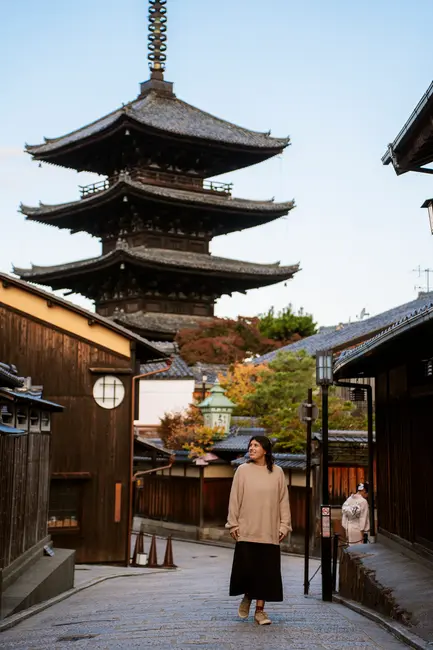
- Yasaka Pagoda (Hōkan-ji Temple): Iconic five-story pagoda rising above Kyoto’s historic Higashiyama streets. Perfect for photos along the narrow cobblestone lanes, especially with traditional wooden machiya houses framing the shot.
- Philosopher's Path: A peaceful canal-side walk lined with cherry trees. Beautiful in any season
- Nanzen-ji Temple (Near the Philosopher’s Path): This is the perfect add-on to the Philosopher’s Path with massive gates, zen gardens, mossy walkways, and a photogenic red-brick aqueduct that feels straight out of a Ghibli film.
- Ninenzaka & Sannenzaka’s Iconic Photo Spots (Temple Street): The postcard-perfect Kyoto streets with curved stone lanes, wooden shopfronts, and that iconic pagoda view rising above the rooftops.
- Nishiki Market. This area is known as Kyoto's kitchen. A long covered market packed with stalls selling everything from fresh seafood to pickles, sweets, and local specialties like yuba (tofu skin).
- Day Trip to Arashiyama: Arashiyama deserves a full day and feels completely different from central Kyoto.
- Arashiyama Bamboo Forest: Visit early morning before tour groups arrive.
- Sagano Romantic Train: A scenic train ride through the mountains (book in advance, especially during the fall foliage season.)
- Adashino Nenbutsuji: A temple with thousands of stone statues. It's hauntingly beautiful and often overlooked.
- Arashiyama Monkey Park Iwatayama: Hike up for mountain views and interactions with wild Japanese macaques
- Day Trip to Uji: Uji is the birthplace of Japanese matcha and makes for a relaxing half or full-day trip from Kyoto. The town is much quieter than Kyoto proper, and you can tour tea houses, visit temples, and obviously drink exceptional matcha.
Getting to Kyoto
You’ve got two solid options for getting between Nara and Kyoto, and both take roughly the same amount of time (about 45–50 minutes):
1. Take the regular Kintetsu train: fast, cheap, reliable.
This is what most people do. It’s inexpensive, runs constantly, and gets you exactly where you need to go without any planning. If you just want to move cities quickly and easily, this is the best option.
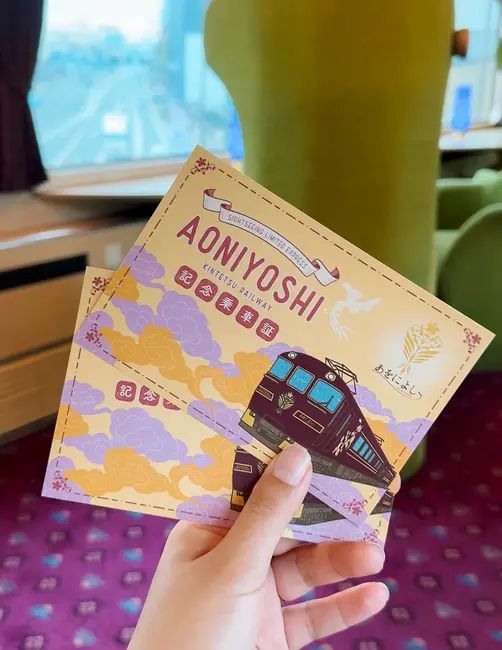
2. Upgrade to the Aoniyoshi Limited Express - the $10 luxury train.
If you want to turn the trip into part of the experience, spend the extra ¥750 (~$5 USD) and take the Aoniyoshi Limited Express. It’s a themed sightseeing train with velvet seats, temple-inspired interiors, panoramic windows, and a library and snack car that feels like a mini museum shop. Same travel time, way more fun.
Our take: If the timing lines up, take the Aoniyoshi. If the schedule doesn’t match your day, just hop on the regular Kintetsu train. You won't be missing out on efficiency, only the ambiance.
Where to Stay In Kyoto


There are a few great options in Kyoto that each have their own vibe.
Gion
The most atmospheric area in town. Traditional wooden buildings, cobblestone streets, and geishas walking around. It's touristy, yes, but still magical, especially at dusk. Expect to pay a bit more here.
Two top-rated options:

Rinn Gion Hanatouro
Rinn Gion Hanatouro offers modern Japanese-style rooms with an exceptional 9.8 location rating in Gion's south side. Just 1 minute to the renowned Geisha district Hanami-koji Street, 2 minutes to Kaburenjo theater and Kennin-ji Temple, and 4 minutes to Yasaka Shrine. Select rooms feature balconies with scenic views of local temples and the Higashiyama district. Contemporary Japanese decor throughout creates an authentic and immersive atmosphere.Check Availability
Yoin Hotel Kyoto Gion
Yoin Hotel Kyoto Gion offers spacious air-conditioned rooms with private bathrooms, work desks, seating areas, coffee machines, refrigerators, and TVs with an exceptional 9.5 location rating. Just 5 minutes from Gion Shijo Station, less than 0.6 miles to Shoren-in Temple, and 1.2 miles to Kiyomizu-dera Temple. Features elevator, concierge service, full-day security, and luggage storage. Highly rated for convenient location and generous room size.Check AvailabilityBest For: First-time visitors who want the classic Kyoto experience.
Higashiyama
Quiet and full of charm. Right near lots of Kyoto's best temples, walkable, peaceful, and feels like the Kyoto you see in the movies. Great base if you're here to soak up culture.
There are a few options here for more budget-friendly options, entire guesthouses, and upscale options.
Best For: Temple lovers, people who want charm and convenience.
Kyoto Station
More modern and central. Great transport links if you're planning day trips or want convenience over atmosphere. Less charm, more efficiency.
There are lots of standard Western-style large hotel options here:

APA Hotel
Kyoto Ekimae APA Hotel is just 656 feet from Kyoto Train Station with an 8.7 location rating for couples. Modern rooms feature air-conditioning, LCD TVs, free WiFi, fridges, electric kettles with green tea, private bathrooms with bathtubs, and free video-on-demand. Eight-minute walk to Higashi and Nishi Hongan-ji Temples, 25 minutes to Sanjusangen-do Temple. On-site buffet restaurant, massage services, vending machines, and private parking are available. Check Availability
Miyako City Kintetsu
Miyako City Kintetsu Kyoto Station is located inside Kintetsu Kyoto Station with an excellent 9.5 location rating for couples. Air-conditioned rooms feature neutral colors, flat-screen TVs, kettles, refrigerators, and private bathrooms with baths, slippers, and hairdryers. Twenty minutes to Kiyomizu-dera and Tofuku-ji Temples, 15 minutes to Kyoto International Manga Museum, 30 minutes to Yasaka Shrine. Twenty-four-hour front desk with free luggage storage.Check Availability
Hotel Tomiya with M's
HOTEL Tomiya with M's offers 4-star accommodations in central Kyoto with an excellent 9.6 location rating for couples. Soundproofed rooms feature air-conditioning, free WiFi, private bathrooms, work desks, TVs, bathrobes, streaming services, and kitchenettes. Just 2 minutes to TKP Garden City Kyoto and 1,312 feet from Kyoto Station. A 14-minute walk to Sanjusangen-do Temple. Highly rated for public transport access and convenient location.Check AvailabilityBest For: Travellers seeking convenience and easy train access.
Ryokan in the North (Kurama or Ohara)
If you want something peaceful and traditional, look for stays near Kurama or Ohara. These areas are quieter and less touristy, but they're not as convenient for exploring the city center.
Best For: People who want a traditional ryokan experience and don't mind being outside the main tourist areas

Kurama Onsen
Kurama Onsen offers mountain-view family rooms with air-conditioning, balconies, dining tables, work desks, and free toiletries. Excellent 9.1 location rating for couples. Extensive relaxation facilities include hot spring baths, open-air baths, sauna, hot tub, public bath, and terrace. On-site restaurant serves Japanese cuisine for dinner with a bar available. Near Shugakuin Imperial Villa and Kyoto Imperial Palace. Hiking opportunities nearby. Check Availability
Japanese Ryokan Seryo
Oyado Seryo offers traditional accommodations with 9.3 location rating for couples. 3 minutes from JR Ohara Bus Station with free shuttle service. Tatami rooms feature futon bedding, garden views, fridges, and tea/coffee facilities. Indoor and outdoor public baths are available. Japanese Kaiseki dinner, Wagyu Shabu-Shabu, or Sukiyaki cuisine served in the dining room. Five-minute walk to Ohara Sanzan-in and Hosei-in Temples, 7 minutes to Jakko-in Temple.Check AvailabilityWeek 2: Japanese Alps & Mountain Towns
Kanazawa (2 Nights)


Kanazawa feels like Kyoto before Kyoto got overwhelmed with tourists. It has similar old streets, geisha lanes, samurai homes, artisans everywhere, and none of the crowds. The city avoided WWII bombing, so most of what you’re seeing is original, not rebuilt. It’s compact, easy to explore, and loaded with culture.
Top Spots to Visit:
- Higashi Chaya District: Classic geisha district with wooden teahouses, craft shops, and lantern-lit lanes.
- Nagamachi Samurai District: Quiet neighbourhood of preserved samurai homes and earthen-walled alleys.
- Nomura-ke Samurai Residence: Beautiful interiors and one of the prettiest small gardens in Japan.
- Oyama Shrine: Known for its stained-glass gate and unique mix of Japanese + Western design.
- Kenrokuen Garden: One of Japan’s top gardens and different in every season (worth the morning visit).
- Omicho Market: Fresh seafood bowls, local snacks, and the best place for a cheap, incredible lunch.
Why It’s Worth the Stop:
You get the atmosphere of Kyoto with the breathing room of a smaller city, so it's perfect as a mellow but culturally rich break between the bigger hubs.
Where to Stay in Kanazawa


Most visitors stay near Kanazawa Station or in the central area between Kenrokuen and the geisha districts. Both spots make it easy to reach the main sights.
Top-rated central pick:

Hotel Kanazawa Zoushi
Hotel Kanazawa Zoushi features an exceptional 9.7 location rating with family rooms offering air-conditioning, private bathrooms with bidets, hypoallergenic bedding, and work desks. Select rooms have tatami or parquet floors with seating areas. Complimentary Asian breakfast includes local specialties. Less than 1 kilometre to Kanazawa Station, 4-minute walk to Saifuku-ji Temple, 17 minutes to Kanazawa Castle, 2 kilometres to Kenrokuen Garden.Check AvailabilityGood standard hotels near Kanazawa Station:

Daiwa Roynet Hotel KANAZAWA-MIYABI
Daiwa Roynet Hotel KANAZAWA-MIYABI offers modern family rooms with air-conditioning, private bathrooms with bidets, baths, refrigerators, work desks, TVs, and free WiFi with a 9.0 location rating. Just 5 minutes from Kanazawa Station, less than 1 kilometre to Hosho-ji Temple, and 3 kilometres to Kanazawa Castle. Features lounge, public bath, lift, 24-hour front desk, housekeeping, full-day security, and luggage storage. Paid on-site parking is available. Check Availability
Daiwa Roynet Hotel Kanazawa Eki Nishiguchi
Daiwa Roynet Hotel Kanazawa Eki Nishiguchi features soundproofed air-conditioned rooms with work desks and TVs. They've earned an excellent 9.3 location rating, being just 2 minutes from Kanazawa Station, 2.8 kilometres from Kenrokuen Garden and Kanazawa Castle. Modern Italian restaurant serves lunch and dinner. Highly praised buffet breakfast includes warm dishes and fresh fruits. Terrace, lounge, 24-hour front desk, and luggage storage available.Check AvailabilityBudget-friendly hostel:

Blue Hour Kanazawa
Blue Hour Kanazawa is just 3 minutes from Kanazawa Station with an excellent 9.4 location rating. Early 10:00 AM check-in with luggage storage allows full-day exploration. Ten-minute walk to historic Omi-cho Market and Kenrokuen Garden, 20 minutes by bus to Kanazawa Castle. Female-only floor available. Shared lounge with English-speaking staff. Two hours thirty minutes to Kyoto, 75 minutes to UNESCO Shirakawa-go villages, 2 hours to Takayama. Check AvailabilitySolid mid-range options near Kenrokuen / Katamachi

Kaname Inn Tatemachi
Kaname Inn Tatemachi boasts an exceptional 9.6 location rating in central Kanazawa. Just 350 meters to the 21st Century Museum, 700 meters to Myoryu-ji Ninja Temple, 800 meters to Kenrokuen Garden, and 1.1 kilometres to Kanazawa Castle. Spacious rooms feature kettles, fridges, slippers, bathrobes, and toiletries. Selectors most evenings. 24-hour staff assistance. Near Omicho Market and Seisonkaku Villa. Perfect blend of culture and comfort.Check Availability
Hotel Amanek Kanazawa
Hotel Amanek Kanazawa offers modern family rooms with air-conditioning, bidets, tea/coffee makers, fridges, kettles, and complete amenities with a 9.1 location rating. On-site restaurant serves Japanese and European cuisine. Features a fitness center, lounge, and public bath. Less than 1 kilometre to Myoryuji Ninja Temple and Kenrokuen Garden, 16-minute walk to Kanazawa Castle, 2 kilometres to Kanazawa Station. Bike hire and 24-hour front desk available. Check AvailabilityRyokan (traditional Inns)

Ryokan Karasawa
Ryokan Karasawa offers traditional Japanese accommodations in Kanazawa with air-conditioned family rooms featuring private bathrooms and garden views. Select rooms include baths, yukata robes, and tatami floors. Relaxing facilities include a lounge, public bath, and peaceful garden. Free WiFi and on-site private parking available. Twelve-minute walk to Aeon Town Kanazawa Shimeno. Five kilometers to Kenrokuen Garden and Kanazawa Castle. Check Availability
Motoyu Ishiya
Motoyu Ishiya is a historic 200-year-old ryokan featuring classic architecture, an original Noh stage, and mountain gardens with an 8.3 location rating. Twenty minutes to Kanazawa Castle, Higashi-Chaya, and Omi-cho Market. Luxurious tatami rooms offer futon bedding, air-conditioning, flat-screen TVs, fridges, and yukata robes. Indoor and outdoor hot-spring baths are available. Seasonal cuisine: Kaga vegetables, Nanao Bay seafood, and Jibuni duck hot pot. Check AvailabilityShirakawa-go (Day Trip)


Shirakawa-go is a UNESCO World Heritage gassho-style village that's famous for its thatched-roof farmhouses that look like praying hands. It's a living village, not a museum, so be respectful of residents. The bus drops you off for a few hours, then another comes and takes you the rest of the way to Takayama. It's just enough time to explore the main village and hike to the observation deck before moving on. There is cheap bag storage right at the bus station, so it's a perfect stopover between Kanazawa and Takayama.
Top Things to See & Do:
- Shiroyama Tenshukaku Observation Deck: Hike up for the postcard view of the entire village
- "Kyoshu" Traditional Coffee Shop: Warm up with coffee in a 250-year-old gassho house
- Shirakawago Three Houses: Tour the interiors to see how families lived in these unique structures
Continuing to Takayama: Your pre-booked bus will take you from Shirakawa-go to Takayama the same day (about 50 minutes.)
Takayama (3 Nights)


Takayama is one of our favorite stops in Japan. It's a beautifully preserved Edo-period town in the Japanese Alps with incredible food, sake breweries, morning markets, and easy access to mountain scenery. Three nights lets you explore at a relaxed pace.
Top Spots to Visit:
- Sanmachi Suji (Old Town): Takayama's preserved merchant district with sake breweries, shops, and restaurants
- Hida Folk Village (Hida no Sato): Open-air museum with traditional farmhouses relocated from around the region
- Miyagawa Morning Market: Browse local produce, crafts, and snacks along the river
- Higashiyama Walking Course: A peaceful temple walk on the edge of town
- Shinhotaka Ropeway: Take a day trip into the Northern Alps for dramatic mountain views (especially stunning in autumn)
Where to Eat & Drink:
- Falò Coffee Brewers: Excellent coffee in a minimalist space
- Funasaka Sake Brewery: Tour and taste Takayama's famous sake.
Getting to Shirakawa-go & Takayama: Take the Nohi Bus to Shirakawa-go, then book a continuing bus to Takayama the same day. Book both buses well in advance, because they fill up quickly, especially during peak seasons.
Matsumoto (1 Night)

Matsumoto serves as a convenient pit stop between Takayama and Tokyo, breaking up what would otherwise be a long travel day. The city's main draw is Matsumoto Castle, which is one of Japan's few original castles and arguably the most beautiful.
Best Things to See In Matsumoto
- Matsumoto Castle: The black-and-white exterior is insane in person and one of the best-preserved castles in the country. If you only do one thing, make it this.
- Old Castle Town Streets: Coffee shops, craft stores, local soba spots, and a slower, more lived-in vibe than the touristy areas in Kyoto or Takayama.
- Nakamachi & Nawate Streets: Traditional merchant houses, little bakeries, frog statues everywhere (yes, there’s a whole frog theme), easy to explore in an hour.
Optional Extension: If you have any extra time in your itinerary, add Nagano after Matsumoto to visit the snow monkeys in hot springs and explore more of the Japanese Alps.
How to Get to Matsumoto (From Takayama)
You’ve got two solid routes:
1. Direct Highway Bus (Easiest + Most Common)
- Time: 2.5 hours
- Cost: ¥3,500
- Where: Buses leave from Takayama Nohi Bus Center (right beside the station). This is a great option. Smooth ride, mountain views, drops you right in the middle of Matsumoto.
2. Train via Nagoya (Faster trains, more hassle)
- Time: 3.5 to 4 hours with transfers
- Cost: ¥7,000–9,000
- Route: Takayama → Nagoya (Hida Limited Express) → Matsumoto (Shinano Limited Express)
- This option only makes sense if you’re trying to make the most of your rail pass, or just love train travel. Otherwise, stick to the bus.
Week 3: Tokyo & Mount Fuji
Tokyo (4 Nights)


We recommend ending your trip in Tokyo rather than starting here. By this point, you'll have adjusted to Japan's culture and pace, making the massive capital less overwhelming. Four nights give you time to explore different neighbourhoods without burning out, though honestly, you could spend months here and still be discovering new streets, hidden restaurants, and unexpected corners.
Tokyo's not really one city. It's dozens of distinct neighbourhoods, each with its own personality and set of activities. Shibuya pulses with youth culture and chaos. Asakusa feels like stepping back in time. Shimokitazawa hides vintage shops down narrow lanes. Yanaka Ginza preserves old Tokyo charm with its traditional shopfronts and resident cats. You could dedicate an entire day to just one neighbourhood and barely scratch the surface.
Some travellers try to tick off every famous spot. We'd rather you wander. Pick a neighbourhood that sounds interesting, get a bit lost, follow your nose to a tiny ramen shop, stumble into a shrine tucked between buildings. The magic of Tokyo is in the small 'real life' moments between the massive landmarks and ancient history.
A few quick tips:
- View Shibuya Crossing from above (Starbucks or Shibuya Sky) rather than just crossing it. You'll appreciate the choreography of thousands of people moving in perfect chaos.
- Visit temples early morning or at night to avoid the daytime crowds. Senso-ji is particularly beautiful when it's illuminated after dark.
- Don't skip the observation decks. Whether it's the free one at Tokyo Metropolitan Government Building, the nostalgic Tokyo Tower, or the modern Shibuya Sky, seeing the city spread out in all directions is genuinely breathtaking.
- Markets are best explored hungry. The outer Tsukiji Market is perfect for a traditional Japanese breakfast of fresh seafood and street food. Come ready to eat.
- Day trips are worth considering if you have extra time. Nikko, Kamakura, and Hakone all offer something different with shrines, beaches, hot springs, and on clear days, views of Mt. Fuji.
Where To Stay In Tokyo
Tokyo's train system is so efficient that your neighbourhood choice matters more for vibe than convenience. Here are a few popular areas to consider:
Shimokitazawa
This is where we stayed, and we loved it. It's well connected by transit to all the popular tourist areas, but it's quieter and removed from some of the chaos. It's a hip, artsy neighbourhood with indie shops, cafes, and a local vibe. Best for travellers who want to feel like a local rather than a tourist. There are fewer standard hotels here, but there are great full apartments available that will give you the full Tokyo resident cosplay experience.
Top picks for apartments:
Standard hotel option:
Shibuya
The heart of youth culture and energy. You're steps from the famous crossing, endless shopping, and great nightlife. Best for first-timers who want to be in the thick of it and don't mind the crowds and noise.
Top picks:
Well-rated and budget-friendly capsule hotel:
Still good, but a bit cheaper:
Shinjuku
Tokyo's busiest transport hub with skyscrapers, entertainment districts, and everything you could possibly need. Golden Gai's tiny bars are nearby, as are parks and observation decks. Best for those who want maximum convenience and don't mind a bit of organised chaos.
Top picks:
Still good, but a bit cheaper:
Asakusa
Old Tokyo atmosphere with temples, traditional streets, and a more laid-back pace. Feels less overwhelming than Shibuya or Shinjuku. Best for travellers who want a more authentic, neighbourhood feel, and don't mind being further from the action.
Top picks:
Still good, but a bit cheaper:
Budget Options:
Ginza/Tokyo Station
Upscale and polished with excellent shopping and dining. Central location makes day trips easy. Best for those with a bigger budget who appreciate sophistication and don't need to be near nightlife.
Top Picks:
Still good, but a bit cheaper:
Ueno
Near museums, parks, and Ueno Station (a major transport hub). More affordable than other central areas with a local feel. Best for budget-conscious travellers and museum lovers.
Top picks:
Still good, but a bit cheaper:
How to Get to Tokyo (From Matsumoto)
Two simple options:
1) Limited Express Azusa (Easiest + Fastest)
- Time: ~2.5 hours
- Cost: ~¥6,500–7,000
- Route: Matsumoto → Shinjuku
- Direct train, comfy seats, scenic countryside, and you roll straight into central Tokyo. This is the move for most travellers.
2) Highway Bus (Cheaper)
- Time: ~3.5 hours
- Cost: ~¥3,500–4,000
- Where: Departs from Matsumoto Bus Terminal
- Good budget option. Less scenic, a bit slower, but still totally fine.
Mount Fuji Area (3 Nights)


While you could squeeze Mount Fuji into fewer days, giving yourself three nights maximizes your chances of actually seeing the mountain clearly. Fuji is notoriously shy, so cloud cover often obscures the view, so extra time means extra opportunities.
Why Stay 3 Nights:
- Weather changes daily, so more days = better odds of clear views
- You can explore multiple viewpoints around the five lakes region
- Less rushed experience enjoying hot springs, lakeside walks, and local restaurants

Top Viewpoints:
- Chureito Pagoda: The classic sunrise shot with the red pagoda in the foreground. Arrive 45 minutes early to claim your spot among the photographers (expect crowds and 400 steps up).
- Shiraito Falls: A fairytale waterfall with misty rainbows and Fuji towering behind. One of the most magical spots we visited.
- Lake Motosu: The view on the ¥1,000 bill. Quick roadside stop perfect for stretching your legs between viewpoints.
- Honcho Street (Fujiyoshida): Urban Fuji shot with the mountain looming at the end of a narrow street lined with shops and power lines. Go early to avoid crowds.
- Momiji Tunnel: In late fall, this tree-lined path glows with fiery red maple leaves framing Fuji perfectly.
Essential Tips:
- Check live webcams constantly. Fuji can be clear in one direction and completely hidden in another.
- Rent a car for maximum flexibility (skip Tokyo traffic by renting from somewhere like Odawara).
- Winter offers the best visibility, and fall adds stunning foliage.
- Pack layers. Mornings are freezing, afternoons can be warm.
- Be patient. Fuji is shy, but when she shows up, it's absolutely worth the wait.
Where to Stay Near Mt. Fuji


You have 4 general options here:
1. Stay in Tokyo and take a day trip. You won't get to every viewpoint, and you're less likely to get clear skies, but it's definitely the easiest option. This is a fully customizable tour that will let you take full advantage of all the information in this blog.
2. Stay at a traditional Ryokan. This is a great chance to work a traditional stay into your itinerary. Since you will have a car for this leg, you can browse among lots of more remote and boutique guest houses.

Kaneyamaen
Kaneyamaen in Fujiyoshida offers a 5-star hotel experience with a beautiful garden, free WiFi, and private bathrooms with a bath or shower. Features include free off-site parking and a daily Asian breakfast. Located 4.9 km from Fuji-Q Highland, 9 km from Lake Kawaguchi, and 24 km from Mount Fuji. Nearby attractions include Oshijuutaku Togawa and Osano's House (3.1 km) and Mount Kachi Kachi Ropeway (7 km). Couples rate the location 9.2.Check Availability
Fuji Onsenji Yumedono
Fuji Onsenji Yumedono is a luxurious ryokan located 1,640 feet from Lake Kawaguchiko, featuring traditional Japanese cuisine, suites with private outdoor hot-spring baths (onsen), and a garden. Massages available at extra cost. Japanese breakfast and a multi-course dinner of local specialties are served. Located 5 minutes' drive from Kawaguchiko Train Station. Nagasaki Park and Oishi Park are 10-minute taxi rides away with magnificent Mount Fuji views.Check Availability3. Standard hotel stay. There are lots of Western-style hotels around the Fuji area. Not a bad option. If you plan to be out all day and just need a place to crash at night. Here are a few well-rated options (all with free parking).

Fujikawaguchiko Resort Hotel
Fujikawaguchiko Resort Hotel offers comfortable rooms with mountain views, private bathrooms, air-conditioning, work desks, and TVs. Buffet breakfast features local specialties. aFeatures include a garden, open-air bath, lift, 24-hour front desk, child-friendly buffet, security, and luggage storage. Located a short walk from Fuji-Q Highland and Mount Kachi Kachi Ropeway. Nearby attractions include Lake Kawaguchi and Mount Fuji. Couples rate it 8.6.Check Availability
Fuji Matsuzono Hotel
Fuji Matsuzono Hotel in Yamanakako offers comfortable rooms with air-conditioning, private bathrooms, and modern amenities. Each room includes a tea and coffee maker, refrigerator, and free toiletries. Guests can enjoy a hot spring bath, open-air bath, and a beautifully maintained garden. Located a 14-minute walk from Lake Yamanaka, the hotel is close to attractions such as Fuji-Q Highland (14 km) and Mount Fuji (29 km). Free on-site private parking.Check Availability
Kuretake Inn Premium Fujinomiya
Kuretake Inn Premium Fujinomiya is a 3-star hotel in Fujinomiya, less than 1 km from Fujisan Hongu Sengen Taisha Shrine. Rooms feature air-conditioning, desks, flat-screen TVs, private bathrooms, and fridges. The hotel offers a 24-hour front desk, luggage storage, free WiFi, and buffet breakfast daily. Located 10 km from Taiseki-ji Temple, 18 km from Lake Tanuki, and 62 km from Shizuoka Airport. Couples rate the location 8.7 for two-person trips.Check Availability
Hotori No Hotel Ban
HOTORI no HOTEL BAN in Fujikawaguchiko offers family rooms with air-conditioning, private bathrooms, city or mountain views, baths, bidets, hairdryers, refrigerators, free toiletries, showers, slippers, TVs, soundproofing, and electric kettles. Located just a 16-minute walk from Kawaguchi Asama Shrine, 1 km from Lake Kawaguchi Ohashi Bridge, 3 km from Lake Kawaguchi, 6 km from Fuji-Q Highland, and 27 km from Mount Fuji. Couples rate it 9.1.Check Availability4. A Unique Glamping Experience

Mt.Shakushi Gateway Camp
Mt.Shakushi Gateway Camp in Fujiyoshida offers outdoor seating, a picnic area, and free parking. Features include air-conditioning, terrace, balcony, patio, parquet floors, garden and mountain views, dining area, and sofa. Located 119 km from Tokyo Haneda Airport, near Fuji-Q Highland (7 km), Mount Fuji (28 km), and Lake Kawaguchi (11 km). Guests appreciate scenic views and excellent service. Couples rate the location 8.9 for two-person trips.Check AvailabilityHow to Get Around the Mt. Fuji Area

Rent a Car: This is the best option if you want to hit multiple viewpoints in a day. The Fuji Five Lakes area is spread out, and public transit doesn't cover all the spots efficiently. Having a car gives you the freedom to chase the best light, adjust plans on the fly, and stop wherever you want.
Pro Tip: Don't rent your car from Tokyo. Take the train out of the city to Shin-Fuji Station, or another nearby station. This will shorten your drive and mean you can skip Tokyo traffic. We rented ours from Odawara as it was the closest rental car company with cars available at the time, and it was smooth sailing from there.
You can browse all the major companies and compare them in one place.
Public Transit
You can reach some viewpoints via train and bus (like Chureito Pagoda from Kawaguchiko Station), but it's slower and less flexible. If you're only visiting one or two spots, public transit works fine. If you want to do a full Fuji viewpoint tour, rent a car or book a tour.
Tours
There are day tours from Tokyo that hit the major Fuji viewpoints. They're convenient if you don't want to drive or take multiple days, but you'll be on a fixed schedule and won't have the flexibility to linger at your favourite spots.
There are generally 2 types of tours:
The private tours are more expensive, but they will let you make much better use of this list!
You can also browse other tour options here.
FAQ
How many days do you need in Japan?
Do I need a JR Pass for this Japan itinerary?
What is the best route through Japan to avoid backtracking?
Should I stay overnight in Nara or day trip?
How do I get from Kanazawa to Takayama via Shirakawa-go?
When is the best time to visit Japan?
How many nights should I spend at Mt. Fuji?
Where should I rent a car for Mt. Fuji?
Our Trusted Travel Partners
We only recommend products and services we personally use and trust.

SafetyWing
Travel medical insurance for nomads and remote workers
Booking.com
Find the best deals on hotels, apartments, and vacation rentals
AllTrails
Discover hiking trails with detailed maps and reviews
Surfshark
Secure VPN for safe browsing and accessing content worldwide
Get Your Guide
Find the best deals on tours and experiences
Airalo
Prepaid SIM cards for travelers
Trusted Housesitters
Find free accommodation by house and pet sitting worldwide
Wise
Send and receive money internationally with low fees* We may earn a commission when you make a purchase through our affiliate links, at no extra cost to you. We appreciate this support, which helps sustain our blog and allows us to create more content and help more great trips get planned!