

Short Answer

The best time to drive the NC500 is May, June, or September. May has decent weather, quiet roads, and no midges. June brings the longest days and some of the sunniest weather, though the midges start to appear. September is my personal favourite, with crowds thinning out once school is back on and the midges are mostly gone. July and August are the busiest and buggiest months, and October to April is best avoided because of short days, rough weather, and seasonal closures.
Where To Stay Along The NC500 (2026 Guide)
Click here for discounts and booking tips!What is the NC500?


The NC500 is an iconic road trip in Scotland that starts and ends in Inverness. The route loops roughly 500 miles (800 km) around the north coast of the Scottish Highlands, passing through mountain passes, fishing villages, white sand beaches, and some of the most stunning landscapes in the UK. It was officially launched in 2015 to bring visitors to the region, and it has since become one of the most popular driving routes in the country. I would advise driving it counterclockwise, heading up the east coast first and finishing along the west.
The drive itself is half the reason people flock to this route, but the castles, cliffs, caves, and cafes along the way are the real selling point for me. Clifftop ruins above the North Sea, sea caves you can walk into, and tiny roadside cafes where a bowl of soup and a view are the whole experience. Some of the best stops are not even on the official map, so leave room in your schedule for unplanned detours.
The roads are beautiful but narrow and can be quite difficult to drive. Much of the route is single track, meaning one lane with small pull-offs called passing places, and you are expected to pull in and wait to let oncoming traffic through.
Add in sheep on the road, blind crests, steep climbs like the Bealach na Bà, and the occasional oversized campervan, and it demands your full attention. If you are not used to driving on the left, or you are renting a manual, factor that learning curve in. Give yourself more time than the map suggests, since 500 miles here does not move like 500 miles anywhere else. Most people take five to seven days, and I would not go any faster than that.
Peak Season


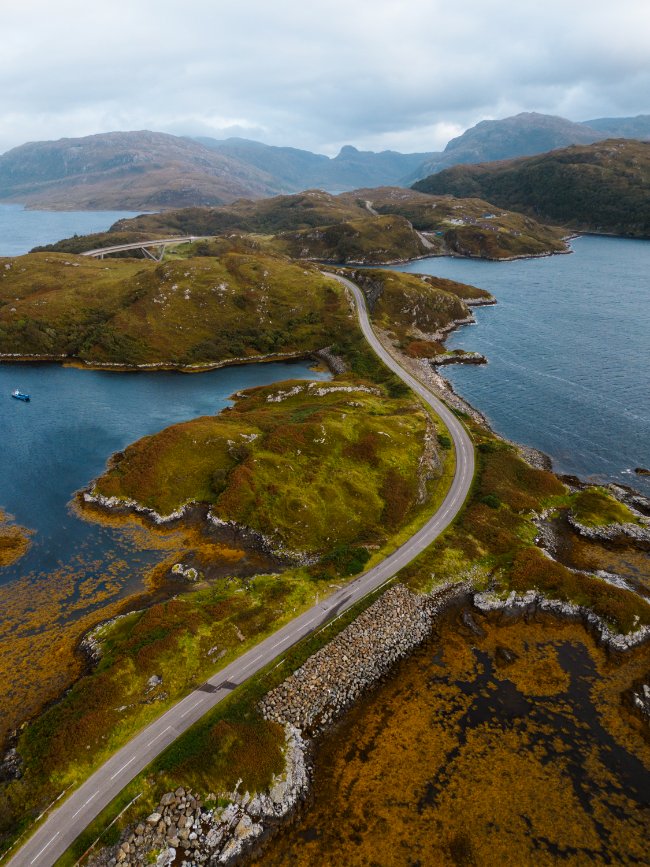
July and August are the most popular months to visit. The downside is the route gets crowded with tourists, and you are travelling in peak midges season.
The crowds are most noticeable on the single-track sections, where passing places fill up fast and you may spend more time waiting for traffic to clear than you expect. Popular stops can be busy by mid-morning, so start early if you want parking and photos without a line of people in them.
Accommodation is the other big squeeze. Campsites, B&Bs, and hotels along the route book up months ahead, and prices climb in summer, so lock in your nights as soon as you know your dates. Some of the smaller villages have only a handful of places to stay, which makes spontaneous planning risky.
Then there are the midges. These tiny biting flies are most active from late May through early September, and they are worst at dawn and dusk, on still, damp, overcast days, and near water or boggy ground. A light breeze helps a lot, but on a calm evening they can make standing outside unbearable. Pick up a repellent (Smidge is the one locals swear by), consider a midge head net if you plan to camp or hike, and wear long sleeves and trousers when the air is still. Plan your outdoor meals and sunset stops with that in mind.
It is not all bad news. Summer gives you very long daylight hours, with light lingering past 10 pm in the far north, which means you can fit in more stops and take on the narrow roads without racing the dark. If you can only travel in July or August, the trade-off is worth it, but go in knowing what to expect. If you have flexibility, May, early June, and September offer quieter roads with fewer midges.
Early Summer Shoulder Season


May has decent weather, fewer crowds, and no midges.
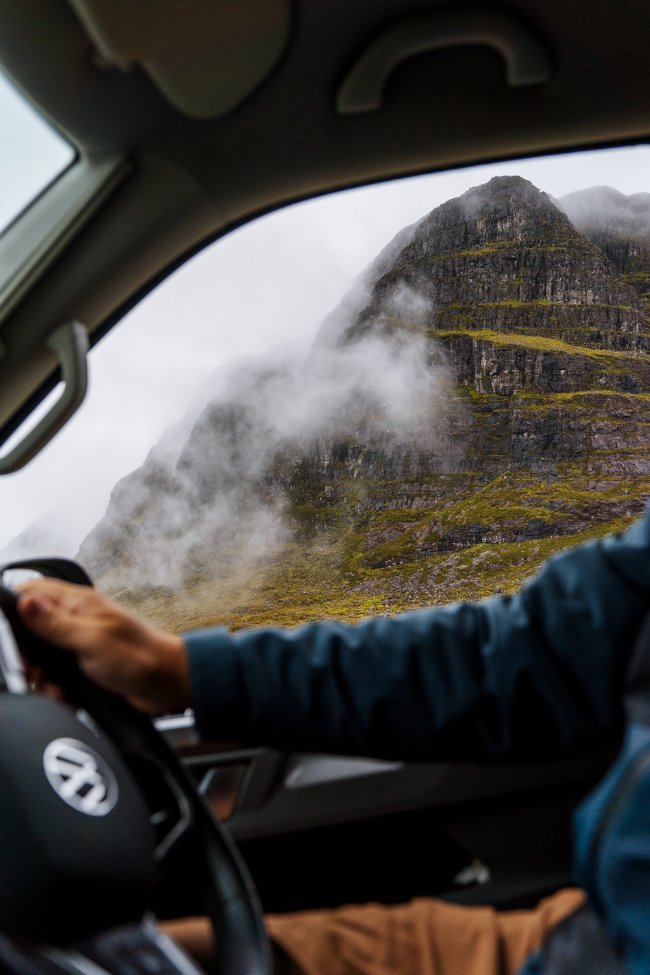
May is one of the driest months in the northwest Highlands, and you can get some of the clearest days of the year. Expect daytime temperatures around 10 to 15°C (50 to 59°F), with the odd warmer spell. The daylight hours are already generous, with the sun up before 5am and light lingering well past 9pm by the end of the month, so you have plenty of time to fit in stops without rushing the narrow roads. Pack layers and a proper waterproof shell, since the weather can swing from sunshine to hail in the same afternoon.
The roads are noticeably quieter. There is less waiting around in passing places, you are not stuck behind a convoy of campervans, and popular stops like Smoo Cave and the Bealach na Bà are far more pleasant without the mid-morning crush. Accommodation is also easier to book and often cheaper, so you can leave a little more room in your itinerary for spontaneous detours. It is still worth booking ahead for the smaller villages, but you are not fighting for the last bed in the county.
The landscape is a big part of the appeal too. Lambs are in the fields, waterfalls are running full from the spring melt, and the hillsides are covered in wildflowers and fresh green. Seabirds are nesting along the coast, so it is a great time for puffin spotting.
There are a few trade-offs. A handful of cafes, campsites, and attractions are only open seasonally, so check opening hours before you count on a stop. Midges are mostly absent through early and mid May, but they start to appear by the end of the month, so pack repellent just in case. Snow is rare on the high passes by May, but it is worth checking road conditions before you tackle the Bealach na Bà.
If you have flexibility, this is the sweet spot for the NC500: long days, quiet roads, and far fewer bugs.
Summer Shoulder Season

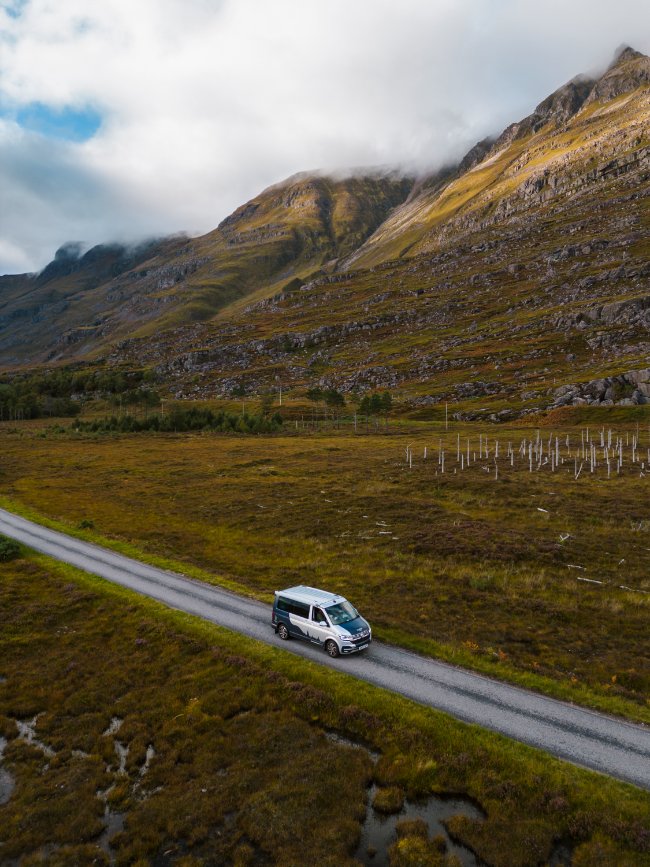
June is a good middle ground if May does not fit your schedule. It is often one of the sunniest months in the north, with daytime temperatures around 12 to 17°C (54 to 63°F) and daylight stretching past 10 pm. In the far north, it barely gets dark at all, which gives you plenty of time to fit in extra stops or tackle the single-track roads without feeling rushed. The big crowds do not arrive until July, so you still get quieter roads and easier bookings, though the most popular spots can start to fill up toward the end of the month. The midges begin to appear in early June and get worse as the weeks go on, so pack repellent and a head net if you plan to camp or hike, and keep an eye on the forecast. Calm, damp evenings are when they are at their worst.
September is the one I recommend most. Once the school holidays end, the roads open up, and you can stop at the popular viewpoints without waiting for a gap in the crowd. Accommodation is easier to book, and prices often drop. The midges thin out quickly, and while a damp, still evening can still bring a few out, they are nothing like the peak of summer. The weather is more mixed than in June, with daytime temperatures around 9 to 14°C (48 to 57°F), so pack layers and a good waterproof. You still get around 13 hours of daylight early in the month, though it shortens noticeably by the end, so plan your longer driving days accordingly.
The main trade-off is that some cafes, campsites, and attractions begin winding down for the season by late September, so check opening hours before you count on a stop.
Off Season


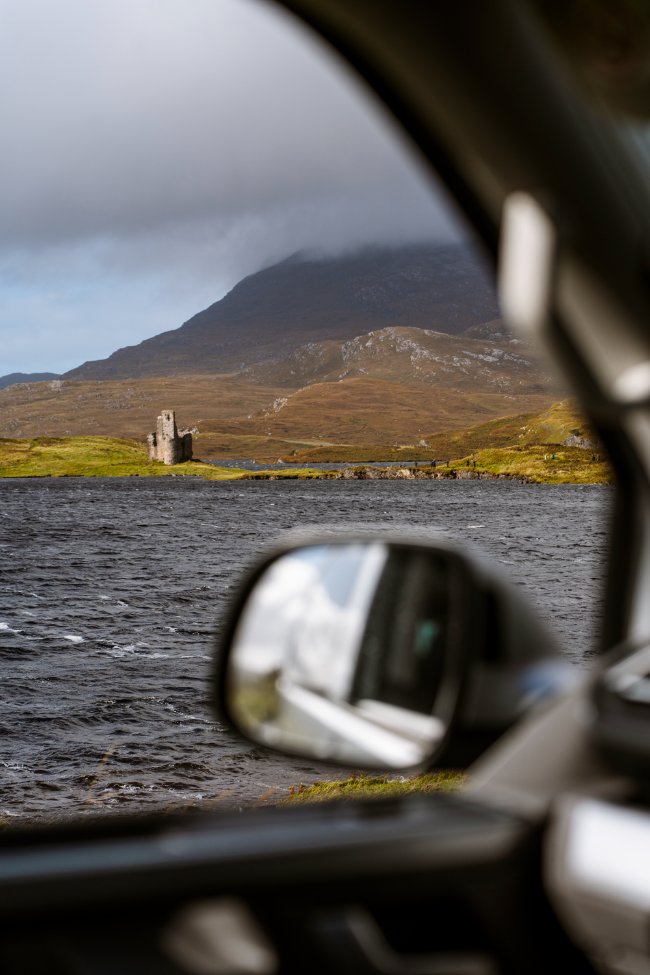
October to April is not ideal.
The main reason is daylight. By December, the sun rises around 9am and sets before 4pm in the far north, which leaves very little time to cover long stretches of narrow road. Driving the single-track sections in the dark, with sheep, deer, and the odd pothole to dodge, is a lot harder than it sounds. Plan shorter driving days and expect to spend more time in the car than the map suggests.
The weather is the next challenge. Winters in the northwest Highlands are wet, windy, and unpredictable, with gales, heavy rain, and the occasional snowstorm. Daytime temperatures hover around 2 to 7°C (36 to 45°F), and ice can form on the roads overnight. The Bealach na Bà is often closed in winter because of snow, so you may need to detour around it, and other high or exposed sections can be shut at short notice. Check road conditions daily and keep your schedule flexible.
Services are the other big issue. Many cafes, campsites, hotels, and attractions close from October through March. Accommodation is cheaper and easier to find in the places that stay open, but your options in the smaller villages are limited, so book ahead and confirm that your stop is open.
There are a few upsides. The roads are almost empty, the midges are gone, and the winter light over the lochs and mountains can be dramatic, especially with snow on the peaks. Clear, dark nights are also your best chance of seeing the northern lights. If you are comfortable with winter driving and flexible plans, it can be a rewarding trip, but it is best suited to experienced, confident drivers.
If you can, aim for May, June, or September instead.
Final Thoughts

The best time to drive the NC500 comes down to what you want from the trip. May is the sweet spot for quiet roads, long days, and no midges. June is a good backup with some of the sunniest weather of the year, as long as you pack repellent. September is my personal favourite, with thinner crowds, softer light, and midges that are mostly gone. July and August work if they are your only option, but expect full passing places, booked-out accommodation, and peak midge season. October to April is best left to confident winter drivers because of the short days, rough weather, and seasonal closures.
Whichever month you choose, give yourself more time than you think you need, book your accommodation early, and check opening hours before you count on a stop. The narrow roads and unpredictable weather are part of the adventure, but a little planning makes them a lot easier to enjoy.
Once you have picked your window, the next step is planning what to see along the way. Check out our NC500 guide for the best things to do, from sea caves and clifftop castles to the roadside cafes worth pulling over for. If you would rather have the days mapped out for you, our NC500 itinerary breaks the route into manageable driving days with stops, distances, and tips along the way.
FAQ
What is the best time of year to drive the NC500?
When are the midges worst on the NC500?
Is July or August a good time to drive the NC500?
Can you drive the NC500 in winter?
How many days do you need for the NC500?
Our Trusted Travel Partners
We only recommend products and services we personally use and trust.

SafetyWing
Travel medical insurance for nomads and remote workers
Booking.com
Find the best deals on hotels, apartments, and vacation rentals
AllTrails
Discover hiking trails with detailed maps and reviews
Surfshark
Secure VPN for safe browsing and accessing content worldwide
Get Your Guide
Find the best deals on tours and experiences
Airalo
Prepaid SIM cards for travelers
Trusted Housesitters
Find free accommodation by house and pet sitting worldwide
Wise
Send and receive money internationally with low fees* We may earn a commission when you make a purchase through our affiliate links, at no extra cost to you. We appreciate this support, which helps sustain our blog and allows us to create more content and help more great trips get planned!