
How Long To Stay


Recommended time: 2-3 days
Two days is the minimum, but three gives you enough time to properly settle in, do a trek, find a swim spot, and still have a lazy morning or two with a chai looking out over the hills. Most people book a guesthouse a little outside of town and use it as a base, which is exactly what we'd recommend. More on that below.

Getting There: The Local Bus Experience


We took the local bus from Kochi to Munnar for less than $2 USD per person. Yes, you read that right. Two dollars. For a multi-hour mountain journey.
It is, predictably, quite the experience.
The bus driver navigates the thin, winding mountain roads with a casual confidence that was equal parts impressive and terrifying. Teetering off the edges of cliffs and narrowly passing the other oncoming buses conjured up thoughts of the Knight Bus from Harry Potter, except it was real, it's on a cliff edge, and there's no magic keeping it on the road. The bus fills up fast, and then more people pile in anyway. Standing room only pretty quickly becomes a generous description.
There's no undercarriage storage, so bags go at the front in a communal pile near the driver. We lost sight of ours completely once things got busy, and just had to let go of any anxiety about it. They were right there waiting when we arrived, and a few people even helped us unbury ours from the pile.
One lesson we learned the hard way: don't assume the seating layout. We sat together on the wider seats on the right side of the bus, thinking they were two-seaters. They're not. They're three-seaters, and the little ones on the left side that look like solo seats are the two-seaters. We became quick, squishy friends with a young guy from Mumbai for the rest of the journey. He was great company until he fell asleep on my shoulder. So, fair warning for anyone who values their personal space.
Is the bus comfortable? No. Is it an experience you'll be talking about for the rest of your trip? Absolutely. If you're up for it, do it.
Local Buses in Munnar

Once you're in Munnar, the local buses are the cheapest and most entertaining way to get around. A ticket costs just a few cents, and a ticket guy weaves through the crowd, collecting cash from new passengers as you go. The same respectful chaos from the Kochi bus applies here. Buses are overflowing, stops are more of a slow-down than a full stop, and you learn quickly to start moving toward the door well before your destination.
It sounds stressful when written down, but it really isn't. There's a warmth to it that's hard to describe. People give up their seats for each other as their stops approach, help strangers with their bags, and steady each other on the bends. It's chaotic and communal in the best possible way, and after a few rides, you'll start to feel like you've got the hang of it.
I didn't realize this at the moment, but looking back on it, these bus rides really encapsulated for me the difference between Kerala and the rest of India, and even the rest of the world. In Canada, when buses get this full, there is a sense of competition and resentment that builds. Everyone wants a seat and is worried people will block them from getting off in time. But in Kerala, there is a communal effort to get everyone where they're trying to go.
Skip the Town, Embrace the Nature

We never made it into the main town of Munnar, and based on everything we heard from other travellers and locals, we didn't miss anything worth seeing. Nobody comes to Munnar for the town. Everyone comes for the mountains, the tea fields, and the fresh air. The consensus was pretty unanimous that the town itself is just a functional service hub rather than a destination.
The move is to base yourself at a guesthouse a little further out, take the bus or join tours during the day, and let the guesthouse handle your meals. It's a stress-free way to do it, and the guesthouses here have a way of making you feel like family pretty quickly. Ours felt less like accommodation and more like staying with relatives who happened to have a spectacular view.
We were given a bill at the end for our food, room, and drinks and were pleasantly surprised to see literally no hidden costs. They charged next to nothing for the food they made for us, and the food they ordered in for us was reasonably priced. There was no funny business like hidden fees or ordering overpriced food from their cousin's restaurant.
What Makes Munnar Special


The thing that hits you first is the air. After the heat and humidity of the coast, stepping off the bus in Munnar feels like taking a proper breath for the first time in days. The mornings and evenings are cool up here, and it's the kind of cool that has you reaching for a layer, which feels almost surreal after sweating through Kerala's lowland cities. The days are warm and sunny, but never oppressive. It will make you want to be outside all day, which is convenient, because outside is exactly where all the good stuff is.
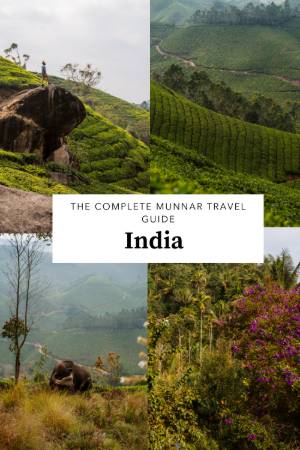
Then there are the tea fields. They spread across the hills in every direction for as far as the eye can see and are a deep, almost impossibly uniform green, broken only by winding paths, workers' shelters, and the occasional viewpoint. It sounds like a cliché to say a landscape is breathtaking, but Munnar earns it. We caught ourselves just stopping mid-conversation to stare more than once.
The combination of the cool air, the scenery, and the slower pace of life up here creates something that's hard to find elsewhere in India. It feels like a different world from the cities, and after even a day or two, you'll understand why people so often extend their stays.
Trekking the Tea Fields


Getting out into the tea fields on a proper trek is the main event in Munnar, and we'd recommend it without hesitation. They're even more beautiful up close than they look from a distance, and the views from the higher trails really show off the scale of the surrounding area.
Wildlife sightings aren't guaranteed, but they're not uncommon either. We spotted a wild buffalo on our trek, and someone staying at our guesthouse had a close encounter with a wild elephant the same day!
Now, here's the thing: the tea fields are private property. Technically, you're not supposed to trek on them independently. In practice, plenty of people do, especially after 4 pm when the workers are wrapping up for the day, and the trails are quieter. But you do run the risk of being stopped by a security guard and facing a fine or an on-the-spot "negotiation" that feels a lot like the tip situation at the fishing nets in Fort Kochi.
The better option is what we did. Hire a local guide. It's inexpensive, the guides know the best trails and viewpoints, they come with snacks, and not a single security guard gave us a second look the entire time. It also puts money directly into the local community, which, after a few days of watching how hard people work up here in the fields, feels like the least you can do.
Getting Around Munnar
Outside of the local buses, tuk-tuks and taxis are available for getting around. Unlike Fort Kochi, Uber isn't reliably available up here, which means you're back to negotiating fares before you get in. It's not a big deal once you're used to it, but agree on a price upfront and don't get in until you have. Your guesthouse is usually the best resource for arranging transport, day trips, and guides. That's what they're there for, and they'll steer you right. They will often call up their cousin, but they will also get you set up with a fair rate.
Where To Eat In Munnar
If your guesthouse is cooking for you, let them. The home-cooked meals at the guesthouses in Munnar were some of the best food we had in all of Kerala. Simple, fresh, made with care, and usually involving more dishes than you could reasonably finish. It's also the best way to experience proper home-style Kerala cooking rather than the slightly more tourist-facing versions you get at restaurants in town.
If you do head into town for a meal, there are plenty of small local spots serving solid South Indian staples at very reasonable prices. Just wander, see what looks busy, and trust your instincts. Busy means good, everywhere in India.
Where To Stay In Munnar


Staying a little outside of the main town is the move, and pretty much every traveller we spoke to said the same thing. The guesthouses in the hills tend to be family-run, incredibly welcoming, and often come with views that would cost five times as much anywhere else. Look for somewhere with meals included, because it simplifies your day considerably, and the food is almost always excellent.
Booking ahead is a good idea, especially between December and March when Munnar gets busy with both international visitors and domestic tourists escaping the heat of the plains. The best guesthouses fill up fast, and this isn't the kind of place where you want to be scrambling for a room at the end of a long bus journey.

The Valle
A 5-star retreat in the Munnar hills, The Valle by Kondody delivers on comfort with spa facilities, a fitness centre, and rooms with private balconies overlooking the gardens. The restaurant covers everything from local Kerala cuisine to Italian and seafood. A solid splurge option if you want world-class amenities without sacrificing the mountain setting. Couples rate it 9.3/10.Check Availability
The Panoramic Getaway
A scenic hillside retreat with two rooftop heated pools, a spa, and mountain views from every room. The Panoramic Getaway has two restaurants covering everything from Indian and Chinese to grilled tandoor, pizza, and tacos. Rooms come with balconies, and the whole property has a resort feel without being too over the top. Couples rate it 9.0/10.Check AvailabilityFinal Thoughts
Munnar was a breath of fresh air, literally and figuratively. The tea fields are stunning, the weather is a genuine relief after the coast, and the whole place just slows you down and reminds you that most of the world is not living zoom-call to zoom-call and worrying about AI making them obsolete. You'll arrive thinking you'll stay a couple of days and start doing the mental math on how you could stay longer.
It's also a completely different experience from Fort Kochi. There's no tourist pressure, no commission-hungry tuk-tuk drivers, no one watching you the moment you walk into a shop. People are warm and helpful because that's just who they are up here, and after a few days of navigating the soft hustle of the coast, that difference is more noticeable than you'd expect.
Hire the guide for the tea fields, take the local bus at least once, and let your guesthouse feed you. That's really all there is to it.
FAQ
How do I get from Kochi to Munnar?
How long should I spend in Munnar?
Is Munnar worth visiting?
Do I need a guide to trek the tea fields in Munnar?
What is the best time to visit Munnar?
Where should I stay in Munnar?
Is the town of Munnar worth exploring?
How do I get around Munnar?
What wildlife can I see in Munnar?
Where should I eat in Munnar?
Our Trusted Travel Partners
We only recommend products and services we personally use and trust.

SafetyWing
Travel medical insurance for nomads and remote workers
Booking.com
Find the best deals on hotels, apartments, and vacation rentals
AllTrails
Discover hiking trails with detailed maps and reviews
Surfshark
Secure VPN for safe browsing and accessing content worldwide
Get Your Guide
Find the best deals on tours and experiences
Airalo
Prepaid SIM cards for travelers
Trusted Housesitters
Find free accommodation by house and pet sitting worldwide
Wise
Send and receive money internationally with low fees* We may earn a commission when you make a purchase through our affiliate links, at no extra cost to you. We appreciate this support, which helps sustain our blog and allows us to create more content and help more great trips get planned!