
Practical Tips for Kerala

Transportation
- Local buses are incredibly cheap (often under $1 USD) but can be crowded and chaotic. They're a worthwhile experience in themselves.
- Uber works well in Kochi and is reliable and affordable.
- Trains connect the major cities and are worth experiencing for longer journeys.
- Tuk-tuks are everywhere, but always negotiate the price before getting in, or use Uber to avoid hassle.

Money
- Many places in Kerala are cash only, especially in smaller towns and tourist areas like Varkala. You will also need lots of small bills for tips (there is a big tipping culture).
- ATMs can be scarce in touristy areas (looking at you, Varkala cliff), so withdraw cash when you see them.
- Prices in Kerala are generally higher than in other parts of India, but still very affordable by Western standards.
Weather
- Kerala is hot and humid year-round, but Munnar is cooler due to elevation.
- Monsoon season (June-September) brings heavy rain. We visited in the dry season (December to March) and would recommend that for ease of travel.
Accommodation
- In Munnar, stay at a guesthouse outside of town. They'll cook for you, arrange tours, and make you feel like family.
- In Kochi and Alleppey, hostels and hotels are plentiful and affordable.
- Book ahead during peak season (December-February)
Food
- Kerala food is delicious. Try the fish curry, appam, dosa, and thali meals.
- Street food is safe if you stick to busy places where food is freshly cooked.
- Restaurants in tourist areas (Fort Kochi, Varkala) are pricier but still reasonable.
Itinerary At A Glance

Days 1–3: Kochi (Fort Kochi)
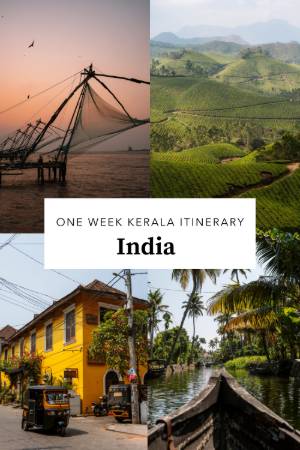
Your starting point and soft landing. Fort Kochi is a walkable, photogenic colonial old town with ancient trees, Chinese fishing nets at sunset, and good food. It's on the tourist trail, and it's obvious, with pushy shopkeepers, tuk-tuk tour pitches, tip-expecting fishermen, and eager restaurant owners. But none of it is aggressive, and it's actually great practice for the rest of India. Use Uber, carry small bills, and enjoy the architecture.
Days 3–5: Munnar
A mountain town at 1,500 metres with cool air, zero hustle, and endless rolling tea fields. Base yourself at a guesthouse out in the hills, hire a local guide for the tea field trek, and let your host family feed you. The local bus journey up from Kochi is an experience worth having in itself.
Days 5–6: Alleppey
One to two days on Kerala's famous backwaters. Skip the houseboats unless you're in a big group. Instead, opt for the canoe tours through the narrow side canals, which are quieter, more scenic, and take you through a slice of local life that most tourists miss entirely. The town itself is pleasant and refreshingly low-pressure.
Optional: Varkala
A beach town on a dramatic cliff, that sounds better on paper than it is in practice (in my opinion). The beach is decent, the food strip is average, and the ATM situation will drive you mildly insane. Worth one night if you're already in the area and craving a beach day. In my personal opinion, it's not worth going out of your way for or giving up time in other parts of the country for.
Days 1 - 3 Kochi (Fort Kochi) (Cochin)

Fort Kochi is the perfect place to start a Kerala trip, and honestly, one of the most charming stops in all of India. It's a small, walkable old town with a layered colonial history: Portuguese, Dutch, and British influences are all visible in the architecture, much of which is beautifully crumbling or being taken over by nature in a way that only adds to the atmosphere.
Massive ancient Banyan and rain trees have grown into and around the buildings over hundreds of years, making a simple stroll through the streets feel like something out of a movie. The iconic Chinese fishing nets along the waterfront are a must-see sight, and watching the sun go down over them is a travel moments that makes you instantly forget about all the uncomfortable Ubers and expensive flights.
Beyond the photo walks, there's a solid amount to keep you busy. Mattancherry Palace has impressive Kerala murals that most people walk straight past, and nearby Jew Town and the Paradesi Synagogue offer a fascinating detour into a surprisingly rich slice of Kochi's history. The street outside is lined with antique shops and spice vendors and makes for a slightly more relaxed shopping experience than Fort Kochi proper.
Speaking of shopping, the handmade, block-printed clothing in Fort Kochi is beautiful, and if you're planning to pick up clothes anywhere in India, this is a great place to do it. Just be warned that the shopping environment is high-pressure and prices are above what you'd pay elsewhere in the country.
Fort Kochi is also a great place to get your first taste of navigating India's tourist economy. The tuk-tuk tours aren't worth it, the fishermen at the nets will expect a tip, and shopkeepers will follow you around the moment you walk in.
None of it is aggressive or unpleasant, but it's just good to know going in. Use Uber to get around, carry plenty of small bills for tips, and practice your polite-but-firm "no thank you." You'll be using it a lot for the rest of the trip.

Days 3-5 Munnar


If Fort Kochi eases you into the state, Munnar is where you actually fall for it. Sitting at around 1,500 metres above sea level in the Western Ghats, it's a completely different experience from the coast, with cool mountain air, no hustle, and tea fields stretching across the hills as far as you can see. The whole place feels like someone turned the volume down and the saturation up. No (or less) honking, no commission-hungry tuk-tuk drivers, no one watching you the moment you walk into a shop. After a few days of navigating the soft pressure of Fort Kochi, the shift is more noticeable than you'd expect.
Getting there on the local bus from Kochi is an experience worth having in itself. Tickets cost less than $2 USD per person for a multi-hour mountain journey on roads that are narrow, winding, and a little bit scary. It's chaotic, it's cramped, and you'll be talking about it for the rest of your trip.
Once you're up there, the town itself isn't really the point. Base yourself at a guesthouse out in the hills with meals included, and use it as your base for your visit. The guesthouses here are family-run, warm, and usually a great value. Ours felt less like accommodation and more like staying with relatives who happened to have a spectacular view.
The main event is getting out into the tea fields on a trek. They're even more beautiful up close than they look from a distance, and wildlife sightings are common. The fields are privately owned, so hire a local guide rather than going it alone. It's inexpensive, they know the best routes and viewpoints, and you won't have to negotiate with any security guards along the way. It also puts money directly into the local community!

Days 5-6: Alleppey


Alleppey is sometimes called the "Venice of India." It's a generous comparison, but once you're there, you will see where they're coming from. The water is everywhere, the town is built around it, and the best way to experience the area is from a boat. But before you picture Italian piazzas and gondoliers, it's worth understanding what the backwaters actually are, because the term gets thrown around a lot without much explanation.
Kerala's backwaters are a vast network of interconnected lakes, rivers, canals, and lagoons that run parallel to the Arabian Sea coast for nearly 900 kilometres. They were formed over thousands of years as rivers flowing down from the Western Ghats met the sea and created this sprawling inland waterway system. For the communities that grew up along them, the backwaters weren't a tourist attraction; they were the roads. Goods were moved by boat, fish were caught and sold from the water, and entire villages were built on narrow strips of land with canals on either side. In many places, that's still true today. Alleppey sits at the heart of this network, which is why it became the place most people associate with the backwaters experience.
The key decision you'll need to make before you arrive is whether you want a houseboat or a canoe tour, and for most travellers, especially couples and solo visitors, the answer should be the canoe.
The houseboats are the famous option, and if you're with a big group or a family, renting one out for a day and night looks like great fun. You get your own floating home, a cook on board, meals included. The appeal is obvious. But the houseboats stick to the main canals, which are heavily trafficked, diesel-powered, and, frankly, not that interesting compared to what's deeper in the network.
The canoes take you through the narrow side canals that branch off from the main waterways that are only accessible by small boat, and they're where Alleppey locals actually live. You pass by people's homes, women doing laundry on the bottom step, children splashing around, boats pulling up alongside houses to sell fish, vegetables, and everything else you can imagine.
A floating market, operating the same way it probably has for a hundred years. The canoes are silent, and zero emission, and the only sounds are the paddles, the birds, and the occasional shout of laughter from kids who've spotted you coming around the bend. It's one of the most peaceful things we did in all of India.
Beyond the water, the town itself is pleasant and refreshingly low-pressure. We went for an evening walk, found somewhere busy for dinner, ate well, and paid very little. Nobody tried to redirect us to their cousin's shop. For a place that sees a lot of tourists, that absence of hustle is more refreshing than you'd think.
One to two days is the right amount of time here. Do the canoe tour, have a wander, eat well, and then keep on moving.

Optional Add-On: Varkala Recommended time: Skip it, or 1 day maximum

This is just our opinion…but: Varkala was the one stop in Kerala that didn't really earn its place on the itinerary. We stayed four days and wouldn't really recommend that long to anyone.
Varkala is a beach town built up on top of a dramatic red cliff, with a single strip of tourist restaurants, shops, and guesthouses running along the edge of it. The views from the cliff are genuinely nice, and we can see the appeal on paper. But in practice, it felt like a tourist trap that had been assembled quickly and maintained reluctantly.
The beach itself is also great on paper (massive and expansive white sandy beach), but the water wasn't particularly clean, and the sky had a persistent haze that made proper beach days feel elusive.
The food on the cliff strip was fine. Not bad, not memorable, priced on the higher end for India (which still means affordable by western standards, but you notice it more when the quality doesn't match). The shopping is mostly souvenirs aimed at domestic tourists, and there's not much else to do once you've walked the strip.
The one thing that will actually drive you slightly mad is the ATM situation. The entire tourist area sits up on the cliff, and almost everything is cash only. The ATMs are all down at the bottom, on the main local road at sea level. So multiple times a day, you'll watch fellow travellers make the sweaty pilgrimage down the hill and back up again. We took a tuk-tuk both ways, and it started to feel like an unofficial tourist tax.
If you're desperate for a beach day and already in the area, one night is enough to get a feel for it and move on. But if you're choosing between Varkala and an extra day in Munnar or Alleppey, it's not close. And if beaches are a priority, Goa does it better, and Sri Lanka or Thailand do it significantly better again.
Our honest recommendation: skip it and head straight to your next destination. You won't spend a single day of the rest of your trip wishing you'd gone to Varkala. And if you're really craving some beach time after your India trip, consider heading to the south coast of Sri Lanka. There is an incredible surfing and digital nomad scene there that will surely scratch that sun and sea itch more thoroughly than Varkala.

Why Visit Kerala


If you're planning your first trip to India and trying to figure out where to start, Kerala is the answer most experienced travellers will give you. India is one of the most rewarding countries in the world to travel, but it can also be one of the most overwhelming, particularly if you land straight into Delhi or Mumbai with no prior frame of reference. The sensory overload, the traffic, the heat, and the constant negotiation are a lot to absorb all at once. Kerala lets you skip that initial shock and ease in gradually instead.
The culture, the chaos, and the colour are all there. You'll still negotiate with tuk-tuk drivers and navigate the tipping culture and deal with the occasional pushy shopkeeper. The food will still challenge you, the buses will still be an adventure, and the heat will still remind you daily that you are not at home. But the intensity is turned down.
People are warmer and less transactional. The scams are scarcer and softer. The landscapes are still stunning, with colonial towns slowly merging with ancient trees, mountain roads disappearing into tea fields, and backwater canals where daily life still happens entirely from boats.
By the time you're ready to head north to Rajasthan or Goa or wherever the rest of your trip takes you, you'll have found your India legs without having needed to white-knuckle it from day one.
Kerala is also just a remarkable place in its own right, not simply a practice run for the rest of the country. It consistently ranks among India's most literate, most developed, and most progressive states, and that shapes the experience in ways that are hard to quantify but easy to feel.
There's a different relationship between locals and visitors here, and you can feel less of the desperation and inequality that can make interactions in more tourist-saturated parts of India feel exhausting.
After a few days in Munnar or drifting through the backwaters in Alleppey, you start to understand why so many people who come to Kerala for a weekend end up staying for three.
Getting Around Kerala


One of the things that makes Kerala so manageable as a first Indian destination is that the transport between stops is pretty straightforward and cheap. The distances are short, the roads are better than you'd expect, and the local buses go pretty much everywhere for almost no money. Here's what you need to know for each leg of the itinerary.
Kochi → Munnar: Take the local KSRTC bus from Ernakulam bus station. It costs under $2 USD per person, winds up through the mountains on roads that are narrow, steep, and spectacular, and is one of the more interesting experiences of the whole trip (full story in our Munnar guide).
Buses run roughly every hour from early morning and take around 4 to 5 hours. If you'd rather not do it the hard way, private taxis cover the same route in 3.5 hours for around $20 to 40 USD. One important note: the bus and train stations are on the Ernakulam (mainland) side of Kochi, not Fort Kochi itself. Budget an extra 30 to 45 minutes and a short Uber or Water Metro ride to get there before your departure.
Munnar → Alleppey: There's no train connection from Munnar, so it's bus or taxi. A direct KSRTC bus runs in the morning. Ask your guesthouse to confirm the current schedule the night before, since timings shift seasonally. A private taxi runs $25–40 USD and is worth considering if you're splitting it between two people. Either way, an early departure gives you the most flexibility when you arrive.
For an alternative worth seriously considering, take the bus or taxi to Kottayam instead of going all the way to Alleppey by road. From there, the government ferry to Alleppey costs almost nothing and takes two and a half to three hours through the heart of the backwaters. Arriving by water rather than by bus is a special way to enter the region, and you'll have done your first backwaters experience before you've even checked in.
When we took the ferry, there were only a few other locals hopping on and off. The cool breeze blew across the water, making it much cooler than the buses, and it was a great introduction to the backwaters. We boarded in a big, wide channel and at first were passing just overgrown banks, and rundown, abandoned buildings that were being reclaimed by the jungle.
But soon we turned into narrower canals and started passing through living villages and going under pedestrian bridges that needed to be raised by ropes as we came by. It already felt cool to see the way people lived along the backwaters, but little did we know that this whole ride would pale in comparison to the actual canoe tour the next day.
It was the perfect way to arrive and the best way to be introduced to the backwaters in general. Also, it's not practical to arrive and do a tour all in the same day anyway, so why not make the journey as fun as possible, get in for dinner, and then get some sleep before heading out for your tour in the morning.
Kottayam is roughly on the way; the detour adds minimal time, and the ferry ticket costs a fraction of anything a tour operator would charge for the same scenery. Ferries usually depart Kottayam at 6:45am, 11:30am, 1:00pm, and 5:15pm, but confirm the current schedule at your guesthouse and time your Munnar departure accordingly.
Kochi → Alleppey (or return): The train is the obvious choice here and one of the easiest journeys in Kerala. The service from Ernakulam Junction to Alleppey runs multiple times a day, takes under an hour, and costs about $1–2 USD. Book online in advance, or just buy a general class ticket at the station on the day.
Alleppey → Varkala: Train again. Several daily services cover this route in 2–3 hours for a few dollars. Just double-check your specific service actually stops at Varkala, because not all southbound trains do. It's easiest to book ahead online, but it can be slightly cheaper (though much more confusing) to book in person on your travel day.
A few general things worth knowing before you go. Uber works well in Kochi and is our default recommendation for getting around the city, but it becomes unreliable and eventually disappears once you leave, so don't count on it in Munnar, Alleppey, or Varkala. Tuk-tuks fill the gap everywhere; always agree on a price before you get in. If you're in Kochi, the Water Metro is an impressive and cheap way to get between Fort Kochi and the mainland. It uses electric, air-conditioned boats that run every 15 minutes or so for less than a dollar. Most people don't know it exists, and it's one of the best things in the city.
Finally, carry cash. Bus fares, tuk-tuks, and most local guesthouses and restaurants are cash only. Withdraw in Kochi and Alleppey, where ATMs are easy to find, rather than relying on spotting one in Munnar or Varkala when you need it most.
For a full breakdown of every route, transport option, and booking link, see our complete Kerala transport guide.
Final Thoughts
Kerala is a fantastic introduction to India. It's got the culture, the chaos, and the incredible landscapes, but it's more manageable than jumping straight into Delhi or Mumbai.
Our highlights were definitely Munnar (those tea fields!) and the peaceful canoe ride through Alleppey's backwaters. Kochi was nice but a bit touristy, and Varkala we could have skipped entirely.
If you're planning a trip to India, starting in Kerala and working your way north (like we did) is a smart move. You'll ease into the country's rhythms and build up your tolerance to some of the more challenging parts of travelling the sub-continent.
FAQ
How many days do I need for Kerala?
Is Kerala safe for solo travelers?
What's the best time to visit Kerala?
Is Kerala expensive?
Should I rent a car in Kerala?
Are the beaches in Kerala worth visiting?
What should I pack for Kerala?
Can I drink the water in Kerala?
How do I get around in Munnar without a car?
Is the canoe tour in Alleppey worth it?
Our Trusted Travel Partners
We only recommend products and services we personally use and trust.

SafetyWing
Travel medical insurance for nomads and remote workers
Booking.com
Find the best deals on hotels, apartments, and vacation rentals
AllTrails
Discover hiking trails with detailed maps and reviews
Surfshark
Secure VPN for safe browsing and accessing content worldwide
Get Your Guide
Find the best deals on tours and experiences
Airalo
Prepaid SIM cards for travelers
Trusted Housesitters
Find free accommodation by house and pet sitting worldwide
Wise
Send and receive money internationally with low fees* We may earn a commission when you make a purchase through our affiliate links, at no extra cost to you. We appreciate this support, which helps sustain our blog and allows us to create more content and help more great trips get planned!