

This guide covers everything you need to know about getting between the four main stops on our Kerala itinerary: Kochi, Munnar, Alleppey, and Varkala. We also include the best option for each leg, what to expect, and the practical details that save you time and headaches on the ground.

Understanding Kerala's Transport Options
Before getting into the specific routes, it's worth knowing what's actually available across the state, because not every option works everywhere.
Uber
Uber is reliable and affordable in Kochi and is our default recommendation for getting around the city itself. The app works the same way it does at home, pricing is transparent, and you avoid the Tuktuk negotiation entirely. Once you leave Kochi, Uber becomes patchy and eventually disappears altogether, so don't count on it in Munnar, Alleppey, or Varkala.
A common scam you might run into (we did) is drivers acting confused about the app and asking for cash payment. You will end up paying once with cash and again through the app. You know they are lying because you can see on the app that most of them have hundreds, if not thousands, of rides already under their belt.
KSRTC Buses
KSRTC (Kerala State Road Transport Corporation) is the backbone of public transport in Kerala and runs an enormous network of routes connecting every major town and most minor ones. The buses range from basic local services, with bench seats, windows that may or may not open, and standing room only, to air-conditioned Volvo coaches that are more comfortable for longer journeys.
Fares are incredibly cheap across the board. The trade-off is that the buses run on their own schedule and their own definition of punctuality, and on the more popular routes, they fill up fast. For budget travellers or anyone who wants the full Kerala experience, they're indispensable. For everyone else, they're at least worth doing once.
Trains

The Kerala coastal rail line connects Kochi, Alleppey, and Varkala with regular, cheap, and reasonably comfortable services. Trains don't reach Munnar, because it's in the mountains and there's no rail connection, but for the coastal legs of the trip, they're often the best option.
Book through the IRCTC app or website (irctc.co.in). Or if you're not able to get that working (we weren't either), you can also use 12Go Asia. The tickets are sometimes marginally more expensive, but it's well-worth the ease of using the better-developed site.
It's worth registering before you travel so you can reserve seats in advance; during peak season (December to February), the trains fill up, and a reservation makes the difference between a comfortable journey and a standing-room scramble.
Tuktuks

Tuk-tuks are everywhere and are the right tool for short trips within a town, like getting from your guesthouse to the bus station or exploring a neighbourhood. For longer inter-city journeys, they're not the move. Always agree on a price before you get in. Outside of Kochi, there's no meter, and showing up without a negotiated fare is how you end up paying double.
You will probably be quoted a bit higher than the locals. You can negotiate a bit, but don't expect to be paying local prices. The Tuktuks are generally so cheap that you are negotiating over a dollar or two, so my advice is to just accept that there is a bit of an unspoken tourist tax and don't stress much. Unless someone is egregiously trying to take advantage of you, you won't rack up that much of a transit bill regardless.
Private Taxis
For routes where the bus isn't comfortable or practical, particularly the mountain road to Munnar, private taxis are available and can be arranged through your guesthouse or hotel. They're significantly more expensive than the bus but significantly more comfortable, and for a couple splitting the cost, the price difference shrinks to something reasonable. Your accommodation is usually the best place to arrange this; they'll know trusted drivers and can help with a fair rate and organize door-to-door drop-off.
The Kochi Water Metro
This one deserves a special mention because it's so impressive and most travellers don't know it exists. Kochi launched India's first water metro system in 2021, and it now connects Fort Kochi and several of the city's islands to the mainland via a fleet of electric, air-conditioned boats. Tickets run from roughly 40 to 60 rupees per journey (less than a dollar), and the High Court to Fort Kochi route is the most useful for tourists, running roughly every 15 minutes during the day.
Two new stations at Mattancherry and Willingdon Island opened in October 2025, expanding the network further. It's faster than a tuk-tuk in traffic, costs almost nothing, and the views of the harbour from the water are excellent. If you're staying in the Ernakulam (mainland) area and visiting Fort Kochi, take the Water Metro instead of a cab at least once. You'll be glad you did.
Key Tips Before You Go
- The Fort Kochi problem. Fort Kochi is on a peninsula, and the main bus station (KSRTC) and train station (Ernakulam Junction) are on the mainland side. If you're departing from Fort Kochi for anywhere, budget an extra 30–45 minutes and a short onward journey via Uber, tuk-tuk, or the Water Metro, to reach the station before your bus or train.
- Book trains in advance. Kerala's train services fill up during peak season. If you're travelling between December and March, book your seats on IRCTC or 12Go Asia before you arrive, rather than showing up and hoping. The general class is always available without a reservation, but is significantly more cramped. Cramped trains are obviously less comfortable, but they also become a logistical nightmare if you're travelling with anything more than your backpack.
- Carry cash. Bus fares, tuk-tuks, and a lot of guesthouses and local restaurants are cash only. ATMs are easy to find in Kochi and Alleppey, but less reliable in Munnar and Varkala. Withdraw before you leave each city rather than hoping to find an ATM when you need one.
- Your guesthouse is a resource. Especially in Munnar, where the transport logistics are more complicated than in the coastal towns, your guesthouse will often be the fastest way to arrange onward travel. They know the bus schedules, know trusted taxi drivers, and will usually make a call on your behalf. You will get more accurate information and better fares if someone can make the call without using Google Translate.
- Don't assume Uber works outside Kochi. It's a mistake worth mentioning twice. Uber is great in Kochi. Elsewhere, assume it won't be available and have a backup plan.
Getting Between Each Stop
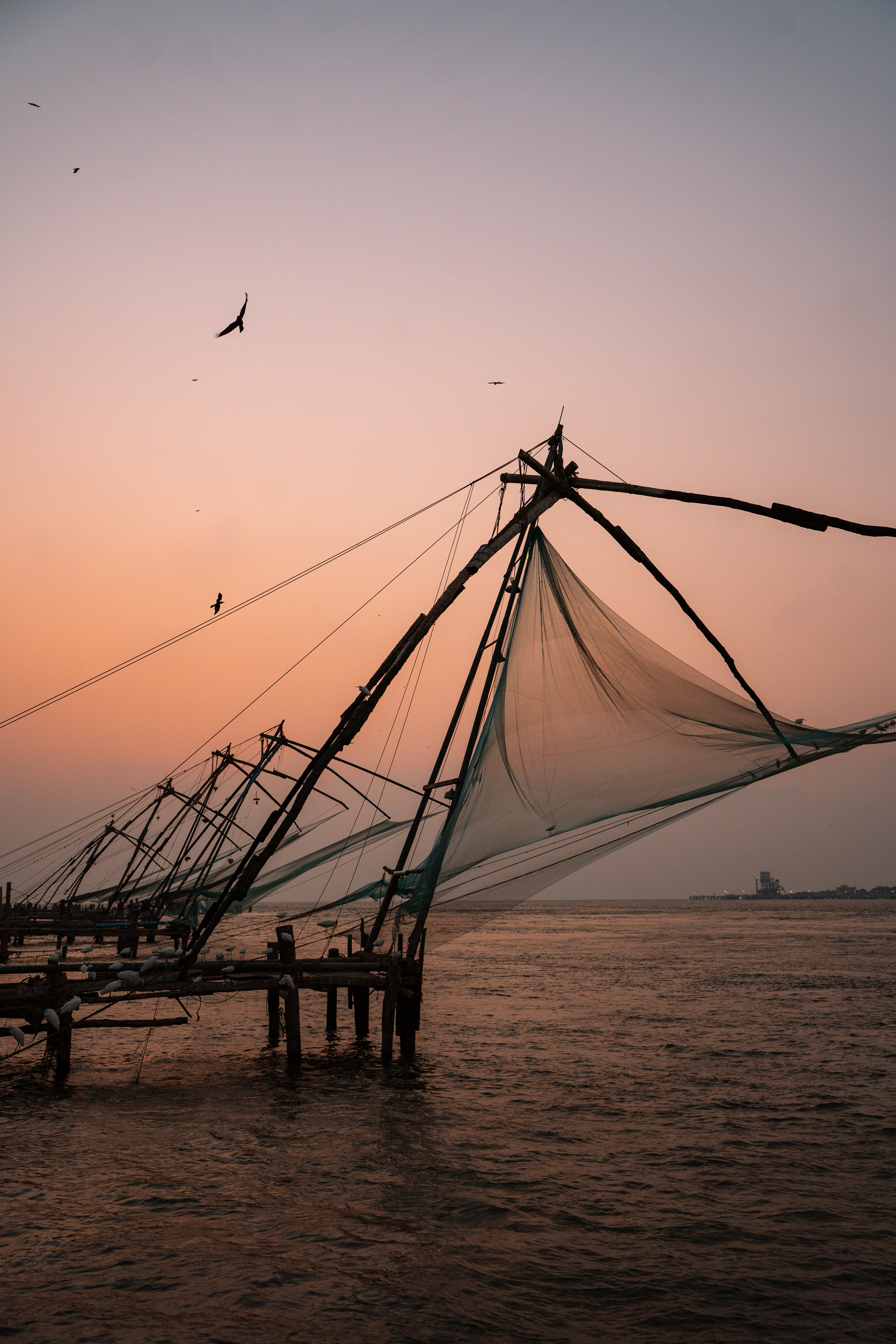
Kochi → Munnar


This is the journey that comes with a story, and if you only take one local bus the entire trip, make it this one. The KSRTC service from Ernakulam bus station to Munnar costs under $2 USD per person for a four-to-five-hour journey up some of the most spectacular mountain roads in India. The bus driver navigates narrow, winding cliff-edge roads with a casual confidence that is simultaneously impressive and terrifying.
The bus fills up quickly, bags go in a communal pile at the front, and somewhere around hour two, you'll become close friends with whoever ends up next to you. It's chaotic and cramped, and one of the best things we did in Kerala. We go over the full story in our Munnar guide.
Buses depart from the KSRTC bus stand in Ernakulam roughly every hour through the morning, with the earliest services departing around 6 am. From Fort Kochi specifically, get to Ernakulam first via a short Uber or the Water Metro to the mainland, and then give yourself at least 30 minutes before your bus.
If you have a lot of luggage, are travelling with young children, or simply want a more relaxed experience, private taxis make the same journey in around 3.5 hours and can be arranged through your hotel for roughly $20 to 40 USD. It's more comfortable, faster, but significantly less memorable.
Best option: Local KSRTC bus (budget/experience) or private taxi (comfort).
Journey time: 4 to 5 hours by bus | 3 to 3.5 hours by taxi
Cost: Under $2 by bus | $20 to 40 by private taxi
Munnar → Alleppey


There's no train to or from Munnar, since the mountain setting means no rail connection, so your options are bus or taxi. There is a direct KSRTC bus from Munnar to Alleppey that runs in the morning, and it's the best public transport option for this leg. Check the current schedule at your guesthouse the day before, since timings shift seasonally.
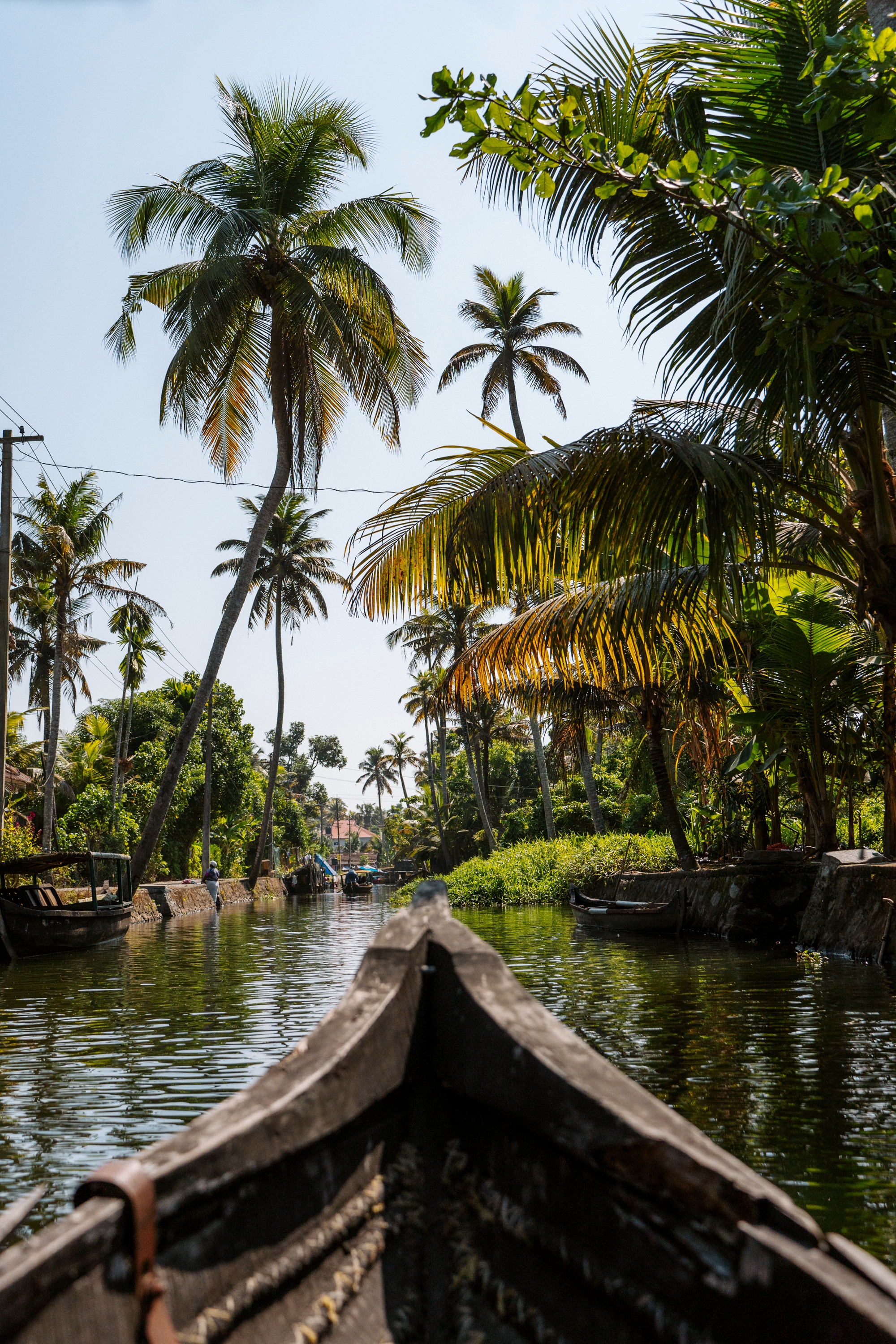
The more interesting option, and the one we'd recommend if you have any flexibility, is to take the bus or taxi to Kottayam instead, and finish the journey to Alleppey by government ferry.
The Kerala State Water Transport Department runs a public ferry service between Kottayam and Alleppey four times daily (currently at 6:45 am, 11:30 am, 1:00 pm, and 5:15 pm from Kottayam), taking two and a half to three hours through Vembanad Lake and the backwater channels beyond.
The fare is under $5 USD. Kottayam sits roughly on the way between Munnar and Alleppey, so the detour adds minimal time to your overall journey, and arriving in Alleppey by water rather than pulling into a bus depot is a genuinely special way to enter the region. You'll have done your first proper stretch of backwaters before you've even checked in.
A private taxi direct to Alleppey costs around $25 to 40 USD and is worth considering if you're splitting it between two people and want the most comfortable, flexible option. If you want the ferry experience without the bus leg, a taxi to Kottayam followed by the ferry splits the journey nicely and still works out cheaper than a full private transfer to Alleppey.
Best option: KSRTC bus or taxi to Kottayam, then government ferry into Alleppey.
Journey time: 4 to 5 hours total (bus/taxi to Kottayam + 2.5 to 3 hrs by ferry).
Cost: A few dollars by bus + under $5 ferry | $25 to 40 by private taxi to Alleppey direct

Alleppey → Kochi(or vice verse)


This is the easiest leg on the itinerary. The train from Ernakulam Junction to Alleppey (Alappuzha) runs multiple times a day, takes under an hour, and costs next to nothing ( roughly $1–2 USD) for a standard unreserved seat. It's quick, reliable, and comfortable enough that there's no real reason to take anything else unless you're on a tight schedule and a taxi makes more sense.
Buses on the same route are slightly cheaper and also frequent, but the train is the better experience and barely takes longer. From Fort Kochi, get to Ernakulam Junction via Uber or the Water Metro first.
Best option: Train from Ernakulam Junction.
Journey time: ~50 minutes by train | ~45 minutes by taxi.
Cost: $1–2 by train | $15–20 by taxi
Alleppey → Varkala

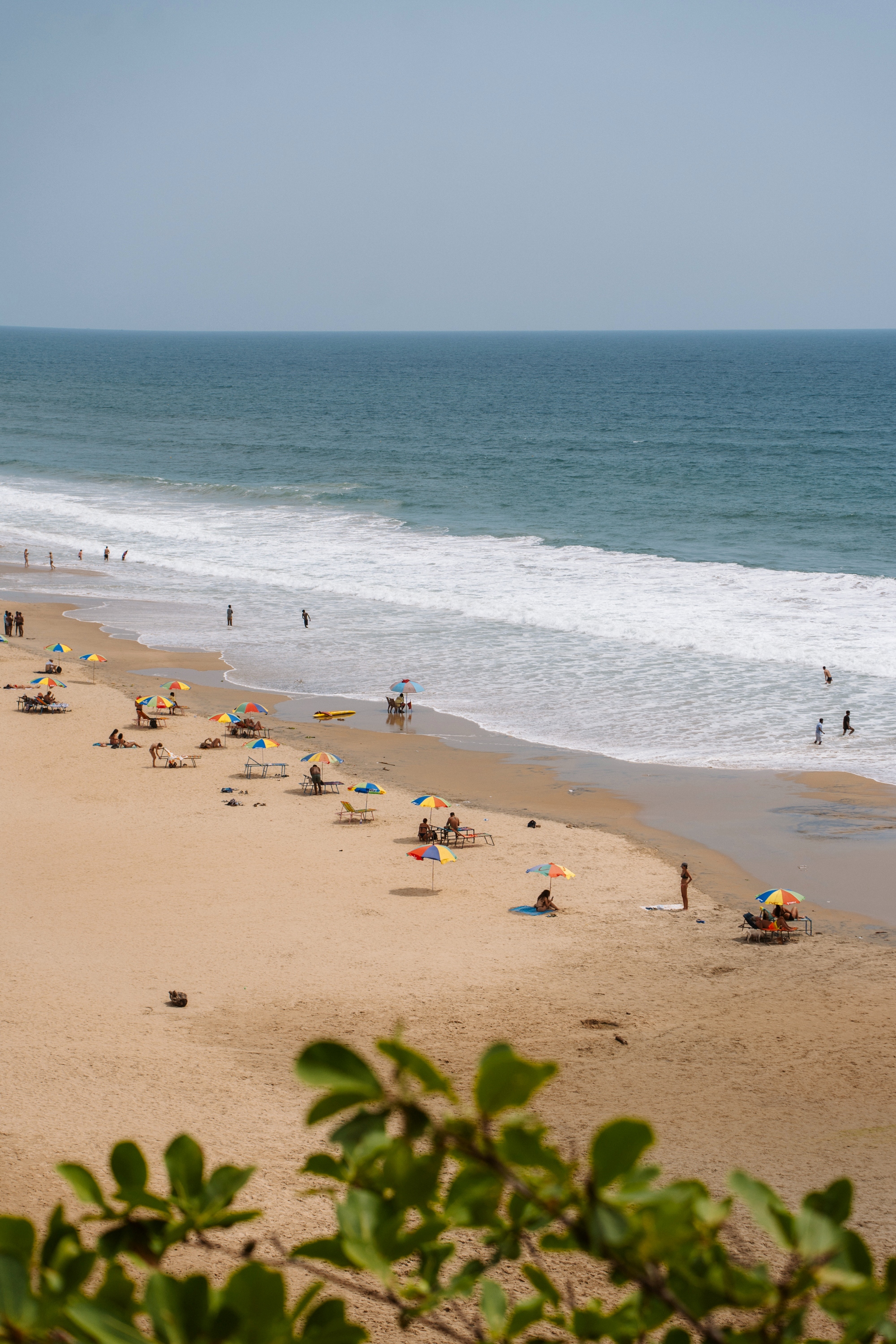
The train is the right call here. Several daily services run from Alleppey (Alappuzha) south to Varkala; the journey takes around 2–3 hours, and tickets are cheap. One thing worth checking before you board: not every southbound train stops at Varkala specifically, so confirm your train stops there and don't just jump on the first service heading in the right direction.
Buses also cover this route, though the journey takes a bit longer and may require a change depending on the service. If you're not in a rush and want the cheapest possible option, it works fine. A private taxi runs around $25 to 35 USD and is the most convenient door-to-door option if logistics matter more than cost.
Best option: Train from Alleppey (Alappuzha) station.
Journey time: 2–3 hours by train | ~2.5 hours by taxi.
Cost: A few dollars by train | $25–35 by private taxi
Quick Reference Summary
| Route | Transport Option | Time | Approx. Cost (USD) |
|---|---|---|---|
| Kochi → Munnar | KSRTC local bus | 4 to 5 hrs | Under $2 |
| Kochi → Munnar | Private taxi | 3.5 hrs | $20 to 40 |
| Munnar → Alleppey | KSRTC direct bus | 4 to 5 hrs | A few dollars |
| Munnar → Alleppey | Private taxi | 4 to 5 hrs | $25 to 40 |
| Kochi → Alleppey | Train | ~50 min | $1 to 2 |
| Alleppey → Varkala | Train | 2–3 hrs | A few dollars |
| Alleppey → Kochi | Train | ~50 min | $1 to 2 |
| Within Kochi | Uber | Varies | Very cheap |
| Fort Kochi → Mainland | Water Metro or Uber | 20 to 30 min | Under $1 to 5 |
All costs are approximate and based on budget/standard class options. Taxi prices assume private hire and will vary by season and negotiation.
FAQ
What is the cheapest way to get around Kerala?
Does Uber work in Kerala?
How do I get from Kochi to Munnar?
How do I get from Munnar to Alleppey?
How do I get from Kochi to Alleppey?
How do I get from Alleppey to Varkala?
What is the Kochi Water Metro?
Do I need to book trains in advance in Kerala?
Should I take tuk-tuks for long journeys in Kerala?
Should I carry cash when travelling Kerala?
Our Trusted Travel Partners
We only recommend products and services we personally use and trust.

SafetyWing
Travel medical insurance for nomads and remote workers
Booking.com
Find the best deals on hotels, apartments, and vacation rentals
AllTrails
Discover hiking trails with detailed maps and reviews
Surfshark
Secure VPN for safe browsing and accessing content worldwide
Get Your Guide
Find the best deals on tours and experiences
Airalo
Prepaid SIM cards for travelers
Trusted Housesitters
Find free accommodation by house and pet sitting worldwide
Wise
Send and receive money internationally with low fees* We may earn a commission when you make a purchase through our affiliate links, at no extra cost to you. We appreciate this support, which helps sustain our blog and allows us to create more content and help more great trips get planned!