
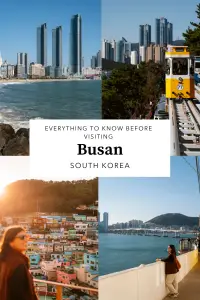
Key Tips For Visiting Busan
)
- T-Money Card: Grab one at the airport or any convenience store. It works for subways, buses, and even some taxis. Makes getting around a breeze.
- Stay Connected: Set up an eSim before you arrive. South Korea has 3 major providers. SKT, KT, and LG U+. SKT is the biggest provider and has the best speeds and best coverage across rural areas. KT is also available across most rural areas. LG U+ is a budget option with great speeds in the cities, but less coverage in rural areas. Nomad and Holafly use SKT, Maya and Airolo use KT. All 4 options should have you covered, so shop around each of them for sales, or pick up a physical SKT SIM from the airport when you land.
- Cash & Cards: Credit cards are widely accepted, but small eateries, markets, and street food vendors often prefer cash.
- Language Help: English is common in tourist areas, but a translation app is handy for off-the-beaten-path neighbourhoods. Google Translate is good, but Naver Papago is the best for Korea
- Café Culture: Busan has plenty of themed cafés worth checking out.
- Dress & Etiquette: Koreans generally dress sharply; casual is fine, but avoid eccentric clothes to blend in better.
- Day Trips: If you’ve got extra time, consider easy escapes like the nearby mountains or tours to nearby cultural hubs like Gyeongju.
Before You Go
Don't Leave Home Without Travel Insurance
We never leave the country without our safety wing coverage activated. Whether it's a missed flight, a lost bag, or a serious medical evacuation Safety Wing offers an irreplaceable peace of mind. Our favourite part is we can pause it with the click of a button when we're back in Canada and turn it back on just as easily when we're back on the move.
The 12 Best Things to Do in Busan
1. Ride the Sky Capsules


If you do only one thing in Busan, make it this. The Sky Capsules are cozy two-seater trams that glide above the coast, offering uninterrupted views of Busan Bridge, the ocean, and the city skyline. The ride lasts about 30 minutes. Long enough to take it all in without feeling rushed. Most people take a one-way trip and then walk back along the boardwalk, passing viewpoints and even a few glass-bottom skywalks.
The tickets can be hard to come by, but you have a few options.
- Book online through the official site. Booking ahead directly is ideal, but the site doesn’t always work depending on where in the world you are.
- Buy in person and try your luck on the day of. You will need to go early because they sell out fast.
- Book a Tour if the tickets are sold out. This is what we did when we couldn’t get a ticket. Lots of tours on Get Your Guide book their tickets in advance, so you can just join a tour that includes the Sky Pods, and the ticket will be handled by your guide. The Sky Pods are 2-seaters anyway, so the experience in a tour is the same.
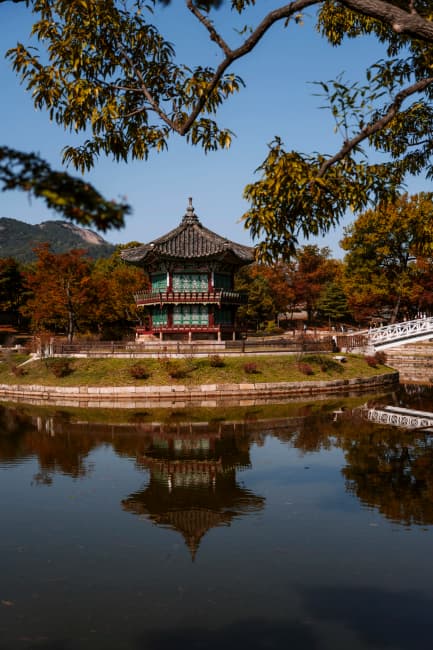
2. Explore Gamcheon Culture Village


Perched on a steep hillside overlooking the sea, Gamcheon was once a post-war settlement and one of Busan’s poorest neighbourhoods. Today, it’s been transformed into a vibrant maze of colour and creativity and is essentially a living art project that locals built from the ground up.
The narrow alleyways twist through pastel houses painted in blues, pinks, and yellows, each one hiding a small café, mural, or craft shop.
For photos, head to the official observation deck near the main entrance for the classic village panorama, then follow the painted arrows deeper in. The further you go, the quieter and more charming it gets.
Where to Stay (Before It’s Fully Booked)
3. Huinnyeoul Munhwa Maul


Built along the cliffs of Yeongdo Island, Huinnyeoul Munhwa Maul is often called the “Santorini of Busan.” I’m not sure I’m entirely sold on the comparison, but it's a cute spot. Whitewashed houses spill down narrow lanes toward the sea, and cafés perch right on the edge, where the smell of salt air mixes with espresso.
It’s quieter than Gamcheon, and you’ll spend most of your time just walking the coastal path, ducking into art studios and watching fishing boats drift past below. Keep an eye out for Huinnyeoul Coastal Tunnel, a hidden walkway carved into the cliff that opens to an incredible ocean viewpoint. There is a massive staircase going down the cliff to the tunnel, so it's a bit of a workout, but it’s worth it.
4. Oryukdo Skywalk


Perched on the southern cliffs of Busan, Oryukdo Skywalk is a short but memorable stop. It’s a glass platform that juts out over the ocean, with waves smashing into the rocks far below. It’s free to visit, and the staff hand out soft shoe covers before you step onto the glass. It's peak touristy Korea vibes, but the domestic tourists are just as into it as you, so it's lots of fun.
The view stretches across the Oryukdo Islets to the five rocky stacks rising from the sea. And on clear days, you can see all the way to Japan. It’s quick to visit (15 to 20 minutes tops), but it’s worth stopping if you’re already exploring the southern coast or heading toward Igidae Coastal Walk.
5. Haeundae Beach & Blueline Park


Haeundae is Busan’s postcard beach; wide, golden, and backed by a skyline that glows golden at sunset. In summer, it’s a full-on beach town vibe: parasols, picnics, and families splashing in the shallows. In winter, it slows down, but it’s still worth coming just to walk the promenade and watch surfers catching waves in front of the high-rises.
This is also where the Blueline Park Sky Capsule begins (a slow-moving seaside train that glides along the cliffs toward Cheongsapo and Songjeong). It’s touristy but gorgeous, especially at sunset when the capsules reflect pink light off the water. Book ahead if you’re visiting on a weekend; they sell out fast.
If you want to linger, Haeundae has some of the city’s best cafés, seafood restaurants, and night views.
6. Haedong Yonggungsa Temple


Unlike most temples in Korea that are tucked into the mountains, Haedong Yonggungsa sits right on the coast. It’s one of the most scenic spots in Busan, with ocean views from almost every angle. Come at sunrise if you can; it’s quieter, the light is incredible, and you’ll see why this is one of the city’s most photographed places. Even during busy hours, it’s worth the trip. It will just be harder to get any photos without the crowds.
7. Gwangalli Beach

Gwangalli’s the spot to unwind after a day of exploring Busan. The beach stretches right across from the massive Gwangan Bridge, which lights up the skyline every night. It’s a great place to grab a drink, dip your feet in the water, watch the sun go down and see the city light up. If you’re lucky, you might catch one of the drone shows they put on over the bay, where hundreds of drones create a mesmerizing dancing light show above the bridge.
8. BIFF Square
BIFF Square is the center of Busan’s film scene, marked by red tiles honouring famous directors. These days, it’s mostly lively streets packed with food stalls, street performers, and small shops selling everything from souvenirs to snacks. It’s easy to spend an hour or two wandering, tasting local treats like hotteok (sweet pancakes) or tteokbokki (spicy rice cakes), and soaking up the city’s energy.
9. Gukje Market
Right next door to BIFF Square is Gukje Market: a sprawling maze of stalls selling everything from vintage clothes and kitchen gadgets to electronics and handmade goods. You can wander for hours and still find something new around every corner. Together, BIFF Square and Gukje Market are a full sensory experience and a great showcase of Busan’s youthful energy.
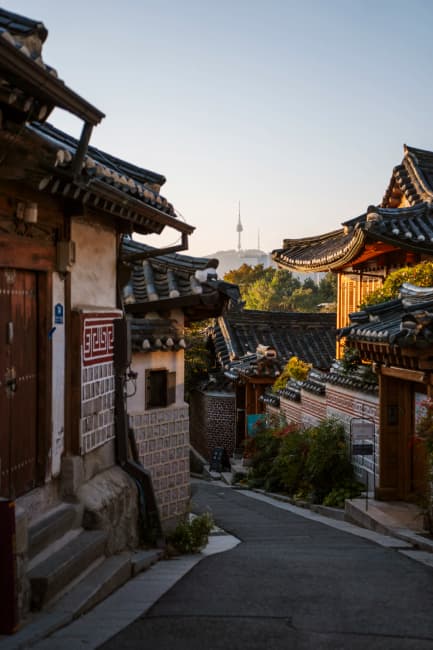
10. Hike to Geumjeong Fortress
Geumjeong Fortress sits high on Geumjeong Mountain, offering history, hiking, and city views. The fortress walls stretch for kilometres, and walking along them gives you views of Busan from above. Trails range from short, easy walks to full-day hikes that take you past gates, temples, and forested paths. Most visitors start from Beomeosa Temple, then wind their way up to the fortress. It’s a quieter alternative to Busan’s busier tourist spots, and the views from the top show the city, the coast, and even Haeundae in the distance. Bring water and good shoes; some sections are steep, but the payoff is worth it.
11. Songdo Beach & Songdo Skywalk
Songdo Beach is smaller than Haeundae but has its own charm. The sand is soft, the water clear, and it’s less crowded, making it perfect for a stroll or a quick dip. The highlight is the Songdo Skywalk: a curved, glass-bottomed walkway that juts out over the waves. Walking across gives you a unique perspective of the coastline and the city beyond. Nearby cafés make it easy to grab a coffee and watch the waves, and in the evening the sunset casts a golden glow over the water. It’s worth a short visit, but you can skip it if you’re already planning to see the other beaches and are short on time.
12. Daytrip to Gyeongju

Gyeongju is often called “the museum without walls”. This city was the capital of the ancient Silla Kingdom for nearly a thousand years, and remnants of that history are sprinkled across its streets, parks, and hills. Everywhere you look, you’ll find temples, tombs, and stone pagodas quietly coexisting with modern cafés and small boutique hotels.
Gyeongju is surprisingly easy to explore. The city is compact and walkable, and there are plenty of bike rentals if you want to cover more ground. The city is mostly flat, so a bike is a speedy way to get around.
If You’re Short on Time
We normally prefer to take a city at our own pace, but we didn’t have that long in Busan, so we booked onto a coach bus tour. We try not to do these often, but it is a great way to see the highlights of Busan quickly. Our tour was about 9 hours long and included the Sky Capsules, Oryukdo Skywalk, Huinnyeoul Munhwa Maul, and Gamcheon Culture Village.
Where to Stay In Busan

Busan’s layout can feel spread out at first, so where you stay really shapes your experience.
If it’s your first visit, Haeundae Beach is hard to beat. You’re right by the water, close to the Sky Capsules, Blueline Park, and a ton of restaurants and cafés. It’s touristy, sure, but it’s also beautiful and convenient.
For a more local feel, Gwangalli Beach is a great pick. It has the same ocean views, fewer crowds, and an unbeatable sightline of Gwangandaegyo Bridge lighting up at night.
If you want to be in the middle of the action, Seomyeon is Busan’s downtown core. It’s where locals shop, eat, and stay out late. You won’t get ocean views, but you’ll have endless food options and easy subway connections.
Nampo-dong and Jagalchi Market make a solid base for food lovers. You’ll wake up surrounded by street markets, fresh seafood stalls, and walking access to BIFF Square.
For something quieter and artsy, Huinnyeoul Munhwa Maul or the hillside around Gamcheon Culture Village has small guesthouses that trade convenience for atmosphere.
Wherever you land, Busan’s public transit makes it easy to hop between districts, so don’t overthink it. Pick which area feels most like your vibe, and then you can compare all the options here.
Some Basic Korean Words For Busan
This is a modern and touristy city, so there is a lot of English spoken and most signs will have an English translation. You definitely can get by with just English and maybe a little bit of Google Translate, but it's nice to be able to say hi or thank you in the local language just as a sign of respect. Here are a few key phrases to get you started:
| English | Translation | Phonetic |
|---|---|---|
| Hello | 안녕하세요 | ahn-nyung HAH-seh-yo |
| Please | 제발 / 부탁합니다 | cheh-BAL / boo-tak-ham-NEE-da |
| Thank you | 감사합니다 | gahm-sa-HAM-nee-da |
| Excuse me / Sorry | 실례합니다 | shil-lyeh-HAM-nee-da |
| Where is...? | 어디에 있어요? | uh-dee-eh EE-ssuh-yo |
How to Get to Busan
Busan is easy to reach from anywhere in South Korea. The fastest way from Seoul is the KTX high-speed train, which takes about 2.5 to 3 hours from Seoul Station to Busan Station. It’s comfortable, efficient, and drops you right in the city center.
If you’re coming from outside Korea, Gimhae International Airport serves Busan with domestic and some international flights. From the airport, you can take the airport bus (about 40 to 50 minutes) or the light metro line to reach central districts like Haeundae or Seomyeon.
For budget travellers, intercity buses are another option, offering slightly longer travel times than the KTX (around 4 hours), but usually cheaper fares. Once in Busan, a T-Money card will make hopping between buses, subways, and even some taxis seamless.
How To Get Around Busan
Busan’s public transit is solid and easy to figure out once you’ve got a T-money card (you can grab one at any convenience store or subway station). The subway is clean, safe, and usually the fastest way to get across the city, especially between Haeundae, Seomyeon, and Nampo-dong. Signs and announcements are all in English, too.
For shorter hops, the bus network fills the gaps. It’s handy for reaching places like Gamcheon Culture Village, Songdo, or the coast between Haeundae and Gwangalli, but expect a few steep hills and tight turns.
Taxis are everywhere and affordable compared to most big cities in Canada or the US. Just keep in mind that traffic can crawl during rush hour or on weekends near the beaches. Kakao T (the local ride-hailing app) is worth downloading. It makes it easy to request rides without needing to speak Korean.
If you want total freedom, renting an electric scooter or e-bike for short rides along the coast is fun and surprisingly practical. Busan’s waterfront paths are well-maintained and scenic.
When to Visit Busan
Busan is worth visiting year-round, but the experience changes with the seasons.
- Spring (March to May) is perfect for cherry blossoms and mild weather.
- Summer (June to August) is peak beach season, lively and crowded, especially at Haeundae and Gwangalli.
- Fall (September to November) brings cooler temperatures, clear skies, and colourful foliage. Ideal for hiking and coastal walks.
- Winter (December to February) is quieter, with fewer tourists and crisp, refreshing air, though the ocean will be chilly for swimming.
Final Thoughts

Busan is a city of contrasts. Bustling streets are steps from serene beaches, colourful hillside neighbourhoods are built into dramatic coastal cliffs, and modern high-rises overlook centuries-old temples. Whether you’re chasing adrenaline on a skywalk, wandering through Gamcheon’s vibrant alleys, or enjoying fresh seafood at Jagalchi Market, there’s a rhythm to Busan that makes it feel both exciting and approachable. Build in time to explore its neighbourhoods, soak up the ocean views, and try local eats, and you’ll leave with a sense of why this feels like Korea’s most relaxed city.
FAQ
How do I get to Busan?
What’s the best way to get around Busan?
Where should I stay in Busan?
When is the best time to visit Busan?
What are the must-see attractions in Busan?
Can I experience Busan’s seafood culture?
What are the best beaches in Busan?
What neighborhoods should I explore in Busan?
How do I see Busan from above?
Do I need Korean language skills to visit Busan?
Are there cultural or historical sites in Busan?
Is Busan good for short visits?
Our Trusted Travel Partners
We only recommend products and services we personally use and trust.

SafetyWing
Travel medical insurance for nomads and remote workers
Booking.com
Find the best deals on hotels, apartments, and vacation rentals
AllTrails
Discover hiking trails with detailed maps and reviews
Surfshark
Secure VPN for safe browsing and accessing content worldwide
Get Your Guide
Find the best deals on tours and experiences
Airalo
Prepaid SIM cards for travelers
Trusted Housesitters
Find free accommodation by house and pet sitting worldwide
Wise
Send and receive money internationally with low fees* We may earn a commission when you make a purchase through our affiliate links, at no extra cost to you. We appreciate this support, which helps sustain our blog and allows us to create more content and help more great trips get planned!